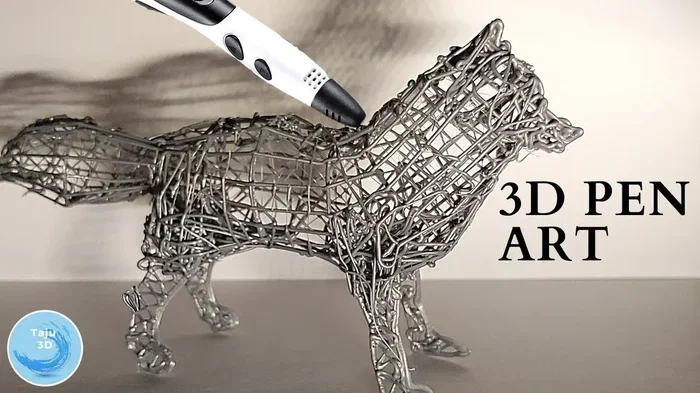
Does A 3d Pen Need A 3d Printer Or Can It Stand Alone
Does a 3D pen need a 3D printer? The short answer is no. A 3D pen is a standalone handheld device that lets you draw and create in three dimensions without any printer attached. It uses heated filament to build objects layer by layer right in your hand, making it a simple and fun creative tool for beginners and pros alike.
This is a comprehensive guide about Does A 3d Pen Need A 3d Printer.
Key Takeaways
- A 3D pen works completely on its own: It does not need a 3D printer to function or create objects.
- A 3D pen is a handheld creative tool: Think of it as a glue gun that melts plastic filament into 3D shapes you can hold.
- You can do amazing projects with just a pen: From art and repairs to educational models, a standalone 3D pen covers a lot of ground.
- A 3D printer offers more precision and scale: If you need large or highly detailed objects, a printer may be the better choice.
- Both tools use similar filament materials: PLA and ABS are the most common materials for both pens and printers.
- Cost and ease of use favor the 3D pen: Pens are cheaper, lighter, and much easier to pick up and use right away.
[FEATURED_IMAGE_PLACEHOLDER]
Does A 3d Pen Need A 3d Printer To Work?
Let us clear this up right away. Does a 3D pen need a 3D printer? No, it absolutely does not. A 3D pen is a fully independent device. You hold it in your hand, feed in a plastic stick called filament, and it melts the material as it comes out the tip. You draw in the air or on a surface, and the melted plastic cools and hardens almost instantly.
A 3D printer, on the other hand, is a much larger machine. It builds objects on a flat bed, layer by layer, following a digital file. The two tools share some similarities, but they serve very different purposes. A 3D pen is more like a portable creative wand. A 3D printer is more like a factory line for objects.
So if you are wondering whether you need both, the answer is no. You can buy a 3D pen and start creating amazing things right out of the box. No printer required. No computer file needed. Just plug it in, insert filament, and start drawing.
What Exactly Is A 3D Pen?
A 3D printing pen looks a lot like a hot glue gun. It has a body you hold, a nozzle at the front, and a place to insert filament sticks. When you turn it on, the internal heating element warms the filament until it becomes soft and gooey. You press the button, and the melted plastic flows out of the tip.
You guide the nozzle with your hand to create shapes in mid-air or on a flat surface. As the plastic leaves the nozzle, it starts to cool down and harden. This happens very fast, usually within a few seconds. That is what allows you to build free-standing structures without any support from a machine.
Most 3D pens work with two main types of filament. PLA filament is plant-based and eco-friendly. It has a lower melting temperature, which makes it safer and easier to use. ABS filament is stronger and more durable, but it needs a bit more heat and produces fumes, so it works best in well-ventilated areas.
How Does A 3D Pen Compare To A 3D Printer?
People often confuse these two tools because they both work with plastic and create three-dimensional objects. But the way they operate is completely different. Here is a simple breakdown of how they compare.
A 3D pen gives you direct, hands-on control. You decide where to place every line of plastic. You can change direction, speed, and thickness as you go. A 3D printer follows a pre-programmed design. You load a digital file, and the machine does all the work based on that file.
A 3D pen is perfect for quick fixes, art projects, and small creations. A 3D printer is better for making precise, repeatable objects with complex details. Each tool has its strengths, and they are not competitors. They are actually complementary.
What Can You Create With A Standalone 3D Pen?
One of the biggest surprises people have is how much you can do with a 3D pen alone. You do not need a printer backing you up. The pen gives you enough freedom to make a wide range of objects. Here are some of the most popular things people create.
Art and Sculpture
Many artists use a 3D pen as their primary medium. They draw freestanding sculptures in the air, creating stunning pieces of 3D art. Some artists build entire scenes made of plastic lines that look almost like glass or crystal. You can create animals, human figures, abstract shapes, and decorative pieces.
The key advantage here is spontaneity. With a printer, you have to design the object on a computer first. With a pen, you just start drawing and let your imagination guide you. It feels more like drawing with a magic wand than operating a machine.
Home Repairs and Modifications
A 3D pen is surprisingly useful around the house. You can fill in small cracks in plastic items. You can reinforce loose joints on toys or furniture. You can even create custom clips, hooks, and holders for organizing your space.
For example, if a plastic handle breaks off a bag, you can use a pen to weld the pieces back together. If you need a custom phone stand, you can just build one right on your desk. The possibilities for DIY projects are really wide.
Educational Models and Teaching Tools
Teachers and students love using 3D pens in the classroom. They can draw out molecular structures for chemistry class. They can build geometric shapes for math lessons. They can create historical artifacts for social studies projects.
Because the pen is so easy to use, even young children can get started with minimal supervision. It makes hands-on learning much more engaging than just reading from a textbook. Students remember what they build far better than what they read.
Fashion and Wearable Art
Some creative people use 3D pens to make jewelry, accessories, and even clothing elements. You can draw earrings, bracelets, and brooches directly onto a flat surface or build them in free space. Fashion designers have used 3D pens to add unique embellishments to garments.
This is a growing trend in the wearable tech and cosplay communities. People build intricate costume pieces, armor, and decorative elements using nothing but a pen and plastic filament.
When Should You Use a 3D Printer Instead?
While a 3D pen is fantastic for many tasks, there are times when a 3D printer is the better choice. Understanding when to use each tool helps you get the best results.
Precision and Detail
If you need an object with exact dimensions and fine details, a printer wins every time. A pen relies on your hand movements, which means there is always some variation. A printer follows a digital file down to the millimeter. For engineering prototypes or technical parts, a printer is the right tool.
Large or Complex Objects
A 3D pen works best for small to medium projects. If you want to build a large object, like a full-sized prop or a functional part, a printer can handle the scale much better. Printers also handle complex geometries that would be nearly impossible to draw by hand.
Repeatability and Consistency
If you need to make the same object ten times, a printer is far more efficient. You just hit print again, and the machine duplicates the object exactly. With a pen, each creation will have slight differences. For batch production, a printer saves a lot of time and effort.
| Feature | 3D Pen | 3D Printer |
|---|---|---|
| Needs a printer to work | No | N/A (it is the printer) |
| Handheld and portable | Yes | No |
| Learning curve | Very low | Moderate to high |
| Precision level | Moderate | Very high |
| Best for | Art, quick fixes, education | Engineering, prototyping, production |
| Cost range | $20 to $100 | $150 to $500+ |
| Setup time | Under 2 minutes | 15 to 30 minutes |
Can You Use a 3D Pen Without Any Digital Tools?
Yes, you can use a 3D pen completely offline. You do not need a computer, a tablet, or any software to start drawing. Most pens come with a simple on/off switch and temperature controls. You just plug them into a wall outlet or USB power source, wait for them to heat up, and start creating.
This is one of the biggest advantages of a standalone 3D pen. There is no digital barrier to entry. You do not need to learn CAD software or download design files. You simply pick up the pen and start drawing whatever comes to mind. It makes the pen incredibly accessible for people of all ages and skill levels.
That said, some advanced users do pair their pens with stencils or templates. You can print a flat outline on paper and then trace over it with the pen to build up a 3D shape. But even this is optional. Many people prefer the free-form approach and create entirely from imagination.
Tips for Getting the Most Out of Your 3D Pen
Whether you are brand new to 3D pens or looking to improve your skills, these tips will help you get better results fast.
- Start with PLA filament: It is easier to work with, smells less, and cools faster than ABS. Great for beginners.
- Use a smooth surface: Drawing on glass or a silicone mat gives you a clean base that peels off easily.
- Go slow at first: Speed comes with practice. Focus on control before trying fast movements.
- Experiment with temperature settings: Different filaments work best at different heat levels. Try a few tests to find the sweet spot.
- Keep the nozzle clean: Wipe it with a cloth between uses to prevent buildup and ensure smooth filament flow.
- Practice drawing flat shapes first: Squares, circles, and triangles help you get comfortable with the flow before moving to 3D structures.
Common Mistakes People Make With 3D Pens
Even though a 3D pen is simple to use, there are a few common mistakes that can frustrate beginners. Knowing what to avoid saves you time and filament.
Using the Wrong Temperature
Every filament type has an ideal temperature range. If the heat is too low, the filament will not flow smoothly and will keep jamming. If the heat is too high, the plastic can burn and produce bad fumes. Always check the recommended temperature for your specific filament before you start.
Moving Too Fast
New users often try to draw quickly, but this leads to uneven lines and weak structures. The plastic needs time to cool and bond as you draw. Slow and steady gives you much better results. Once you build muscle memory, you can gradually increase your speed.
Skipping Surface Preparation
If you are drawing on a surface, make sure it is clean and smooth. Dust or texture can cause your creation to stick unevenly or fall apart. A light coat of washable glue stick on paper can help your base layer adhere without damaging the final piece when you peel it off.
Ignoring Ventilation
While PLA filament is relatively safe, ABS filament releases fumes that are not great to breathe. Always work in a well-ventilated room. If you are using ABS, consider opening a window or turning on a fan. Your lungs will thank you.
Is a 3D Pen Worth Buying If You Already Have a Printer?
Many people wonder if a 3D pen is worth the investment when they already own a 3D printer. The answer depends on what you enjoy doing. A pen adds a completely different creative experience that a printer cannot replicate.
A printer excels at producing precise, repeatable objects from digital files. A pen excels at spontaneous, hands-on creation that feels more like art than manufacturing. They complement each other beautifully. If you are a hobbyist, educator, or maker, having both gives you the most flexibility.
But if budget is tight, a 3D pen alone can provide hours of creative fun and practical utility. You do not need a printer to justify buying a pen. The pen stands on its own as a valuable creative tool.
Final Thoughts
So, does a 3D pen need a 3D printer to be useful or impressive? Absolutely not. A 3D pen is a fully capable standalone device that opens up a world of creative possibilities. You can make art, fix things around the house, build educational models, and craft unique accessories all without ever touching a printer.
The beauty of a 3D drawing pen is its simplicity and accessibility. Anyone can pick one up and start creating within minutes. It does not require software, digital files, or technical expertise. Just your hands, some filament, and a little imagination.
If you are on the fence about buying one, go for it. A 3D pen is an affordable, fun, and surprisingly practical tool that delivers real value on its own. And if you later decide to add a printer to your setup, the pen will still hold its place as a favorite creative companion.
Frequently Asked Questions
Can a 3D pen replace a 3D printer entirely?
For most creative and casual users, a 3D pen can replace a printer. However, if you need highly precise, repeatable, or large-scale objects, a printer is still the better choice. The pen and printer serve different needs, and neither fully replaces the other for all use cases.
Is a 3D pen safe for kids to use?
Most 3D pens are designed with safety in mind. The nozzle and melted plastic can be hot, so adult supervision is recommended for younger children. PLA filament is the safest option for kids because it has a lower melting temperature and produces fewer fumes than ABS.
What filament should I start with for my 3D pen?
PLA filament is the best starting point for beginners. It is easy to use, biodegradable, and works at lower temperatures. It also comes in a wide range of colors, which makes it fun for creative projects. ABS is a great second option once you are comfortable with the pen.
How long does it take to get good at using a 3D pen?
Most people feel comfortable drawing basic shapes within the first 30 minutes of practice. Building more complex structures takes a few hours of hands-on time. The learning curve is very gentle compared to operating a 3D printer, which requires learning software and setup.
Can I use a 3D pen to repair plastic items?
Yes, 3D pens are excellent for repairing plastic objects. You can fill cracks, reattach broken pieces, and reinforce weak joints. The melted plastic bonds well with most plastic surfaces, making it a handy tool for quick fixes around the home.
Do 3D pens need to be plugged into an outlet?
Most 3D pens need to be plugged in for power, since the heating element requires a consistent energy source. Some newer models come with rechargeable batteries, making them more portable. However, battery-powered pens may have slightly lower heat output and shorter continuous use times.
Frequently Asked Questions
What is Does A 3d Pen Need A 3d Printer?
Does A 3d Pen Need A 3d Printer is an important topic with many practical applications.