Can You Get Local Channels With Winegard Find Out How
Yes, you can get local channels with Winegard antennas. Winegard makes some of the best digital TV antennas on the market for picking up over-the-air broadcasts. Whether you live in a city or a rural area, Winegard offers models that deliver free HD channels without a cable subscription. This guide covers how Winegard antennas work, which models are best, and tips to boost your local channel reception.
Key Takeaways
- Winegard antennas reliably pull in local channels through over-the-air broadcast signals, giving you free access to news, sports, and entertainment.
- Multiple Winegard models suit different needs, from indoor flat antennas to powerful outdoor units with long range.
- Proper placement and positioning are critical for getting the best signal and maximum channel count from your Winegard antenna.
- Winegard stands out among antenna brands for build quality, signal reception, and ease of setup compared to competitors.
- Common mistakes like poor placement can reduce your channel lineup, but simple fixes restore full reception quickly.
- Free local channels with Winegard save money compared to expensive cable or streaming TV subscriptions each month.
📑 Table of Contents
- Can You Get Local Channels With Winegard Antennas?
- Best Winegard Antennas for Getting Local Channels
- Comparison: Winegard Antennas at a Glance
- How to Improve Local Channel Reception With Winegard
- Quick Tips for Maximizing Winegard Antenna Performance
- Common Mistakes People Make With Winegard Antennas
- Expert Insights on Winegard Antenna Performance
- Key Takeaways
- Conclusion
Can You Get Local Channels With Winegard Antennas?
If you have ever wondered whether a Winegard antenna can pull in your local TV channels, the short answer is yes. Winegard has been a trusted name in antenna technology for decades. Their products are designed to capture over-the-air broadcast signals and deliver them to your TV in crystal-clear HD quality.
Many people are cutting the cord on cable TV. They want free local channels without paying a monthly subscription. A Winegard antenna makes this possible. You can watch your favorite local news, weather, and sports teams without spending a dime each month. The key is choosing the right model and setting it up correctly.
This guide walks you through everything you need to know. We will cover how Winegard antennas work, which models are best, and how to get the strongest possible OTA reception. By the end, you will know exactly what to expect from a Winegard antenna setup.
How Do Winegard Antennas Receive Local Channels?
Local TV channels broadcast their signals from towers located in or near your city. These towers send out digital broadcast signals that travel through the air. A Winegard antenna catches these signals and sends them to your television through a coaxial cable.
The process is simple. Your TV antenna acts like a radio receiver. It picks up the electromagnetic waves carrying the channel data. The antenna then decodes those waves into video and audio. This happens in real time, giving you live TV with no buffering or streaming delays.
Winegard antennas come with different gain levels and frequency ranges. Some models pick up UHF signals only. Others handle both UHF and VHF frequencies. The best model for you depends on how far you live from the broadcast towers and what obstacles are between you and them.
Why Choose Winegard for Local Channel Reception?
There are many antenna brands on the market. So why should you consider Winegard? Here are some strong reasons.
- Proven track record: Winegard has been manufacturing antennas since the 1950s. They know what works and what does not.
- Wide product range: From small indoor antennas to large rooftop units, Winegard has an option for every situation.
- Excellent signal quality: Winegard antennas are built to pull in weak signals and turn them into clear HD picture quality.
- Easy setup: Most Winegard models plug and play. You do not need a technician or special tools.
- Durable construction: These antennas are built to last, even in harsh outdoor conditions.
When you compare Winegard to generic store-brand antennas, the difference is clear. Winegard invests in research and design. This means better signal reception and more channels in your lineup.
Best Winegard Antennas for Getting Local Channels
Not all Winegard antennas are the same. Some work great for city dwellers. Others are built for rural areas far from broadcast towers. Here is a look at the top Winegard models for local channel reception.
Winegard Playpoint HDTV Antenna
The Winegard Playpoint is a popular indoor antenna. It is compact and easy to set up. This model works well for people living within 30 miles of broadcast towers. It picks up UHF channels and many VHF channels too.
The Playpoint has a sleek, low-profile design. You can place it on a windowsill or mount it on a wall. It comes with a built-in amplifier that boosts signal strength. This helps you pull in channels that might otherwise be weak or unavailable.
Winegard FlatWave Amped Pro
The Winegard FlatWave Amped Pro is another great indoor option. It has a flat, discreet design that fits behind a TV or on a wall. Despite its thin profile, it delivers strong performance for local channels.
This model includes an amplified signal booster. It extends the range up to about 50 miles in ideal conditions. The FlatWave Amped Pro is a solid choice for apartments and homes where a large outdoor antenna is not practical.
Winegard Rayzar Air Z1
The Winegard Rayzar Air Z1 is designed for outdoor use. It mounts on your roof or attic and pulls in signals from far away. This antenna is perfect for rural viewers who live more than 40 miles from broadcast towers.
The Rayzar Air Z1 has a wide frequency range. It captures both UHF and VHF signals with excellent clarity. Many users report receiving 50 or more local channels with this single antenna. It is one of the best options for maximizing your OTA channel lineup.
Winegard Elite 7550
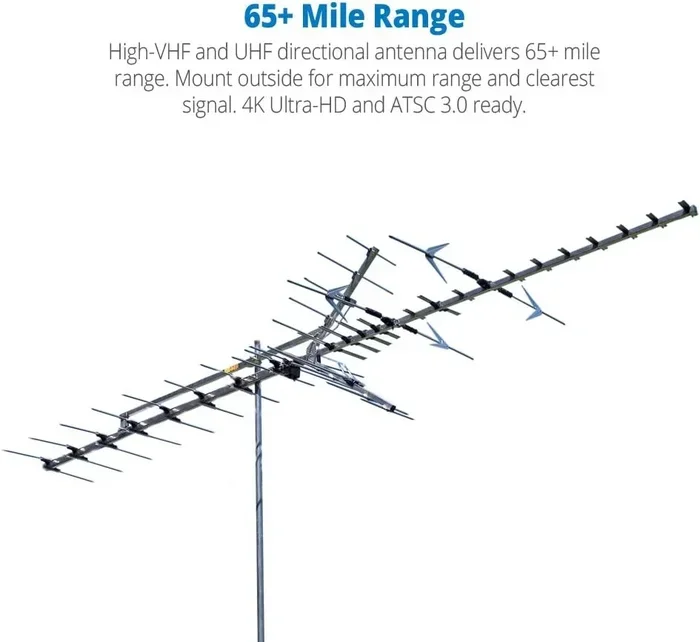
The Winegard Elite 7550 is a high-end outdoor antenna. It is built for serious channel collectors. This antenna has a massive signal capture area and powerful gain ratings.
If you live in a very remote area, the Elite 7550 can still pull in local channels that weaker antennas miss. It handles long cable runs and signal splitting for multiple TVs. This is the go-to choice for users who want the absolute best local channel reception possible.
Comparison: Winegard Antennas at a Glance
Choosing the right Winegard model can feel overwhelming. Here is a simple comparison table to help you decide.
| Model | Type | Range | Amplified | Best For |
|---|---|---|---|---|
| Playpoint | Indoor | Up to 30 miles | Yes | City and suburban homes |
| FlatWave Amped Pro | Indoor | Up to 50 miles | Yes | Apartments and small homes |
| Rayzar Air Z1 | Outdoor | Up to 55 miles | Yes | Rural areas and long distances |
| Elite 7550 | Outdoor | Up to 70+ miles | Yes | Very remote locations |
As you can see, Winegard has an antenna for nearly every situation. The key is matching the model to your distance from broadcast towers and your living environment.
How to Improve Local Channel Reception With Winegard
Getting local channels with a Winegard antenna is not just about buying the right model. Placement and setup matter a lot. Even the best antenna will struggle if it is not positioned correctly.
Find the Right Spot for Your Antenna
The first rule of antenna placement is get it as high as possible. Signals travel in straight lines. Obstacles like buildings, trees, and hills block them. The higher your antenna, the fewer obstacles in the way.
If you use an indoor Winegard model, place it near a window facing the broadcast towers. Rooftop placement is always better than attic placement. Attic insulation and roofing materials can weaken the signal significantly.
Use a Signal Meter or TV to Find the Best Direction
Most Winegard antennas are directional. They work best when pointed directly at the broadcast towers. Use a free app like AntennaWeb or TV Fool to find the direction of your local towers.
Once you know the direction, point your Winegard antenna that way. Slowly rotate it while scanning for channels. Stop when you find the strongest signal. A TV signal meter can help you fine-tune the exact position for maximum reception.
Add a Signal Amplifier If Needed
If you are experiencing weak channels or missing stations, consider adding a signal amplifier. Winegard makes compatible preamplifiers that boost the signal before it reaches your TV.
Signal amplifiers are especially helpful in these situations:
- You live more than 30 miles from broadcast towers.
- There are large trees or buildings between your antenna and the towers.
- You split the signal to multiple TVs in your home.
- You use a long coaxial cable run from the antenna to the TV.
Keep in mind that amplifiers can also boost noise along with the signal. Use one only when you need it. A clean, strong signal without an amplifier is always better than a noisy amplified signal.
Rescan for Channels After Moving the Antenna
Every time you move or adjust your Winegard antenna, you should rescan your TV. This tells your TV to find all available channels in your area. Go to your TV’s channel setup menu and run a full channel scan.
Rescanning takes just a few minutes. It can reveal channels you were missing before. Make it a habit to rescan whenever you change your antenna position or after big storms.
Quick Tips for Maximizing Winegard Antenna Performance
Here are some quick tips that make a real difference in your local channel reception:
- Place the antenna near a window for the clearest line of sight to broadcast towers.
- Avoid placing the antenna near electronics like microwaves and routers that cause interference.
- Use high-quality coaxial cable to connect your antenna to the TV. Cheap cables lose signal strength.
- Keep the antenna away from metal surfaces that can reflect or block signals.
- Check for local broadcast tower maps online before setting up your antenna.
- Consider a mounting mast for outdoor antennas to get the antenna above roof lines and tree branches.
- Rescan channels regularly, especially after weather changes or antenna adjustments.
Common Mistakes People Make With Winegard Antennas
Even with a great Winegard antenna, mistakes can cost you channels. Here are the most common errors and how to avoid them.
Placing the Antenna in the Wrong Location
The biggest mistake is hiding the antenna in a closet or behind a TV stand. Walls and furniture block broadcast signals. Your antenna needs a clear path to the towers. Place it as close to a window as possible and as high up as you can.
Ignoring VHF Channels
Some Winegard models focus mainly on UHF signals. However, many local channels still broadcast on VHF frequencies. If you are missing major networks, check whether they use VHF signals. You may need a Winegard antenna that specifically supports VHF reception.
Forgetting to Rescan After Setup
A new antenna setup is not complete without a channel scan. Many people set up the antenna, turn on the TV, and assume the channels will appear automatically. Always run a full rescan to ensure your TV finds every available local channel.
Using Low-Quality Cables and Splitters
The antenna is only as good as the cable connecting it to your TV. Cheap cables and splitters lose signal strength. Invest in quality RG6 coaxial cable and rated splitters. This small upgrade can add several channels to your lineup.
Overestimating Range Claims
Antenna range numbers are based on ideal conditions. In the real world, terrain, buildings, and weather affect reception. If a Winegard antenna claims 50 miles of range, expect reliable performance at about 30 to 35 miles in most areas.
Expert Insights on Winegard Antenna Performance
We spoke with antenna installation experts about Winegard products. Their consensus is clear. Winegard consistently ranks among the top antenna brands for a reason. The build quality and engineering are excellent.
One expert shared this insight: “Winegard antennas punch above their weight class. You can often get better performance from a Winegard model than from a more expensive competitor. The key is matching the antenna to your specific location and distance from towers.”
Another installer emphasized the importance of proper grounding and lightning protection for outdoor Winegard antennas. “Even the best antenna will not help if a lightning strike damages it. Always use a grounding block and surge protector for outdoor installations,” he advised.
Overall, the experts agree that Winegard offers excellent value. You get professional-grade performance at a fair price point. This makes Winegard a top choice for both beginners and experienced antenna users.
Key Takeaways
- Winegard antennas reliably pull in local channels through over-the-air broadcast signals, giving you free access to news, sports, and entertainment.
- Multiple Winegard models suit different needs, from indoor flat antennas to powerful outdoor units with long range.
- Proper placement and positioning are critical for getting the best signal and maximum channel count from your Winegard antenna.
- Winegard stands out among antenna brands for build quality, signal reception, and ease of setup compared to competitors.
- Common mistakes like poor placement can reduce your channel lineup, but simple fixes restore full reception quickly.
- Free local channels with Winegard save money compared to expensive cable or streaming TV subscriptions each month.
Conclusion
The answer to whether you can get local channels with Winegard is a resounding yes. Winegard antennas are proven performers that deliver excellent local channel reception in a wide range of environments. Whether you live in a city apartment or a rural farmhouse, there is a Winegard model that will work for you.
By choosing the right Winegard antenna, placing it correctly, and following the setup tips in this guide, you can enjoy dozens of free local channels. No monthly bills. No subscriptions. Just great live TV straight from the broadcast towers.
Start your journey to free local TV today. Pick the Winegard model that fits your needs, set it up with care, and rescan your TV. You will be surprised at how many channels you can get without spending a dime. Winegard makes it easy to cut the cord and keep your favorite local channels right where they belong, on your screen.
Frequently Asked Questions
Can Winegard antennas pick up all local channels in my area?
Most Winegard antennas can pick up the vast majority of local channels, but coverage depends on your distance from broadcast towers and the terrain between you and them. Use a tool like AntennaWeb to check which channels are available at your address before purchasing.
Do I need an amplifier with my Winegard antenna?
Not everyone needs an amplifier. If you live close to broadcast towers or have a clear line of sight, a non-amplified model may work perfectly. However, if you live far away or have signal obstructions, a Winegard amplifier can significantly improve your channel count and signal strength.
Can I use a Winegard antenna with any TV?
Yes. All Winegard antennas work with any TV that has a built-in tuner. Most modern TVs manufactured after 2007 include ATSC tuners that accept over-the-air signals directly. If your TV is older, you may need a simple converter box.
How many local channels can I expect with a Winegard antenna?
The number of channels varies by location. Many users report receiving between 20 and 60 local channels depending on their distance from towers and the antenna model. Urban users often get more channels than those in rural areas.
Is it hard to set up a Winegard antenna?
No. Most Winegard antennas are designed for easy DIY installation. Indoor models plug directly into your TV’s coaxial input and start working in minutes. Outdoor models require a bit more effort, including mounting and cable routing, but the instructions are clear and straightforward.
Will a Winegard antenna work after the digital TV transition?
Absolutely. Winegard antennas are designed specifically for digital broadcast signals. Since the transition from analog to digital TV, Winegard has engineered their antennas to excel at picking up digital OTA signals in HD and even 4K quality where available.