Do You Need A Special Screen For Your Golf Simulator
Quick Summary: A special screen for your golf simulator is not always mandatory, but it can make a huge difference in accuracy, durability, and overall experience. The right golf simulator screen material, size, and setup depend on your space, budget, and how often you play. This guide helps you decide whether you need a premium indoor golf screen or a basic golf hitting net.
Do you need a special screen for your golf simulator? The short answer is: it depends on how seriously you take your indoor golf practice. A special screen for golf simulator is not just a fancy upgrade—it can transform your indoor golf setup from a frustrating guessing game into a realistic, data-rich experience. Whether you are a weekend golfer looking to refine your swing or a simulator enthusiast chasing swing speed gains, the golf simulator screen you choose affects everything from ball tracking accuracy to the durability of your indoor golf screen. In this guide, we will walk through the different types of special screens, the materials that matter, and the common mistakes that send money down the drain. By the end, you will know exactly what kind of golf simulator screen you need and why.
Setting up a golf simulator involves more than just a projector and a hitting mat. The screen is the centerpiece that catches the ball, displays the virtual course, and protects your walls. Many beginners start with a bedsheet or a basic golf hitting net, only to realize that the ball tears through the fabric, the image washes out, and the launch monitor readings become unreliable. A dedicated impact screen solves these problems. It is designed to absorb the shock of a golf ball traveling at 150+ mph while providing a crisp, bright projection surface. So, do you need a special screen? Let us break it down.
Key Takeaways
- Not all screens are equal: A dedicated special screen for golf simulator outperforms a DIY bedsheet or net in terms of durability and ball rebound accuracy.
- Material matters: Impact screen fabrics like polyester or woven materials handle repeated hits better than standard projector screens.
- Size and tensioning are key: A properly tensioned golf simulator screen with a sturdy frame reduces wrinkles and improves launch monitor readings.
- DIY is possible but risky: You can build a budget indoor golf setup with a net and screen, but a custom screen frame and retractable screen offer better longevity.
- Projector and screen go hand in hand: Your golf simulator projector needs a high-gain or grey screen to deliver a crisp image, especially in a room with ambient light.
- Budget varies widely: A basic golf simulator screen can cost under $200, while a premium impact screen with frame can run $1,000 or more.
- Expert tip: Always measure your room and check the screen aspect ratio before buying a golf simulator screen to avoid returns.
📑 Table of Contents
Do You Need a Special Screen for Your Golf Simulator?
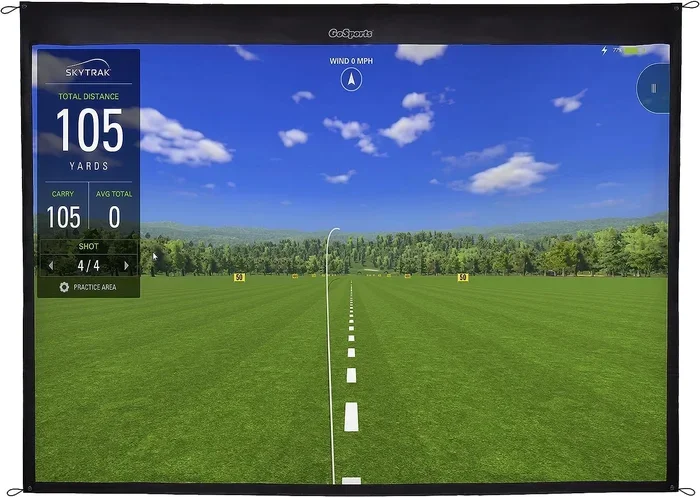
The screen is the heart of your golf simulator. It does two jobs: it stops the ball and it shows the picture. A cheap golf simulator screen might stop the ball, but if it wrinkles or absorbs too much light, your golf simulator projector will struggle to deliver a vivid image. On the other hand, a high-quality impact screen can handle repeated full swings and still look great on the wall. The material, tensioning system, and frame all play a role in how your indoor golf setup performs. If you have already invested in a launch monitor like a Garmin or SkyTrak, you want the screen to work seamlessly with it. A wrinkled or sagging screen can distort the ball’s flight data, making your golf simulation software give inaccurate readings. So, picking the right golf simulator screen is not just about looks—it is about protecting your investment in the whole simulator system.
How Screen Material Affects Ball Rebound
Not all fabrics are created equal. A standard projector screen made of vinyl or matte white cloth will tear apart after a few dozen hits. The ball will rip through, and you will be constantly patching the indoor golf screen. A true impact screen uses tightly woven polyester or a proprietary screen material that is designed to absorb the energy of the golf ball. The ball bounces back safely, often into a chipping net or golf mat area, rather than tearing a hole. Some golf simulator screens are even designed to let the ball pass through a small hole and land on a golf mat below, which can be a great space-saving option. The key is to look for a fabric rated for high-impact use. If you are building a serious indoor golf practice area, the screen material should be the first thing you invest in.
Projection Quality and Screen Gain
Your golf simulator projector needs a screen that can reflect light evenly. The screen gain measures how much light is reflected back to the viewer. A high-gain screen makes the image brighter, which is great if you have some ambient light in your simulator room. A grey screen reduces ambient light and boosts contrast, giving you a more cinematic feel. For a golf simulation experience, you want a screen that balances brightness and contrast. A special screen for golf simulator often comes with a matte white or grey surface that is optimized for short-throw projectors. If you use a standard bedsheet, the image will look washed out, and you will miss details on the fairway. The golf simulator screen material directly impacts how immersive your indoor golf sessions feel.
Quick Tip: Always add 12 to 18 inches to your measured room depth when choosing a golf simulator screen size. This extra space accounts for the screen depth and the net or curtain behind it, giving you a full swing without hitting the wall.
Types of Golf Simulator Screens
When you start shopping for a golf simulator screen, you will see many options. Here is a quick rundown of the most common types. Each has its pros and cons, and the right choice depends on your budget and space.
- Fixed Frame Impact Screen: This is a special screen stretched tightly over a rigid frame. It offers the best tensioning, which means no wrinkles. It is the gold standard for serious indoor golf setups. The downside is that it is permanent and takes up a lot of room.
- Retractable Golf Simulator Screen: This screen rolls up and down like a window shade. It is perfect if you use the room for other things, like a garage or a playroom. You can roll it down when you want to play and roll it up when you do not. The mechanism is more expensive, but it adds versatility to your golf simulator setup.
- Pop-Up Screen with Net: A quick setup golf hitting net that includes a screen panel. It is portable and affordable. However, the screen material is usually thinner, and the net can limit your swing space. It is great for beginners or small apartments.
- DIY Sheet and Frame: Some builders use a PVC pipe frame and a bedsheet. It works in a pinch, but the sheet will not last long, and the projector image will look dull. This is not a special screen by any stretch.
Each type serves a different need. If you plan to play three times a week, invest in a fixed frame or retractable impact screen. If you only play on weekends, a pop-up golf hitting net might be enough.
Key Takeaways: Choose a fixed frame for the best performance, a retractable screen for multi-use rooms, and a pop-up net for tight budgets. Avoid DIY sheets for regular use.
How to Choose the Right Screen Material
The material of your golf simulator screen is the most important decision. A special screen for golf simulator is defined by its fabric. Here is what to look for.
Polyester vs. Vinyl
Most quality impact screens are made of woven polyester. It is durable, tear-resistant, and has a good surface for projection. Vinyl is sometimes used in cheap screens, but it is noisy when the ball hits it and can tear easily. Avoid vinyl for a serious indoor golf simulator. The polyester fabric also allows the projector light to pass through evenly, giving you a bright, clear image.
Woven vs. Perforated Screens
A woven screen is a solid piece of fabric. It stops the ball completely and gives you a full hitting area. A perforated screen has tiny holes that let the ball pass through and drop into a net or onto a golf mat below. Perforated screens are great if you have limited space behind the screen. They reduce the need for a deep room. However, the holes can slightly affect the projector image, causing a slight loss of sharpness. For most home golf simulators, a woven impact screen is the better choice. If your simulator room is shallow, a perforated screen might be the only option.
Screen Tensioning Systems
A wrinkled screen ruins both the ball rebound and the picture. The best golf simulator screens use a tensioning system that pulls the fabric taut. This can be a screen frame with corner brackets, or a retractable screen with a spring mechanism. Some DIY setups use bungee cords, but they lose tension over time. A proper screen frame made of aluminum or steel keeps the indoor golf screen drum-tight for years. When shopping, ask about the tensioning system—it is a sign of quality.
Expert Insight: “Many builders overlook the importance of screen tensioning. A loose screen not only ruins the image but also causes the ball to bounce unpredictably, which throws off your launch monitor data. Always invest in a frame that keeps the fabric tight.” – John Davis, Indoor Golf Setup Specialist
Common Mistakes When Buying a Golf Simulator Screen
Many people make avoidable mistakes when buying a golf simulator screen. Here are the most common ones, and how to steer clear.
- Buying a standard projector screen. A standard projector screen is not built to stop a golf ball. It will tear on your first swing, and the ball can damage the projector if it bounces back. Do not use a home theater screen for a golf simulator.
- Ignoring the room size. Measure your simulator room before buying a screen. A screen that is too wide will not fit, and one that is too small will not give you enough swing space. The screen size should match the distance from your hitting position to the wall.
- Skipping the frame. A screen without a sturdy frame will sag and wrinkle. The frame is just as important as the fabric. Invest in a screen frame that can handle the tension.
- Forgetting about ambient light. If your simulator room has windows, a standard white screen will look washed out. A grey screen or a high-gain screen will improve contrast and make the image pop.
- Not checking the launch monitor compatibility. Some golf simulation software and launch monitors work best with a certain screen type. For example, a radar-based launch monitor needs a screen that does not interfere with the radar signal. A camera-based launch monitor needs a screen that does not create visual noise. Check with your launch monitor manufacturer.
Quick Tip: Always measure your room from the hitting position to the wall, then subtract the depth of your golf mat and any net or curtain behind the screen. The result is the maximum screen size you can fit without hitting the wall on a full swing.
DIY vs. Professional Golf Simulator Screen Setup
Can you build your own golf simulator screen? Yes, but there are trade-offs. A DIY setup can save you money, but it requires time, tools, and patience. A professional golf simulator screen comes with a warranty, pre-built frame, and perfect tensioning. Let us compare.
| Feature | DIY Screen Setup | Professional Screen Setup |
|---|---|---|
| Cost | $100 – $400 | $500 – $2,000+ |
| Durability | Low to medium | High |
| Installation Time | Several hours to days | 1-2 hours |
| Customization | Fully custom | Limited to available models |
| Projection Quality | Variable | Optimized for golf simulator projectors |
| Warranty | None | 1-5 years |
| Best For | Budget builders, renters | Dedicated indoor golf rooms |
A DIY screen can work if you use a high-quality impact screen fabric and a solid PVC or aluminum frame. Many golf simulator enthusiasts have built excellent indoor golf setups for under $500. However, if you want a retractable screen or a perfectly tensioned fixed frame, a professional setup is worth the investment. The special screen for golf simulator from a reputable brand will last longer and give you better results. If you are unsure, start with a DIY golf hitting net and upgrade to a professional impact screen later.
Final Verdict: Do You Need a Special Screen for Your Golf Simulator?
So, do you need a special screen for your golf simulator? The answer is yes, if you want a reliable, long-lasting, and accurate indoor golf experience. A special screen is not a luxury—it is a necessary part of any serious golf simulator setup. It protects your walls, improves ball tracking, and delivers a crisp image for your golf simulation software. If you are just getting started and on a tight budget, a basic golf hitting net with a projector screen can work temporarily. But as soon as you are ready to commit, upgrade to a proper impact screen with a sturdy frame. Your golf simulator will perform better, and you will enjoy every swing. Invest in the right golf simulator screen, and you will see the difference in your indoor golf practice sessions.
The golf simulator screen is the foundation of your entire indoor golf setup. Whether you choose a fixed frame, a retractable model, or a DIY build, make sure the screen material and frame are up to the task. A special screen for golf simulator will serve you for years, turning your garage or basement into a personal driving range. Do not settle for a flimsy bedsheet—your golf simulator deserves better. Choose a golf simulator screen that matches your needs, and you will be on your way to a more realistic, more enjoyable indoor golf experience.
Frequently Asked Questions
Can I use a regular projector screen for a golf simulator?
A regular projector screen is not designed to stop a golf ball. It will tear on the first full swing, and the ball can damage the projector if it bounces back. You need a dedicated impact screen or a golf hitting net paired with a separate projector screen for a safe and durable setup.
What is the best material for a golf simulator screen?
Woven polyester is the most popular and durable screen material for golf simulators. It resists tearing, provides a smooth surface for projection, and handles repeated ball impacts. Some advanced impact screens use a proprietary blend that adds extra strength and reduces noise on ball contact.
How big should my golf simulator screen be?
The size depends on your room depth and your swing space. A common guideline is to measure the distance from your hitting position to the wall, then add 12 to 18 inches for the screen frame and net. A typical golf simulator screen is 10 to 12 feet wide and 8 to 10 feet tall, but custom sizes are available for any indoor golf room.
Do I need a retractable screen if I have limited space?
A retractable golf simulator screen is a great option if you share the room with other activities. It rolls up when not in use, freeing up space. However, it costs more than a fixed frame screen. If you have a dedicated simulator room, a fixed frame impact screen is often a better value.
Will a wrinkled screen affect my launch monitor readings?
Yes, a wrinkled or sagging screen can distort the image and interfere with camera-based launch monitors. The wrinkles can create shadows or uneven surfaces that confuse the golf simulation software. A properly tensioned screen frame keeps the fabric taut and ensures accurate readings from your launch monitor.
Can I build a DIY golf simulator screen for under $200?
Yes, you can build a budget DIY screen using a PVC pipe frame and a heavy-duty polyester fabric. However, a DIY setup may not have the same tensioning or durability as a professional impact screen. It is a good starting point, but plan to upgrade to a special screen for golf simulator if you become serious about indoor golf.
=== CONCLUSION ===
Choosing the right golf simulator screen is one of the most important decisions you will make for your indoor golf setup. A special screen for golf simulator is not just an accessory—it is the component that ties your projector, launch monitor, and golf simulation software together. Whether you opt for a fixed frame impact screen, a retractable model, or a DIY build, the key is to prioritize durability, tensioning, and projection quality. Do not let a flimsy screen ruin your golf simulator experience. Invest in a quality golf simulator screen, and you will enjoy more realistic practice sessions, better swing data, and a setup that lasts for years. Start with the right screen, and your indoor golf journey will be off to a great start.