Does A Stronger Magnet Really Make A Better Speaker
Does a stronger magnet make a better speaker? The short answer is yes, but with important caveats. A stronger magnet speaker can improve efficiency, bass response, and overall sound clarity. However, magnet strength alone does not guarantee better audio. Speaker design, cone material, and voice coil quality all play major roles too. Understanding how magnets work inside your speaker helps you make smarter buying decisions.
If you have ever wondered whether a stronger magnet speaker actually sounds better, you are not alone. This question comes up constantly among audio enthusiasts, casual listeners, and anyone shopping for new speakers. The idea is simple: bigger, stronger magnets should mean better sound, right? Well, the truth is more nuanced than that.
The relationship between magnet strength and speaker performance is real, but it is not the whole story. Many factors work together to produce the sound you hear. In this guide, we will explore exactly how magnets affect speaker quality, what the science says, and what you should look for when choosing speakers. By the end, you will have a clear understanding of whether upgrading to a stronger magnet speaker is worth your money.
Key Takeaways
- Stronger magnets boost speaker efficiency: They convert more electrical energy into sound with less power.
- Magnet type matters just as much as size: Neodymium magnets outperform ferrite magnets in most audio applications.
- Bigger does not always mean better: Speaker design, cone material, and enclosure shape affect sound quality just as much as magnet strength.
- Bass response improves with stronger magnetic fields: A stronger magnet speaker can handle lower frequencies more effectively.
- Distortion decreases with better magnets: Stronger magnets keep the voice coil centered, reducing unwanted buzzing and distortion.
- Match magnet strength to your needs: Home listening, car audio, and studio monitoring all have different magnet requirements.
📑 Table of Contents
How Speakers Work: The Basics You Need To Know
What Is A Speaker Driver?
Before we dive into magnets, let us cover the basics. A speaker driver is the component that turns electrical signals into sound waves. It is the part you actually see when you look at a speaker cone. The driver has several key parts that work together. Each part plays a specific role in producing the sound you hear.
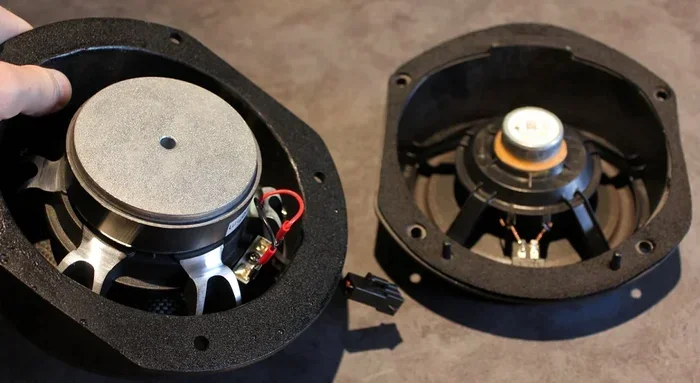
The main components include the cone, the voice coil, the magnet, and the surround. The cone pushes air to create sound waves. The voice coil is a coil of wire that sits inside the magnetic field created by the magnet. When electrical current flows through the voice coil, it creates a magnetic field that interacts with the permanent magnet. This interaction moves the cone back and forth, producing sound.
Understanding this basic mechanism is essential. It helps you see why the magnet is so important. The magnet creates the stationary magnetic field that the voice coil pushes against. Without a strong magnetic field, the voice coil cannot move the cone efficiently. This is where the question of magnet strength becomes critical.
The Role Of Magnets In Sound Production
The magnet sits at the heart of every speaker driver. It creates a stable and powerful magnetic field in the gap where the voice coil sits. The stronger this field, the more control the speaker has over the movement of the voice coil and cone.
Think of it like a tug-of-war. The magnet pulls one way, and the electrical signal in the voice coil pulls the other way. A stronger magnet gives you more pulling power. This means the speaker can respond more accurately to the electrical signal. The result is cleaner, more precise sound reproduction.
Magnet strength is measured in units called gauss or tesla. Higher numbers mean a stronger magnetic field. In the audio world, you will often hear terms like magnetic flux density and magnetic field strength. These refer to the same concept. The stronger the field, the better the speaker can reproduce the original audio signal.
Does A Stronger Magnet Make A Better Speaker?
Understanding Magnetic Field Strength
Now we get to the core question. Does a stronger magnet make a better speaker? The answer is yes, but with conditions. A stronger magnet speaker generally offers several measurable advantages. Let us break them down so you can see exactly what changes.
First, a stronger magnet improves speaker efficiency. Efficiency means how much sound you get for each watt of power input. A speaker with a powerful magnet converts more electrical energy into acoustic energy. You get louder, clearer sound without needing to crank up the volume. This is especially noticeable in portable speakers and car audio systems.
Second, stronger magnets reduce distortion. When the magnetic field is weak, the voice coil can move outside the optimal range. This causes the cone to behave erratically. The result is fuzzy, distorted sound, especially at high volumes. A strong magnet keeps the voice coil centered and controlled. This leads to cleaner sound even at high volumes.
Third, stronger magnets improve transient response. Transients are the quick attack and decay of sounds, like the snap of a snare drum or the pluck of a guitar string. A powerful magnet allows the cone to start and stop more quickly. This makes music feel more dynamic and alive.
How Magnet Size Affects Speaker Performance
Magnet size and magnet strength are related but not the same thing. A larger magnet often contains more magnetic material, which can produce a stronger field. However, the type of magnetic material matters just as much as the size.
A small neodymium magnet can outperform a large ferrite magnet easily. Neodymium magnets are incredibly dense in magnetic energy. They pack a lot of power into a small space. This is why modern headphones and high-end speakers often use tiny but powerful neodymium magnets.
On the other hand, ferrite magnets are larger and heavier. They are less powerful per unit of volume but are much cheaper to manufacture. Many affordable speakers use ferrite magnets because they keep costs down. The trade-off is that you need a bigger magnet to achieve the same field strength as a smaller neodymium magnet.
When evaluating a stronger magnet speaker, do not just look at size. Look at the material and the magnetic field specification. These give you a much better picture of actual performance.
Neodymium vs. Ferrite Magnets: A Head-to-Head Comparison
What Are Neodymium Magnets?
Neodymium magnets are the strongest permanent magnets available today. They are made from an alloy of neodymium, iron, and boron. These magnets are incredibly powerful for their size. They are also known as NIB magnets or rare-earth magnets.
In the audio world, neodymium magnets have revolutionized speaker design. They allow manufacturers to build compact speakers that deliver powerful sound. Headphones, earbuds, and portable Bluetooth speakers almost all use neodymium magnets now. The reason is simple: they offer the best performance-to-size ratio available.
Neodymium magnets also have excellent temperature stability. They maintain their magnetic strength across a wide range of temperatures. This makes them ideal for speakers that will be used in different environments, from cold cars to hot outdoor settings.
What Are Ferrite Magnets?
Ferrite magnets are the older, more traditional choice. They are made from ceramic compounds of iron oxide and barium or strontium carbonate. They are cheaper to produce and widely available. Many budget-friendly speakers still rely on ferrite magnets.
The main advantage of ferrite magnets is cost. They are much less expensive than neodymium magnets. This makes them popular for mass-market speakers where price is a major factor. They are also resistant to demagnetization over time, which is a nice bonus.
The downside is size and weight. Ferrite magnets are bulkier and heavier for the same magnetic strength. This is why older speakers and budget models tend to be larger and heavier than their modern counterparts. If you want a stronger magnet speaker with ferrite, you need a much bigger magnet.
Comparison Table
| Feature | Neodymium Magnets | Ferrite Magnets |
|---|---|---|
| Magnetic Strength | Very High | Moderate |
| Size For Equivalent Strength | Small | Large |
| Cost | Higher | Lower |
| Weight | Light | Heavy |
| Temperature Stability | Excellent | Good |
| Common Use In Speakers | High-end, portable, headphones | Budget, large floor-standing |
| Durability | Good (can chip) | Very Good |
Does Bigger Magnet Mean More Bass?
The Truth About Bass Response And Magnet Strength
One of the most common beliefs is that a stronger magnet equals more bass. There is some truth to this, but it is not the whole picture. Let us look at how magnets affect bass response specifically.
Bass frequencies require the speaker cone to move a lot of air. This means the cone has to travel back and forth over a large distance. A strong magnet gives the voice coil more control over this movement. The result is tighter, more controlled bass. Instead of muddy, boomy low-end, you get punchy, well-defined bass.
However, bass quality also depends heavily on speaker size, cone material, and enclosure design. A large speaker with a weak magnet can still produce decent bass, but it will lack control. A small speaker with a powerful magnet can produce tight bass but may not move enough air for deep, room-filling low frequencies.
If you love bass-heavy music like hip-hop or electronic dance music, a stronger magnet speaker can definitely help. But pair it with the right cone material and enclosure design for the best results. Subwoofers, for example, always benefit from powerful magnets because they need precise control over large cone movements.
Speaker Sensitivity And Magnet Strength
Speaker sensitivity is a spec you should pay attention to. It measures how effectively a speaker converts power into sound. It is expressed in decibels (dB) per watt per meter.
Speakers with stronger magnets generally have higher sensitivity ratings. This means they get louder with less power. If you are using a small amplifier or driving speakers from a phone, high sensitivity is a big advantage.
For example, a speaker with 90 dB sensitivity and a strong magnet will sound noticeably louder than a 85 dB speaker with the same power input. The stronger magnetic field simply moves the cone more efficiently. This is one of the clearest benefits of a stronger magnet speaker in everyday use.
Common Myths About Speaker Magnets
Myth 1: Bigger Magnets Always Mean Louder Sound
This is one of the biggest misconceptions in the audio world. A bigger magnet does not automatically mean louder sound. It depends on the magnetic material, the design of the magnetic circuit, and how well the magnet is integrated into the speaker assembly.
A well-designed speaker with a smaller but high-quality neodymium magnet can easily outperform a poorly designed speaker with a massive ferrite magnet. The engineering behind the magnetic circuit matters just as much as the magnet itself. Speaker designers carefully shape the pole pieces and gap to maximize the magnetic field where it counts most.
Myth 2: Magnet Quality Does Not Matter
Some people believe that all magnets are basically the same. This is far from the truth. The grade of a neodymium magnet, for instance, varies significantly. Grades like N52 are stronger than N42. The difference in magnetic energy is substantial and directly affects speaker performance.
Cheap magnets with lower grades produce weaker fields. They also degrade faster over time, especially in hot environments. When you invest in a stronger magnet speaker, you are investing in better-grade magnetic material that lasts longer and performs better.
Myth 3: Magnet Strength Has No Effect On Sound Quality
We have already covered this, but it is worth repeating. Magnet strength directly affects speaker efficiency, distortion levels, and transient response. These are all measurable aspects of sound quality. Dismissing the role of magnets ignores fundamental speaker physics.
That said, magnet strength is not the only factor. It works alongside other design elements to produce the final sound. Think of it as one important ingredient in a recipe, not the entire dish.
How To Choose The Right Speaker For Your Needs
Matching Magnet Strength To Your Listening Needs
Choosing the right speaker means considering how you will use it. Different listening situations call for different speaker characteristics. Here is a simple guide to help you decide.
For home listening and stereo systems, look for speakers with neodymium magnets and high sensitivity ratings. These will deliver clean, detailed sound even at lower volumes. They are efficient and responsive, making them ideal for casual listening and critical music appreciation.
For car audio, a stronger magnet speaker is especially important. Car environments are noisy, and you need speakers that can produce clear sound at higher volumes without distortion. Car speakers with neodymium magnets handle this challenge well. They also save space in tight vehicle installations.
For portable Bluetooth speakers, size is at a premium. Neodymium magnets allow manufacturers to build compact speakers that still deliver impressive sound. Look for brands that use high-grade neodymium magnets. This ensures you get the best sound from a small package.
For studio monitoring and professional audio, magnet quality is non-negotiable. Studio speakers need to reproduce sound with absolute accuracy. They use premium neodymium magnets and carefully engineered magnetic circuits to achieve flat frequency response and minimal distortion.
Quick Tips For Evaluating Speaker Magnets
- Check the magnet material: Neodymium is almost always better for audio performance than ferrite.
- Look for sensitivity ratings: Higher dB numbers mean more efficient sound production.
- Feel the weight: A speaker with a strong neodymium magnet will be surprisingly light for its size.
- Read reviews: Real-world listening tests reveal more about sound quality than specs alone.
- Consider the enclosure: Even the best magnet cannot compensate for poor cabinet design.
Key Takeaways
- Stronger magnets improve speaker efficiency: They convert more electrical power into clear sound.
- Neodymium magnets are the gold standard: They deliver the best performance in the smallest package.
- Magnet strength affects bass control and distortion: Stronger fields keep the voice coil centered and responsive.
- Size alone does not determine performance: Material quality and design matter just as much.
- Match your speaker to your use case: Home, car, portable, and studio speakers all have different magnet requirements.
- A stronger magnet speaker is not a magic fix: It works best when combined with good overall speaker design.
Conclusion
So, does a stronger magnet make a better speaker? The evidence clearly points to yes. A stronger magnet speaker offers better efficiency, lower distortion, improved transient response, and tighter bass control. These are all measurable improvements that you can hear and feel when listening to music.
However, magnet strength is not the only factor. Speaker design, cone material, enclosure engineering, and crossover quality all contribute to the final sound. A great speaker combines a powerful magnet with smart design choices that work together in harmony.
If you are shopping for new speakers, pay attention to the magnet type and strength. Choose neodymium magnets whenever possible, especially if you want compact, high-performance audio. And remember that a stronger magnet speaker is one piece of a larger puzzle. The best speaker is the one that balances all its components to deliver the sound you love.
Take what you have learned here and apply it to your next speaker purchase. Your ears will thank you.
Frequently Asked Questions
Can a stronger magnet damage your hearing?
No, the magnetic field from a speaker magnet does not affect your hearing. Sound waves are what reach your ears, not the magnetic field. A stronger magnet speaker may produce louder sound, but that is controlled by volume levels, not the magnet itself. Always listen at safe volumes regardless of magnet strength.
Do wireless speakers use stronger magnets than wired speakers?
Not necessarily. Wireless speakers often use neodymium magnets because they need to be compact and efficient. Wired speakers can use any magnet type depending on the design and price point. The wireless or wired connection has no direct impact on magnet strength.
Are expensive speakers always built with stronger magnets?
Most high-end speakers do use premium neodymium magnets, but price also reflects cabinet quality, crossover design, and brand value. A higher price does not always mean a stronger magnet. Check the specifications if magnet strength is important to you.
Can you upgrade the magnet in an existing speaker?
In theory, yes, but it is rarely practical. Speaker magnets are integrated into the driver assembly. Replacing a magnet requires specialized tools and knowledge. It is usually more cost-effective to buy a new speaker with a stronger magnet built in.
Do speaker magnets weaken over time?
All permanent magnets lose a tiny amount of strength over very long periods. Neodymium magnets can also degrade if exposed to high heat or moisture. Under normal conditions, a quality speaker magnet will last the lifetime of the speaker without noticeable loss of strength.
What is the strongest magnet used in speakers today?
Neodymium magnets are the strongest magnets used in speakers. The highest grades, like N52, offer the most magnetic energy. These are found in premium headphones, high-end studio monitors, and professional audio equipment where maximum performance in minimum size is essential.