Do I Need An Amp For Kicker Speakers And Subwoofers
Whether you need an amp for your Kicker speakers depends on the speaker type, power handling, and your audio goals. Many Kicker speakers work fine with a factory head unit, but adding an external amplifier unlocks deeper bass, cleaner highs, and overall better sound quality. This guide breaks down exactly when an amp is necessary and when you can skip it.
You just bought a set of Kicker speakers or a Kicker subwoofer. You are excited to hear what they can do. Then you start wondering, “Do I need an amp for Kicker speakers?” It is one of the most common questions car audio enthusiasts ask. And the answer is not as simple as yes or no.
The truth is, it depends on several factors. What kind of Kicker speaker you have matters. Where you plan to install it matters. And what kind of sound quality you want matters most of all. Some Kicker speakers can run perfectly fine off a factory head unit. Others will sound weak and distorted without a proper external amplifier. This guide will walk you through everything you need to know so you can make the right decision for your setup.
We will cover how Kicker speakers work, when you need an amp, when you do not, and how to choose the right amplifier if you do need one. By the end, you will feel confident about your car audio choices. Let us dive in.
Key Takeaways
- Not all Kicker speakers need an amp: Some models work well with a factory head unit, especially if you are not chasing audiophile-level sound.
- Subwoofers almost always need a dedicated amp: Kicker subwoofers demand significant power that a stock stereo simply cannot deliver.
- Check your speaker’s RMS rating: Matching the amplifier’s power output to the speaker’s RMS wattage prevents damage and distortion.
- Factory head units have limited power: Most stock stereos produce around 15 to 20 watts per channel, which is often not enough for quality audio.
- An amp improves every part of your audio system: Even bookshelf speakers and component sets benefit from cleaner, more consistent power.
- Consider your listening environment: Car cabin size, speaker placement, and noise levels all affect how much power you actually need.
- Avoid common mistakes like impedance mismatches: These can damage both your amp and your speakers.
📑 Table of Contents
- Understanding Kicker Speakers And How They Work
- Built-In Amplifiers vs External Amplifiers
- When You Definitely Need an Amp for Kicker Speakers
- When You Might Not Need an Amp for Kicker Speakers
- How to Choose the Right Amp for Your Kicker Setup
- Common Mistakes People Make With Kicker Speakers and Amps
- Expert Tips for Getting the Most From Your Kicker System
- Conclusion
Understanding Kicker Speakers And How They Work
Kicker is one of the most trusted names in car audio. They make everything from coaxial speakers to powered subwoofers and component sets. But before you decide on amplification, it helps to understand what makes these speakers tick.
What Makes Kicker Speakers Different
Kicker designs their speakers with specific features that affect how they perform. Things like speaker sensitivity, RMS power handling, and impedance all play a role. Sensitivity tells you how efficiently a speaker converts power into sound. Higher sensitivity means the speaker gets louder with less power. This is important because it directly affects whether you need an external amp.
Most Kicker speakers have sensitivity ratings between 88 and 93 dB. That is pretty good for a car speaker. But here is the catch. A higher sensitivity rating does not mean you can skip the amp entirely. It just means the speaker is more efficient. You still need enough clean power to really bring out the best in any speaker.
Passive vs Powered Kicker Speakers
Kicker makes both passive and powered speakers. Passive speakers do not have a built-in amplifier. They rely entirely on an external source for power. This includes your head unit or a separate car audio amplifier.
Powered speakers have an amplifier built right into the enclosure. A great example is the Kicker CompRT series. These subwoofers come with their own amp already installed. You wire them directly to your battery and they work out of the box. If you buy a powered Kicker product, you do not need a separate amp. Period.
This distinction is the single biggest factor in answering the question, “Do I need an amp for Kicker speakers?” If your speaker is passive, you likely need some form of amplification. If it is powered, you are already set.
Built-In Amplifiers vs External Amplifiers
When we talk about amplification in car audio, there are two main paths. You can use a built-in amp or add an external one. Both have pros and cons. Let us break them down.
What Does a Built-In Amplifier Do?
A built-in amplifier is an amp that comes inside the speaker or subwoofer itself. You will find these in powered subwoofers and some all-in-one speaker systems. The advantage is simple. Everything is contained in one unit. You do not need to buy a separate amp, wire it in, or worry about matching impedance.
Kicker’s CompRT and Solo-Baric L7S lines include models with built-in amplification. These are great for people who want a straightforward upgrade without a lot of extra work. You get solid bass and decent overall sound without dealing with extra equipment.
What Does an External Amplifier Do?
An external amplifier is a separate unit you install in your car. It takes the audio signal from your head unit and boosts it before sending it to your speakers. External amps come in different types. You have stereo amplifiers for a pair of speakers. You have mono amplifiers designed specifically for subwoofers. And you have multi-channel amps that can power a full system.
The big advantage of an external amp is power. A dedicated amplifier can deliver clean, consistent power that a factory head unit simply cannot match. This means better bass response, clearer vocals, and less distortion at higher volumes. If you are serious about car audio, an external amp is almost always the way to go.
When You Definitely Need an Amp for Kicker Speakers
There are clear situations where adding an amplifier is not just nice to have. It is essential. Let us look at when an amp becomes a must.
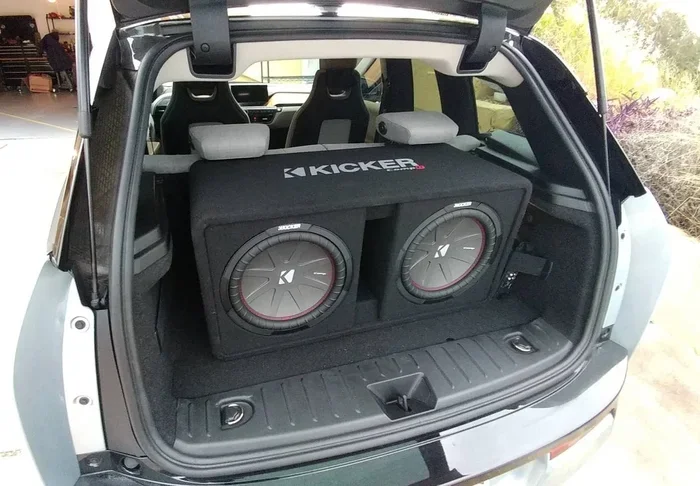
You Have a Kicker Subwoofer
If you are installing a Kicker subwoofer, you almost certainly need an amp. Subwoofers need a lot of power to move air and produce deep bass. A factory head unit typically puts out around 15 to 20 watts per channel. That is nowhere near enough to drive a subwoofer properly.
Without an amp, your subwoofer will sound weak and muddy. You will hear distortion at higher volumes. And you risk damaging the speaker over time. A dedicated mono amplifier is the best match for a Kicker subwoofer. Brands like Kicker themselves make excellent mono amps designed specifically for their subwoofer lineup.
You Want Audiophile-Level Sound Quality
Even if you are not running a subwoofer, an amp makes a huge difference in overall sound quality. Factory head units use cheap digital-to-analog converters and low-quality preamp outputs. The result is a flat, lifeless sound. An external amp provides a clean audio signal that brings out the detail and nuance in your music.
If you listen to a wide range of genres, from jazz to metal, an amp will make every genre sound better. Instruments will sound more defined. Vocals will be clearer. The stereo image will feel wider and more immersive. For many car audio enthusiasts, this alone is worth the investment.
Your Factory Head Unit Is Clipping
Clipping is a term used when your head unit is being pushed beyond its limits. It happens when you turn the volume up past what the factory stereo can handle. You will hear a harsh, distorted sound. Over time, clipping can actually damage your speakers.
If you notice your factory head unit distorting at moderate volumes, that is a clear sign you need an amplifier. A good amp takes the load off your head unit and delivers clean power to your speakers. This protects your equipment and improves your listening experience.
You Are Running Component Kicker Speakers
Kicker’s component speaker sets, like the Kicker KS Series, include separate tweeters and woofers. These are designed for high-performance audio. They usually have higher power handling ratings than coaxial speakers. That means they need more power to reach their full potential.
A factory head unit will not deliver enough clean power to properly drive component speakers. You will be leaving a lot of performance on the table. A stereo amplifier paired with a crossover network ensures each speaker driver gets the right amount of power at the right frequencies.
When You Might Not Need an Amp for Kicker Speakers
Now for the flip side. There are situations where you can get by without adding an amplifier. Let us explore those.
You Have a Kicker Powered Speaker or Subwoofer
As we mentioned earlier, powered Kicker products come with a built-in amp. The Kicker CompRT subwoofer is a perfect example. It includes everything you need in one box. You just wire it up and you are good to go. In these cases, a separate amplifier is unnecessary.
That said, some people still choose to add an amp even with powered speakers. They want more bass or louder volumes. But for most everyday listening situations, the built-in amp is more than enough.
You Are Happy With Stock Sound Quality
Let us be honest. Not everyone is an audio purist. If you just want your music to sound a little better than the factory stereo, a basic set of Kicker coaxial speakers wired to your head unit might be all you need. You will notice an improvement in clarity and volume over stock speakers.
This is especially true if your factory head unit has a decent preamp output or if you keep the volume at moderate levels. You will not get earth-shaking bass or concert-quality highs. But for casual listening on your daily commute, it works just fine.
You Have a Small Vehicle With Limited Space
Sometimes the constraints of your vehicle play a role. If you drive a compact car or truck with very limited space under the seats or in the trunk, fitting a full amplifier setup can be difficult. In these cases, you might choose to run Kicker speakers without an amp and still enjoy a meaningful upgrade over stock audio.
How to Choose the Right Amp for Your Kicker Setup
If you have decided you need an amplifier, the next step is choosing the right one. This is where many people get confused. There are so many options out there. Let us simplify it.
Match the Amp Power to Your Speaker RMS Rating
The most important rule in amplifier matching is this. Your amp’s power output should match your speaker’s RMS rating. RMS stands for Root Mean Square. It is the continuous power a speaker can handle without damage.
For example, if your Kicker speaker has an RMS rating of 75 watts, you want an amp that delivers around 75 watts per channel. Do not go too far over. Too much power can blow your speakers just as easily as too little power can distort them.
Choose the Right Amp Type
There are three main types of amplifiers you should know about. A stereo amplifier powers a pair of speakers. It is the most common type for front or rear speaker upgrades. A mono amplifier is built for subwoofers. It delivers all its power to a single channel, which is perfect for driving a subwoofer or a pair of subs.
A multi-channel amplifier can power both speakers and subwoofers from one unit. This is a great option if you want to run a full system without buying multiple amps. Brands like Kicker, Rockford Fosgate, and JL Audio all make excellent multi-channel options.
Consider Amplifier Class
Amplifiers come in different classes, and each has its own strengths. Class D amplifiers are the most popular for car audio. They are compact, efficient, and run cool. Class A and Class AB amplifiers offer excellent sound quality but tend to be larger and generate more heat.
For most Kicker speaker setups, a Class D amp is the best choice. It gives you great performance in a small package. If you are a hardcore audiophile and sound quality is your top priority, a Class AB amp might be worth the extra size and heat.
Check the Impedance Rating
Speaker impedance is measured in ohms and is a critical factor. Most Kicker speakers are 4-ohm or 2-ohm. Your amplifier must be compatible with your speaker’s impedance. Running a 2-ohm speaker on an amp not rated for 2 ohms can cause the amp to overheat and fail.
Always check both the speaker and amplifier impedance ratings before making a purchase. This small step can save you from expensive mistakes.
Common Mistakes People Make With Kicker Speakers and Amps
Even experienced car audio enthusiasts make mistakes. Here are the most common ones to avoid when setting up your Kicker system.
Mistake 1: Ignoring the RMS rating. People often look at the peak power number instead of the RMS. Peak power is a marketing number. RMS is the real-world continuous power. Always match based on RMS.
Mistake 2: Using too thin speaker wire. The wire connecting your amp to your speakers matters. Thin wire creates resistance and loses power. Use the correct gauge wire for your setup. A general rule is 12-gauge for short runs and 8-gauge for longer runs.
Mistake 3: Skipping the fuse. Every amplifier needs a fuse as close to the battery as possible. Without a fuse, a short circuit can cause a fire. This is non-negotiable.
Mistake 4: Not using a remote turn-on wire. If you do not connect the remote turn-on wire from your head unit to your amp, the amp will stay on all the time. This drains your car battery.
Mistake 5: Overpowering your speakers. More power is not always better. If your amp delivers more power than your speakers can handle, you will blow the speakers. Match power levels carefully.
Expert Tips for Getting the Most From Your Kicker System
You have your Kicker speakers and your amplifier. Now what? Here are some expert tips to help you get the best possible sound.
Tune your subwoofer properly. If you have a Kicker subwoofer, take the time to adjust the crossover frequency, phase, and gain settings. These small adjustments make a massive difference in how your system sounds.
Use a quality head unit. Even with a great amplifier, a cheap head unit will hold you back. Look for a head unit with clean preamp outputs and a good digital-to-analog converter.
Seal your subwoofer enclosure properly. The enclosure design affects bass performance more than most people realize. Make sure your box is airtight and built to the recommended specifications for your specific Kicker subwoofer model.
Keep your wiring neat and organized. Clean wiring not only looks better but also reduces the chance of electrical interference. Route power wires away from audio signal cables to avoid noise and static.
Break in your speakers. New speakers sound slightly different after the first few hours of use. The suspension loosens up and the speaker moves more freely. Give your Kicker speakers a few hours of moderate-level playing time before you judge their full potential.
Conclusion
So, do you need an amp for Kicker speakers? The short answer is: it depends. If you have a powered Kicker product, you are already covered. If you have a passive Kicker subwoofer, you absolutely need an amp. And if you want the best possible sound quality from any Kicker speaker, an external amplifier is the way to go.
The key is understanding your specific setup. Check your speaker’s RMS rating, match it with the right amplifier, and pay attention to impedance and wiring. Do not skip the basics like fuses and proper wire gauges. These small details make a huge difference in both performance and safety.
Car audio is a journey. Whether you are just starting out or upgrading an existing system, the right amplifier can transform your listening experience. Kicker makes some of the best speakers and subwoofers on the market. Pair them with the right amp, and you will wonder how you ever settled for stock sound. Take your time, do your research, and enjoy the ride.
Frequently Asked Questions
Can I run Kicker speakers without an amplifier?
Yes, you can run passive Kicker speakers without an amp if your factory head unit provides enough power. However, the sound quality will be limited compared to using a dedicated amplifier. You may notice distortion at higher volumes and a lack of bass response.
What size amp do I need for Kicker speakers?
The amp size depends on your speaker’s RMS power handling rating. As a general rule, choose an amplifier that delivers power close to the speaker’s RMS rating. For example, a Kicker speaker rated at 75 watts RMS works best with an amp that outputs around 75 watts per channel.
Do Kicker powered subwoofers need a separate amp?
No, Kicker powered subwoofers have a built-in amplifier and do not need a separate amp. You simply wire them to your battery and head unit. These are great for people who want a simple, all-in-one bass solution.
Will an amp make my Kicker speakers sound better?
Yes, in most cases an amp will significantly improve the sound quality of your Kicker speakers. It provides cleaner power, reduces distortion, and allows your speakers to reproduce music with more detail and dynamics. The difference is especially noticeable at higher volumes.
What happens if I use too much power with my Kicker speakers?
Using too much power can blow your speakers. This usually happens when the amplifier delivers more wattage than the speaker can handle continuously. Always match the amp’s power output to the speaker’s RMS rating to avoid damage.
Is a mono amp or stereo amp better for Kicker speakers?
A stereo amp is best for powering a pair of Kicker speakers. A mono amp is designed specifically for subwoofers. If you are running a full system with both speakers and a subwoofer, consider a multi-channel amplifier that can handle both.