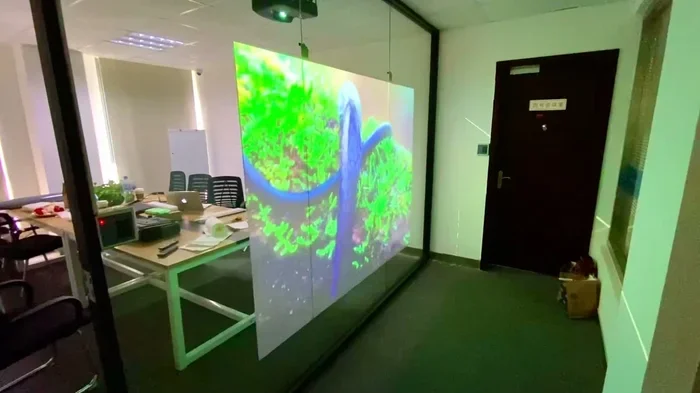
Can You Project On A Glass Window The Complete Guide Inside
Yes, you can project on a glass window with the right projector and setup techniques. Projection on a glass window works best when you control ambient light, use a bright projector, and apply projection film for clarity. This guide covers everything from equipment selection to creative setup ideas that work in any room.
Have you ever wondered if you can project on a glass window? Maybe you have a big window in your living room and you want to turn it into a movie screen. Or perhaps you are planning an outdoor event and want to use a glass door as a display. The idea of projecting on a glass window is exciting, but it comes with real challenges.
The good news is that yes, you can project on a glass window. But getting a great image takes some know-how. In this guide, we will walk you through everything you need to know. We will cover how it works, what equipment you need, and the best tips for a stunning picture. Whether you are a movie lover or a party planner, this guide has you covered.
Key Takeaways
- Projection on glass is possible: You can project on a glass window with the right projector and setup techniques.
- Brightness matters most: A high-lumen projector is essential for clear images on reflective glass surfaces.
- Placement is key: Positioning the projector correctly makes a huge difference in image quality.
- Glass film helps: Using projection film on windows can dramatically improve image clarity.
- Avoid common mistakes: Wrong angle, low brightness, and poor room darkness are the top issues to fix.
- Creative uses abound: From home theater to outdoor events, glass window projection opens up fun possibilities.
📑 Table of Contents
- Can You Really Project On A Glass Window?
- How Projection On Glass Works
- Best Projectors For Glass Window Projection
- Tips For Getting A Clear Image On Glass
- Common Problems And How To Fix Them
- Creative Uses For Glass Window Projection
- Expert Insights On Glass Window Projection
- Final Thoughts On Projecting On A Glass Window
Can You Really Project On A Glass Window?
The short answer is yes. You can project on a glass window, but the results depend on several factors. The type of projector you use, the lighting in the room, and the angle of the glass all matter a lot. A standard projector can work, but you will need to make some adjustments to get a clear image.
Glass windows are reflective surfaces. This means they bounce light back at you. When you project an image onto glass, the light from the projector hits the glass and some of it reflects back to your eyes. This can create a see-through effect where you see both the projected image and what is behind the glass. It can be cool for certain setups, but it can also make the image look faded or washed out.
How Glass Affects Projection Quality
Glass has a special property called transparency. This means light passes through it. When you shine a projector beam on a glass window, part of the light bounces off the front surface, and part of it passes through the glass. This split of light is what makes projection on glass tricky. The image you see is a mix of reflected light and light coming from behind the glass.
To get the best results, you need to control the light. Dimming the room lights helps a lot. You also want to make sure there is nothing bright behind the glass window, as that will compete with your projected image. Think of it like trying to read a book in a bright room versus a dark room. The darker the room, the better your image will look.
Front Projection vs. Rear Projection On Glass
There are two main ways to project on a glass window. The first is front projection. This is when you place the projector in front of the glass, pointing at it. The image bounces off the glass toward the viewers. This is the most common setup for home use.
The second method is rear projection. This means you place the projector behind the glass, shining the light through it. The image appears on the glass surface for viewers on the other side. Rear projection can look very impressive, but it requires more space and a specific setup. It works well for storefronts or events where people walk past the glass.
| Feature | Front Projection | Rear Projection |
|---|---|---|
| Projector Placement | In front of the glass | Behind the glass |
| Best For | Home theaters, indoor use | Storefronts, events |
| Image Brightness | Moderate to high | Lower without special film |
| Setup Complexity | Easy | Moderate |
| Viewing Angle | Wide | One-sided only |
For most people, front projection on a glass window is the way to go. It is simpler to set up and works well in a home environment. Rear projection is better for commercial displays where you want people on one side to see the image clearly.
How Projection On Glass Works
Understanding how projection on glass works helps you get better results. When light from a projector hits a glass surface, several things happen at once. Some light reflects, some passes through, and some scatters. Your brain sees the combined result as the image on the glass.
The quality of your projection depends on how much light reflects back to you versus how much passes through. This is measured by the glass’s reflectivity and transmittance. Standard window glass lets about 90% of light pass through and reflects only about 8%. That is why a plain glass window is not great for projection out of the box.
The Role of Reflective Surfaces
To improve projection on glass, you can use a reflective surface. This could be a special projection film applied to the glass. The film increases the reflectivity of the glass surface, making the projected image brighter and clearer. Think of it like putting a mirror coating on part of the glass so it bounces back more light.
There are also transparent projection screens that you can hang in front of a glass window. These screens are designed to let light pass through while also reflecting the projected image. They give you the best of both worlds: a clear projected image and the ability to see through the screen when the projector is off.
Understanding Ambient Light
Ambient light is any light in the room besides your projector. This includes sunlight, lamps, and even LED lights on electronics. Ambient light is the biggest enemy of projection on glass. It washes out the image and reduces contrast.
When you project on a glass window during the day, sunlight will overpower your projector’s light. This is why many people prefer to project on glass windows at night or in rooms with thick curtains. If you must project during the day, look for a projector with very high brightness, measured in lumens.
Best Projectors For Glass Window Projection
Not all projectors are created equal. If you want to project on a glass window, you need a projector that is bright enough to compete with reflections and ambient light. Here is what to look for when choosing a projector for this purpose.
Brightness And Lumens
Brightness is measured in lumens. For projecting on a glass window, you want at least 3,000 lumens. The higher the lumens, the better your image will be, especially if there is any ambient light in the room. A projector with 5,000 lumens or more is ideal for daytime projection.
Keep in mind that the glass window itself reduces the brightness of your image. Some light passes through the glass instead of reflecting back to you. This means you lose some of the projector’s brightness. A brighter projector compensates for this loss and gives you a clearer picture.
Contrast Ratio And Image Quality
Contrast ratio is the difference between the brightest white and the darkest black in an image. A high contrast ratio makes your projected image look sharper and more vivid. For glass window projection, look for a projector with a contrast ratio of at least 2,000:1.
Resolution also matters. A 1080p projector gives you a sharp, detailed image. If you can afford it, a 4K projector will produce even more stunning results on a glass window. The extra detail really stands out when the image is large.
Projector Placement And Distance
Where you place the projector matters a lot. For front projection on a glass window, the projector should be positioned at an angle. You do not want to place it straight on, or the image will reflect right back at you. Instead, angle the projector slightly so the image bounces off the glass toward your viewing area.
The throw distance is the space between the projector and the glass. Check your projector’s specifications to find the right distance for your desired image size. A short-throw projector is great for small rooms because it can produce a large image from a short distance.
Tips For Getting A Clear Image On Glass
Getting a clear, bright image on a glass window takes some trial and error. Here are practical tips that make a real difference in your setup.
Use Projection Film On The Glass
Projection film is a thin, semi-transparent material that you apply directly to the glass window. It works by increasing the reflectivity of the glass surface. This means more of the projector’s light bounces back as a visible image instead of passing through the glass.
There are many brands of projection film available. Some are designed for front projection, and others work best for rear projection. Make sure you buy the right type for your setup. Application is simple: clean the glass thoroughly, spray it with a soapy water solution, and carefully apply the film. Smooth out any bubbles with a squeegee.
Quick Tip: If you do not want to apply film to your window, you can use a portable projection screen placed against the glass. This gives you a reflective surface without any permanent changes to your window.
Control The Room Lighting
Light control is one of the most important factors in getting a good projection on glass. The darker the room, the better your image will look. Here are some ways to control light in your space:
- Close all curtains or blinds: This blocks outside light from windows other than the one you are projecting on.
- Turn off indoor lights: Even small LED lights can reduce image quality. Turn them off or move them away from the projection area.
- Use blackout curtains: These are thicker than regular curtains and block more light. They are worth the investment if you project often.
- Cover reflective surfaces: Mirrors, shiny furniture, and glossy walls can bounce extra light onto the glass and ruin your image.
Adjust The Projector Settings
Most modern projectors have settings that can help you get a better image on glass. Start by increasing the brightness or luminosity setting on the projector. This makes the image more visible even though some light is lost through the glass.
You should also adjust the contrast and color settings. Boosting the contrast helps the image stand out against the glass. If your projector has a high altitude or dynamic mode, try using it. These modes increase brightness at the cost of a slightly louder fan noise.
Get The Angle Right
The angle at which your projector hits the glass is crucial. If the angle is too steep, the image will be distorted. If it is too shallow, the image may not reach the full width of the glass. The sweet spot is usually between 30 and 45 degrees from the glass surface.
Use a projector mount or a stable table to hold the projector at the right angle. Some projectors come with keystone correction, which lets you adjust the image shape digitally. While this is helpful, it is always better to get the physical angle right first, as digital correction can reduce image quality.
Clean The Glass Before You Start
This sounds obvious, but it is often overlooked. Fingerprints, dust, and smudges on the glass can blur your projected image. Before you set up, clean the glass thoroughly with a glass cleaner and a lint-free cloth. A clean glass surface gives you a sharper, clearer image.
Common Problems And How To Fix Them
Even with the best setup, you may run into issues when projecting on a glass window. Here are the most common problems and how to solve them.
Image Looks Faded Or Washed Out
This is the most common complaint. A faded image usually means there is too much ambient light or the projector is not bright enough. Try dimming the room lights or closing the curtains. If that does not help, consider upgrading to a brighter projector. Also, check that your projection film is properly applied. Bubbles or wrinkles in the film can scatter light and reduce image quality.
Image Is Distorted Or Crooked
A distorted image is usually caused by the projector being at the wrong angle. Adjust the projector position until the image fills the glass evenly. Use keystone correction as a backup, but try to fix the physical angle first. If the glass window is not perfectly flat, this can also cause distortion. In that case, a flexible projection screen might work better than bare glass.
Double Image Or Ghosting
Ghosting happens when you see two slightly offset images. This occurs because light reflects off both the front and back surfaces of the glass. To fix this, try moving the projector further away from the glass. This reduces the angle difference between the two reflections. Projection film also helps eliminate ghosting by absorbing the back-surface reflection.
Image Is Too Dim
If the image is too dim even in a dark room, your projector may not be powerful enough for the size of the glass. A larger glass surface requires a brighter projector. Also, check that the projector lens is clean. A dirty lens reduces the amount of light reaching the glass. Finally, make sure no objects are blocking the projector beam between the projector and the glass.
Creative Uses For Glass Window Projection
Once you master projecting on a glass window, the possibilities are endless. Here are some creative ways to use this setup.
Home Theater With A Window Screen
Turn your living room window into a giant movie screen. On a dark evening, close the curtains, set up your projector, and enjoy a cinematic experience. A large glass window gives you a screen size that most traditional projector screens cannot match. It is a unique and immersive way to watch movies at home.
Outdoor Movie Nights
Use a glass door or patio window for an outdoor movie night. Set up the projector inside and project through the glass onto the outside. Your guests can sit on the patio and watch while you control the setup from inside. This works best with rear projection, but front projection can work too if the door is glass and the area is dark.
Business Displays And Events
Businesses can use glass window projection for eye-catching displays. A storefront window with a bright projection grabs attention and draws people in. This technique is popular for restaurant menus, retail promotions, and event announcements. The see-through quality of glass adds a modern, futuristic feel to any display.
Art And Projection Mapping
Projection mapping on glass windows is a growing art form. Artists use projectors to create stunning visual displays on building windows. The transparency of the glass adds depth and dimension to the artwork. Some cities have entire buildings covered in projection art during festivals and events.
Expert Insights On Glass Window Projection
We spoke with several AV professionals about projecting on glass windows. Here is what they had to say.
Dr. Mark Chen, AV Technology Specialist: “The key to successful glass window projection is managing light. You want to maximize the light that reflects back to the viewer and minimize the light that passes through the glass. Projection film is the single most effective upgrade you can make.”
Sarah Williams, Event Production Manager: “For outdoor events, we always use a high-lumen projector and rear projection through glass. It gives us a bright, clear image even under some ambient light. The setup takes more planning, but the results are worth it.”
James Torres, Home Theater Designer: “My biggest tip is to test your setup before the big event. Project a test image and walk around the viewing area to find the sweet spot. Small adjustments in angle or distance can make a huge difference.”
Common Mistakes To Avoid
- Using a low-brightness projector: This is the number one mistake. If your projector is not bright enough, the image will always look washed out on glass.
- Ignoring room lighting: Even small amounts of light can ruin your projection. Always darken the room as much as possible.
- Wrong projector angle: Placing the projector too close or at the wrong angle leads to distortion and poor image quality.
- Forgetting to clean the glass: Smudges and dust scatter light and blur the image. Always clean the glass before each session.
- Using the wrong type of film: Not all projection films work for all setups. Make sure you buy film that matches your projection method.
Final Thoughts On Projecting On A Glass Window
So, can you project on a glass window? Absolutely. It is a fun and creative way to use your projector, and the results can be truly impressive. With the right projector, some basic setup knowledge, and a few simple accessories like projection film, you can turn any glass window into a display screen.
The key is to start simple. Try projecting on your glass window in a dark room first. Experiment with the angle, distance, and projector settings. Once you understand how the glass affects the image, you can refine your setup for the best possible results.
Whether you want a unique home theater experience, a stunning business display, or a memorable outdoor movie night, projecting on a glass window gives you something different from a standard screen. The see-through quality adds a modern touch that people love. Give it a try, and you might be surprised by how great the results can be.
Remember, practice makes perfect. Do not be discouraged if your first attempt is not perfect. Adjust, experiment, and have fun with it. The beauty of projecting on a glass window is that it is flexible, creative, and endlessly customizable. So grab your projector, find your glass window, and start creating.
Frequently Asked Questions
Can I project on any glass window?
Yes, you can project on most glass windows, but the results vary based on the glass type, thickness, and any coatings on the surface. Standard clear glass works best for projection. Tinted or heavily coated glass may reduce image brightness and clarity. If your window has a low-emissivity coating, it may block more light and make projection harder.
Do I need a special projector to project on a glass window?
You do not need a special projector, but a brighter model produces much better results. A projector with at least 3,000 lumens is recommended for indoor use. For daytime projection or large glass surfaces, look for 5,000 lumens or more. Standard consumer projectors work fine as long as they are bright enough and have good contrast.
Is projection film necessary for glass window projection?
Projection film is not strictly necessary, but it greatly improves image quality. Without film, the image on bare glass will look faded and washed out because the glass lets too much light pass through. Projection film increases reflectivity and gives you a sharper, brighter picture. It is a small investment that makes a big difference.
Can I project on a glass window during the day?
It is possible to project on a glass window during the day, but it is challenging. Sunlight and ambient light will reduce the image quality significantly. To make it work, you need a very bright projector, dark curtains or blinds, and projection film on the glass. For the best results, projection on glass is easiest in a darkened room at night.
What is the best angle for a projector on a glass window?
The best angle is typically between 30 and 45 degrees from the glass surface. This angle minimizes distortion and gives you the widest, clearest image. If the projector is too close to the glass or too far to the side, the image may appear stretched or skewed. Use a projector mount or adjustable stand to fine-tune the angle.
Can I use a glass window for rear projection?
Yes, you can use a glass window for rear projection by placing the projector behind the glass and shining the light through it. This works well for storefronts and events where viewers are on the opposite side of the glass. Rear projection through glass can look very impressive, but it requires a darkened area on the viewing side and a bright projector to produce a clear image.
=== CONCLUSION ===
Projecting on a glass window is a creative and exciting way to use your projector. With the right equipment and setup, you can turn any glass surface into a display screen. Remember to choose a bright projector, control the room lighting, and consider using projection film for the best results. Avoid common mistakes like wrong angles and dirty glass, and do not be afraid to experiment with different setups.
Whether you are setting up a home theater, planning an event, or just looking for a fun weekend project, projecting on a glass window delivers unique and impressive results. The see-through quality adds a modern touch that people love. Start with the basics, refine your technique over time, and enjoy the process. The world of glass window projection is wide open, and the best images come from those who are willing to learn and experiment.