Can You Get a Portable Laptop Charger That Actually Works
Yes, you can get a portable laptop charger that actually works, and they have never been better. Modern portable laptop chargers use advanced technology like GaN and USB-C Power Delivery to deliver fast, reliable power wherever you are. This guide covers everything you need to know about choosing the right portable charging solution for your laptop.
Key Takeaways
- Portable laptop chargers are real and effective: Today’s portable chargers can deliver enough wattage to charge most laptops quickly and reliably.
- USB-C Power Delivery is the game-changer: PD technology allows portable power banks to charge laptops at speeds that rival wall outlets.
- Wattage matters most: You need a portable charger with at least 65W for most laptops, and 100W or more for gaming or performance models.
- Capacity determines how many charges you get: A 20,000mAh power bank can fully charge most laptops two to three times before needing a refill.
- Not all portable chargers are equal: Cheap, low-wattage options often fail to charge laptops at all or do so painfully slowly.
- GaN technology makes chargers smaller: Gallium Nitride chargers deliver the same power as traditional adapters but in a much more compact size.
- Matching your laptop’s charging requirements is critical: Always check your laptop’s wattage needs before buying a portable charger.
📑 Table of Contents
- Can You Get a Portable Laptop Charger That Actually Works?
- What Is a Portable Laptop Charger?
- How Portable Laptop Chargers Work
- Types of Portable Laptop Chargers You Can Buy
- What to Look for When Choosing a Portable Laptop Charger
- Common Mistakes People Make with Portable Laptop Chargers
- Expert Tips for Getting the Most from Your Portable Laptop Charger
- How Portable Laptop Chargers Compare: Quick Reference
- Conclusion
Can You Get a Portable Laptop Charger That Actually Works?
You are sitting in a coffee shop. Your laptop battery is blinking red. You have a deadline in two hours. You look around for an outlet. Nothing. This is a situation almost every laptop user has faced. The good news is that portable laptop chargers have come a long way. They are no longer the weak, unreliable gadgets they used to be. Today, you can get a portable laptop charger that genuinely keeps your laptop running.
But here is the catch. Not every portable charger on the market will work for your laptop. Some are too weak. Some are too bulky. Some promise the world but deliver almost nothing. That is why this guide exists. We are going to break down everything you need to know about portable charging solutions for laptops. From how they work to what to look for, you will walk away knowing exactly what to buy.
Whether you travel frequently, work remotely, or just want peace of mind during long days out, a good portable laptop charger can be a lifesaver. Let us dive in and find the one that works for you.
What Is a Portable Laptop Charger?
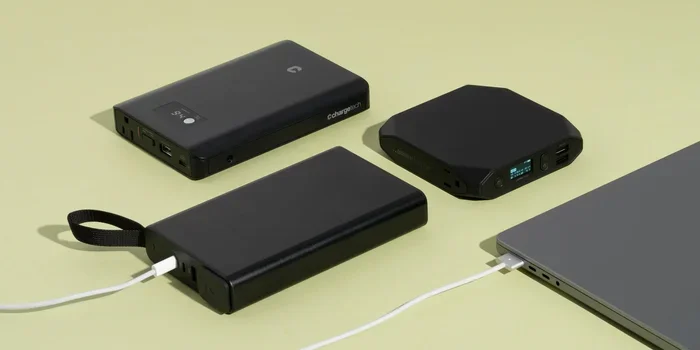
A portable laptop charger is a compact, battery-powered device designed to charge your laptop away from a wall outlet. Think of it as a giant, smarter version of the power bank you already use for your phone. Instead of plugging into the wall, it stores energy inside itself and releases it through USB-C or other ports to power your laptop.
These devices go by many names. You might hear people call them laptop power banks, portable power supplies, or travel chargers for laptops. They all mean roughly the same thing. A device that gives your laptop battery life when there is no outlet in sight.
What makes modern portable laptop chargers different from older models is speed. Early versions could barely trickle-charge a laptop. Today, the best fast-charging portable chargers can refill a laptop battery in under two hours. That is a massive leap forward.
Who Needs a Portable Laptop Charger?
You might be wondering if you really need one. Here are some situations where a portable laptop charger shines:
- Frequent travelers: Long flights, train rides, and airport layovers become productive when your laptop stays charged.
- Remote workers: Working from parks, cafes, or client sites means outlets are not always available.
- Students: Late-night study sessions in the library or lecture halls with limited seating near outlets.
- Outdoor enthusiasts: Camping trips or outdoor events where electricity is nonexistent.
- Professionals on the go: Sales teams, photographers, and creatives who spend full days away from a desk.
If any of these sound like you, a compact laptop charger is probably worth your investment.
How Portable Laptop Chargers Work
Understanding how a portable laptop charger works helps you make a smarter purchase. At its core, the device stores electrical energy in rechargeable cells, usually lithium-ion or lithium-polymer batteries. When you connect your laptop, the charger releases that stored energy through a cable.
But the real magic lies in the technology inside. Let us break it down.
USB-C Power Delivery (PD)
The most important feature in any modern portable laptop charger is USB-C Power Delivery, commonly called USB-C PD. This is a charging standard that allows USB-C ports to deliver much higher wattage than older USB standards.
USB 2.0 delivers about 2.5 watts. USB-C PD can deliver up to 240 watts as of the latest specification. This means it can handle everything from small phones to powerful gaming laptops. When shopping for a portable power bank for laptop use, always check if it supports USB-C PD. If it does not, it likely will not charge your laptop effectively.
GaN Technology
You may have heard of GaN chargers. GaN stands for Gallium Nitride. This is a material that allows chargers to be smaller and more efficient than traditional silicon-based adapters. A GaN portable charger delivers the same wattage as a larger, heavier charger but fits in your pocket.
GaN technology has made lightweight laptop chargers a real thing. Brands like Anker, Baseus, and Ugreen have released compact laptop chargers that weigh under a pound. That is a huge improvement over the brick-like adapters that came with older laptops.
Battery Capacity Explained
Portable chargers measure their capacity in milliampere-hours, or mAh. The higher the mAh, the more energy the charger stores. For phones, 10,000 mAh is plenty. For laptops, you need more.
Here is a quick guide:
- 10,000 mAh: Enough for one full charge of a small or medium laptop.
- 20,000 mAh: Typically delivers two to three full charges for most standard laptops.
- 27,000 mAh or higher: Can charge a large laptop three or more times. Great for long trips.
Keep in mind that actual charges vary based on your laptop’s battery size and how much charge it needs. A high-wattage portable charger with a large battery gives you the most flexibility.
Types of Portable Laptop Chargers You Can Buy
Not all portable laptop chargers are built the same. There are several distinct categories, each suited for different needs. Let us look at the main types.
1. Portable Power Banks with Laptop Charging
These are the most common type. They look like large phone power banks but have USB-C PD ports that deliver 65W, 100W, or even 140W. Brands like Anker, INIU, and Romoss make excellent laptop charging on the go power banks. They are versatile because they also charge your phone, tablet, and other devices.
2. Foldable or Compact Travel Chargers
These are plug-style chargers that fold or collapse for travel. They are not battery packs. Instead, they are smaller versions of your wall adapter. A travel charger for laptop like a GaN foldable charger can deliver 100W while fitting in a jacket pocket. These are ideal if you still have access to outlets but need something lighter than the stock charger.
3. Car Chargers for Laptops
If you spend time driving, a car charger for laptop can keep you powered. These plug into your car’s cigarette lighter or USB-C ports. Some are portable power banks that double as car chargers. They are great for road trips or delivery drivers.
4. Solar-Powered Portable Chargers
For the truly adventurous, solar-powered options exist. These use solar panels to recharge the internal battery. They are slow but can provide emergency power for laptop in remote locations where no outlet or car is available. Think camping, hiking, or emergency preparedness kits.
5. Multi-Port Charging Stations
Some portable laptop chargers come with multiple ports, including USB-A, USB-C, and even DC barrel plugs. These multi-port chargers let you charge your laptop, phone, and peripherals all at once. They are slightly bulkier but very practical for people with multiple devices.
What to Look for When Choosing a Portable Laptop Charger
Now that you know the types, let us talk about what actually matters when you buy one. Not everything on the product page is important. Focus on these factors.
Wattage Output
This is the single most important factor. Your laptop needs a certain amount of power to charge. Check your laptop charger label or manual for the wattage rating. Common ratings are:
- 45W: Ultrabooks and smaller laptops like MacBooks Air.
- 65W: Most standard laptops and 13-inch models.
- 100W: 15-inch laptops and some gaming laptops.
- 130W-140W: High-performance gaming laptops and 17-inch models.
If your portable laptop charger does not meet your laptop’s wattage requirement, it will either not charge it or charge it very slowly while the laptop is in use. Always match or exceed the wattage.
USB-C Power Delivery Support
As mentioned earlier, USB-C PD is essential for laptop charging. Make sure the charger explicitly states it supports PD. Some cheaper chargers use older USB-A ports or low-wattage USB-C that simply will not work. A fast-charging portable charger with PD 3.0 or newer is what you want.
Battery Capacity
Higher capacity means more charges. For most users, 20,000 mAh is a sweet spot. It is heavy enough to be a hassle on long walks but light enough to toss in a bag. If you want maximum runtime, go for 27,000 mAh or more. If portability is your top concern, 10,000 mAh might work for a single top-up charge.
Weight and Size
A portable laptop charger you will never carry is useless. Try to keep your charger under 1.5 pounds if you plan to carry it daily. Foldable GaN chargers are the lightest options. Power banks with large batteries will always be heavier, so balance capacity against portability.
Number and Type of Ports
More ports mean more devices can charge at once. Look for at least one USB-C PD port and one USB-A port. Some premium models offer wireless charging pads built in. A laptop charging station with multiple ports can replace several adapters entirely.
Safety Features
Reliable brands include overcharge protection, short-circuit protection, and temperature control. These features protect your laptop from damage. Never buy a cheap, unbranded charger without these safeguards. Your laptop is expensive. A safe portable power supply is worth the extra cost.
Common Mistakes People Make with Portable Laptop Chargers
Even smart buyers make mistakes. Here are some common pitfalls to avoid when shopping for a portable laptop charger.
1. Buying Based on Capacity Alone
Bigger mAh does not always mean better. A 30,000 mAh charger that only outputs 30W will not charge a 100W laptop effectively. You need both capacity and wattage. A high-wattage portable charger with moderate capacity will outperform a high-capacity low-wattage charger every time.
2. Ignoring Laptop-Specific Requirements
Every laptop has different charging needs. Some laptops require a specific voltage or proprietary charging protocol. Always check compatibility before buying. Not every USB-C charger works with every laptop, even if both use USB-C. Check the manufacturer’s specifications.
3. Choosing Cheap Unbranded Options
It is tempting to grab the cheapest compact laptop charger on Amazon. But unbranded chargers often lie about their wattage and capacity. They can also damage your laptop battery over time. Stick to reputable brands like Anker, Baseus, Ugreen, INIU, or your laptop manufacturer’s official accessories.
4. Forgetting to Recharge the Power Bank
A portable laptop charger is only useful if it has charge in it. Many people forget to top up their power bank. Make it a habit to recharge it after every use or overnight. A drained power bank is just a dead weight in your bag.
5. Overlooking Charging Speed
Some power banks charge slowly themselves. If it takes 8 hours to recharge your power bank, you will spend a lot of time tethered to a wall. Look for power banks that support fast input charging. Many modern models recharge to 50% in just 30 minutes with the right cable and adapter.
Expert Tips for Getting the Most from Your Portable Laptop Charger
Once you have the right portable laptop charger, how do you make it last longer and work better? Here are professional tips.
Charge Your Laptop First, Then the Power Bank
If your power bank can both charge a laptop and be recharged itself, prioritize charging your laptop first. This ensures your laptop gets the full power it needs without the power bank diverting energy to its own recharge cycle.
Use the Right Cable
A good cable matters. Cheap cables limit power delivery. Use a certified USB-C to USB-C cable rated for 60W or 100W. Thunderbolt 4 cables also work and support the highest speeds. A quality cable ensures your portable charging solution performs at its best.
Keep Your Power Bank Cool
Lithium batteries degrade faster in heat. Do not leave your power bank in direct sunlight or inside a hot car. Store it in a cool, dry place. This extends its lifespan significantly.
Do Not Let It Drain to Zero
Like all lithium batteries, the one inside your portable laptop charger lasts longer if you do not fully drain it. Try to recharge it when it drops to 20% or so. This simple habit can add hundreds of charge cycles to its life.
Pair It with a Good Laptop Battery Case
Some laptops work with external battery cases that attach to the bottom. While these are different from power banks, they can complement your laptop battery life strategy nicely. Using both a power bank and a battery case gives you maximum runtime anywhere.
How Portable Laptop Chargers Compare: Quick Reference
Here is a simple comparison of the main types discussed above. This table helps you quickly decide which option fits your needs.
- Portable Power Banks: Best for all-around use. High capacity, multiple ports, charges from any outlet.
- Foldable GaN Chargers: Best for travelers who still have outlet access. Extremely light and compact.
- Car Chargers: Best for drivers. Keeps you powered during commutes and road trips.
- Solar Chargers: Best for emergency and outdoor use. Slow but independent of any power grid.
- Multi-Port Charging Stations: Best for multi-device users. Charges laptop, phone, and accessories simultaneously.
Conclusion
So, can you get a portable laptop charger that actually works? Absolutely. The technology today makes it easier than ever to keep your laptop powered no matter where you are. Whether you choose a high-capacity power bank, a foldable GaN travel charger, or a multi-port charging station, the key is matching the charger to your laptop’s specific needs.
Focus on wattage, USB-C Power Delivery, battery capacity, and build quality. Avoid the trap of buying based on price alone. A reliable portable laptop charger is an investment in your productivity and peace of mind.
Take the time to choose wisely, and you will never find yourself staring at a blinking battery icon again. The perfect portable charging solution is out there. Go find it and stay powered up, wherever life takes you.
Frequently Asked Questions
Can any portable charger charge a laptop?
No, not every portable charger can charge a laptop. You need a charger that supports USB-C Power Delivery and outputs at least the wattage your laptop requires. A standard phone power bank with 10W or 18W output will not effectively charge most laptops. Always check the charger’s specifications and match them to your laptop’s charging needs before purchasing.
How many times can a portable power bank charge my laptop?
It depends on the power bank’s capacity and your laptop’s battery size. A 20,000 mAh power bank can typically charge a standard 15-inch laptop with a 50Wh battery about two to three times. Larger power banks with 27,000 mAh or more can deliver three or more full charges. The actual number varies based on usage, laptop model, and charging efficiency.
Are portable laptop chargers safe for my laptop battery?
Yes, portable laptop chargers from reputable brands are safe when used correctly. Look for chargers with built-in safety features like overcharge protection, short-circuit protection, and temperature control. Avoid cheap, unbranded chargers that may deliver unstable power. Using a certified portable laptop charger from a trusted brand protects your laptop battery from damage.
How long does it take to recharge a portable laptop power bank?
Recharge time depends on the power bank’s capacity and the charger used to refill it. A 10,000 mAh power bank typically takes 2 to 3 hours with a fast charger. A 20,000 mAh model may take 4 to 6 hours. Many modern power banks support fast input charging, which can cut these times roughly in half. Using a high-wattage wall adapter speeds up the process significantly.
Can I use a portable laptop charger while my laptop is plugged into a wall outlet?
Yes, most portable laptop chargers allow pass-through charging. This means you can plug the power bank into the wall and connect your laptop to the power bank at the same time. The power bank charges from the wall and simultaneously delivers power to your laptop. This is useful during outages or when you want to top up both devices at once.
What is the best portable laptop charger for travel?
The best travel charger for laptop depends on your needs. For maximum portability, a foldable GaN charger delivering 65W or 100W is ideal because it weighs under half a pound. For longer trips where outlets are scarce, a 20,000 mAh or 27,000 mAh USB-C PD power bank offers the best balance of capacity and portability. Top-rated brands include Anker, INIU, and Baseus for reliable laptop charging on the go.
=== META DESCRIPTION ===
Discover if a portable laptop charger actually works. Learn about the best fast-charging solutions, types, and tips for reliable laptop power on the go.
=== QUICK SUMMARY ===
Yes, you can get a portable laptop charger that actually works, and modern options are better than ever. With USB-C Power Delivery and GaN technology, today’s portable laptop chargers deliver fast, reliable charging anywhere. Here is everything you need to know before buying one.
=== KEY TAKEAWAYS ===
Key Takeaways
- Portable laptop chargers are effective: Modern chargers with USB-C PD can power most laptops quickly and reliably.
- Wattage is the most important factor: Your charger must match or exceed your laptop’s wattage requirements for proper charging.
- Capacity determines charge count: A 20,000 mAh power bank typically delivers two to three full charges for a standard laptop.
- GaN chargers are extremely compact: Gallium Nitride technology allows powerful chargers to weigh under a pound.
- Not all chargers are compatible: Always verify USB-C PD support and wattage before purchasing a portable charging solution.
- Safety features matter: Overcharge and short-circuit protection keep your laptop safe during charging.
- Recharge habits affect longevity: Avoid draining your portable charger to zero to maximize its lifespan.
=== MAIN CONTENT ===
[FEATURED_IMAGE_PLACEHOLDER]
Can You Get a Portable Laptop Charger That Actually Works?
You are sitting in a coffee shop. Your laptop battery is blinking red. You have a deadline in two hours. You look around for an outlet. Nothing. This is a situation almost every laptop user has faced. The good news is that portable laptop chargers have come a long way. They are no longer the weak, unreliable gadgets they used to be. Today, you can get a portable laptop charger that genuinely keeps your laptop running.
But here is the catch. Not every portable charger on the market will work for your laptop. Some are too weak. Some are too bulky. Some promise the world but deliver almost nothing. That is why this guide exists. We are going to break down everything you need to know about portable charging solutions for laptops. From how they work to what to look for, you will walk away knowing exactly what to buy.
Whether you travel frequently, work remotely, or just want peace of mind during long days out, a good portable laptop charger can be a lifesaver. Let us dive in and find the one that works for you.
What Is a Portable Laptop Charger?
A portable laptop charger is a compact, battery-powered device designed to charge your laptop away from a wall outlet. Think of it as a giant, smarter version of the power bank you already use for your phone. Instead of plugging into the wall, it stores energy inside itself and releases it through USB-C or other ports to power your laptop.
These devices go by many names. You might hear people call them laptop power banks, portable power supplies, or travel chargers for laptops. They all mean roughly the same thing. A device that gives your laptop battery life when there is no outlet in sight.
What makes modern portable laptop chargers different from older models is speed. Early versions could barely trickle-charge a laptop. Today, the best fast-charging portable chargers can refill a laptop battery in under two hours. That is a massive leap forward.
Who Needs a Portable Laptop Charger?
You might be wondering if you really need one. Here are some situations where a portable laptop charger shines:
- Frequent travelers: Long flights, train rides, and airport layovers become productive when your laptop stays charged.
- Remote workers: Working from parks, cafes, or client sites means outlets are not always available.
- Students: Late-night study sessions in the library or lecture halls with limited seating near outlets.
- Outdoor enthusiasts: Camping trips or outdoor events where electricity is nonexistent.
- Professionals on the go: Sales teams, photographers, and creatives who spend full days away from a desk.
If any of these sound like you, a compact laptop charger is probably worth your investment.
How Portable Laptop Chargers Work
Understanding how a portable laptop charger works helps you make a smarter purchase. At its core, the device stores electrical energy in rechargeable cells, usually lithium-ion or lithium-polymer batteries. When you connect your laptop, the charger releases that stored energy through a cable.
But the real magic lies in the technology inside. Let us break it down.
USB-C Power Delivery (PD)
The most important feature in any modern portable laptop charger is USB-C Power Delivery, commonly called USB-C PD. This is a charging standard that allows USB-C ports to deliver much higher wattage than older USB standards.
USB 2.0 delivers about 2.5 watts. USB-C PD can deliver up to 240 watts as of the latest specification. This means it can handle everything from small phones to powerful gaming laptops. When shopping for a portable power bank for laptop use, always check if it supports USB-C PD. If it does not, it likely will not charge your laptop effectively.
GaN Technology
You may have heard of GaN chargers. GaN stands for Gallium Nitride. This is a material that allows chargers to be smaller and more efficient than traditional silicon-based adapters. A GaN portable charger delivers the same wattage as a larger, heavier charger but fits in your pocket.
GaN technology has made lightweight laptop chargers a real thing. Brands like Anker, Baseus, and Ugreen have released compact laptop chargers that weigh under a pound. That is a huge improvement over the brick-like adapters that came with older laptops.
Battery Capacity Explained
Portable chargers measure their capacity in milliampere-hours, or mAh. The higher the mAh, the more energy the charger stores. For phones, 10,000 mAh is plenty. For laptops, you need more.
Here is a quick guide:
- 10,000 mAh: Enough for one full charge of a small or medium laptop.
- 20,000 mAh: Typically delivers two to three full charges for most standard laptops.
- 27,000 mAh or higher: Can charge a large laptop three or more times. Great for long trips.
Keep in mind that actual charges vary based on your laptop’s battery size and how much charge it needs. A high-wattage portable charger with a large battery gives you the most flexibility.
Types of Portable Laptop Chargers You Can Buy
Not all portable laptop chargers are built the same. There are several distinct categories, each suited for different needs. Let us look at the main types.
1. Portable Power Banks with Laptop Charging
These are the most common type. They look like large phone power banks but have USB-C PD ports that deliver 65W, 100W, or even 140W. Brands like Anker, INIU, and Romoss make excellent laptop charging on the go power banks. They are versatile because they also charge your phone, tablet, and other devices.
2. Foldable or Compact Travel Chargers
These are plug-style chargers that fold or collapse for travel. They are not battery packs. Instead, they are smaller versions of your wall adapter. A travel charger for laptop like a GaN foldable charger can deliver 100W while fitting in a jacket pocket. These are ideal if you still have access to outlets but need something lighter than the stock charger.
3. Car Chargers for Laptops
If you spend time driving, a car charger for laptop can keep you powered. These plug into your car’s cigarette lighter or USB-C ports. Some are portable power banks that double as car chargers. They are great for road trips or delivery drivers.
4. Solar-Powered Portable Chargers
For the truly adventurous, solar-powered options exist. These use solar panels to recharge the internal battery. They are slow but can provide emergency power for laptop in remote locations where no outlet or car is available. Think camping, hiking, or emergency preparedness kits.
5. Multi-Port Charging Stations
Some portable laptop chargers come with multiple ports, including USB-A, USB-C, and even DC barrel plugs. These multi-port chargers let you charge your laptop, phone, and peripherals all at once. They are slightly bulkier but very practical for people with multiple devices.
What to Look for When Choosing a Portable Laptop Charger
Now that you know the types, let us talk about what actually matters when you buy one. Not everything on the product page is important. Focus on these factors.
Wattage Output
This is the single most important factor. Your laptop needs a certain amount of power to charge. Check your laptop charger label or manual for the wattage rating. Common ratings are:
- 45W: Ultrabooks and smaller laptops like MacBooks Air.
- 65W: Most standard laptops and 13-inch models.
- 100W: 15-inch laptops and some gaming laptops.
- 130W-140W: High-performance gaming laptops and 17-inch models.
If your portable laptop charger does not meet your laptop’s wattage requirement, it will either not charge it or charge it very slowly while the laptop is in use. Always match or exceed the wattage.
USB-C Power Delivery Support
As mentioned earlier, USB-C PD is essential for laptop charging. Make sure the charger explicitly states it supports PD. Some cheaper chargers use older USB-A ports or low-wattage USB-C that simply will not work. A fast-charging portable charger with PD 3.0 or newer is what you want.
Battery Capacity
Higher capacity means more charges. For most users, 20,000 mAh is a sweet spot. It is heavy enough to be a hassle on long walks but light enough to toss in a bag. If you want maximum runtime, go for 27,000 mAh or more. If portability is your top concern, 10,000 mAh might work for a single top-up charge.
Weight and Size
A portable laptop charger you will never carry is useless. Try to keep your charger under 1.5 pounds if you plan to carry it daily. Foldable GaN chargers are the lightest options. Power banks with large batteries will always be heavier, so balance capacity against portability.
Number and Type of Ports
More ports mean more devices can charge at once. Look for at least one USB-C PD port and one USB-A port. Some premium models offer wireless charging pads built in. A laptop charging station with multiple ports can replace several adapters entirely.
Safety Features
Reliable brands include overcharge protection, short-circuit protection, and temperature control. These features protect your laptop from damage. Never buy a cheap, unbranded charger without these safeguards. Your laptop is expensive. A safe portable power supply is worth the extra cost.
Common Mistakes People Make with Portable Laptop Chargers
Even smart buyers make mistakes. Here are some common pitfalls to avoid when shopping for a portable laptop charger.
1. Buying Based on Capacity Alone
Bigger mAh does not always mean better. A 30,000 mAh charger that only outputs 30W will not charge a 100W laptop effectively. You need both capacity and wattage. A high-wattage portable charger with moderate capacity will outperform a high-capacity low-wattage charger every time.
2. Ignoring Laptop-Specific Requirements
Every laptop has different charging needs. Some laptops require a specific voltage or proprietary charging protocol. Always check compatibility before buying. Not every USB-C charger works with every laptop, even if both use USB-C. Check the manufacturer’s specifications.
3. Choosing Cheap Unbranded Options
It is tempting to grab the cheapest compact laptop charger on Amazon. But unbranded chargers often lie about their wattage and capacity. They can also damage your laptop battery over time. Stick to reputable brands like Anker, Baseus, Ugreen, INIU, or your laptop manufacturer’s official accessories.
4. Forgetting to Recharge the Power Bank
A portable laptop charger is only useful if it has charge in it. Many people forget to top up their power bank. Make it a habit to recharge it after every use or overnight. A drained power bank is just a dead weight in your bag.
5. Overlooking Charging Speed
Some power banks charge slowly themselves. If it takes 8 hours to recharge your power bank, you will spend a lot of time tethered to a wall. Look for power banks that support fast input charging. Many modern models recharge to 50% in just 30 minutes with the right cable and adapter.
Expert Tips for Getting the Most from Your Portable Laptop Charger
Once you have the right portable laptop charger, how do you make it last longer and work better? Here are professional tips.
Charge Your Laptop First, Then the Power Bank
If your power bank can both charge a laptop and be recharged itself, prioritize charging your laptop first. This ensures your laptop gets the full power it needs without the power bank diverting energy to its own recharge cycle.
Use the Right Cable
A good cable matters. Cheap cables limit power delivery. Use a certified USB-C to USB-C cable rated for 60W or 100W. Thunderbolt 4 cables also work and support the highest speeds. A quality cable ensures your portable charging solution performs at its best.
Keep Your Power Bank Cool
Lithium batteries degrade faster in heat. Do not leave your power bank in direct sunlight or inside a hot car. Store it in a cool, dry place. This extends its lifespan significantly.
Do Not Let It Drain to Zero
Like all lithium batteries, the one inside your portable laptop charger lasts longer if you do not fully drain it. Try to recharge it when it drops to 20% or so. This simple habit can add hundreds of charge cycles to its life.
Pair It with a Good Laptop Battery Case
Some laptops work with external battery cases that attach to the bottom. While these are different from power banks, they can complement your laptop battery life strategy nicely. Using both a power bank and a battery case gives you maximum runtime anywhere.
Conclusion
So, can you get a portable laptop charger that actually works? Absolutely. The technology today makes it easier than ever to keep your laptop powered no matter where you are. Whether you choose a high-capacity power bank, a foldable GaN travel charger, or a multi-port charging station, the key is matching the charger to your laptop’s specific needs.
Focus on wattage, USB-C Power Delivery, battery capacity, and build quality. Avoid the trap of buying based on price alone. A reliable portable laptop charger is an investment in your productivity and peace of mind.
Take the time to choose wisely, and you will never find yourself staring at a blinking battery icon again. The perfect portable charging solution is out there. Go find it and stay powered up, wherever life takes you.