Can I Tow A Trailer With Electric Brakes No Controller
You should not tow a trailer with electric brakes without a brake controller. It is unsafe, often illegal, and puts everyone on the road at risk. A brake controller gives you proportional braking power, which keeps your tow stable and stops it safely. This guide breaks down why a controller is essential and what can go wrong without one.
Read on to learn the real risks and the right way to set up your towing system.
Can I tow a trailer with electric brakes without a brake controller? The short answer is no. You really should not do it. Towing a trailer with electric brakes and no brake controller is one of the most common mistakes new towers make. It might seem like a good idea to skip the extra parts and save time. But the truth is, doing so puts your safety and the safety of others at serious risk.
A brake controller is not just an optional accessory. It is a critical part of your towing setup. It makes sure your trailer brakes work in sync with your tow vehicle. Without it, you lose control over how your trailer slows down and stops. This article will explain everything you need to know. We will cover why a brake controller matters, what happens without one, and how to set up your system the right way.
Whether you are towing a small utility trailer or a large camper, this guide has you covered. We will look at the risks, the laws, and the proper way to wire up your electric trailer brakes. By the end, you will understand why a brake controller is a must-have, not a nice-to-have.
Key Takeaways
- No, you should not tow with electric brakes without a brake controller: It removes your ability to control the trailer’s braking force, which is dangerous.
- Electric brakes need a signal to work: Without a controller, the brakes may apply randomly or not at all when you hit your vehicle brakes.
- It is often illegal: Most states and countries require a working brake controller for trailers over a certain weight.
- You risk brake fade and damage: Riding your vehicle brakes alone causes overheating and can lead to total brake failure.
- Installing a brake controller is simple: Most units take less than an hour to wire up and mount.
- Proportional braking keeps you safe: A controller matches your trailer brake force to how hard you press the vehicle brake pedal.
- Alternatives exist but are not ideal: Surge brakes work without a controller but have their own limitations and risks.
📑 Table of Contents
- What Are Electric Trailer Brakes and How Do They Work?
- Can You Actually Tow Without a Brake Controller?
- The Legal Side: Is It Even Allowed?
- What Is a Brake Controller and Why Do You Need One?
- Risks of Towing Without a Brake Controller
- How to Properly Set Up Your Towing Braking System
- Common Mistakes People Make When Towing
- Expert Tips for Safe Towing
- Conclusion
What Are Electric Trailer Brakes and How Do They Work?
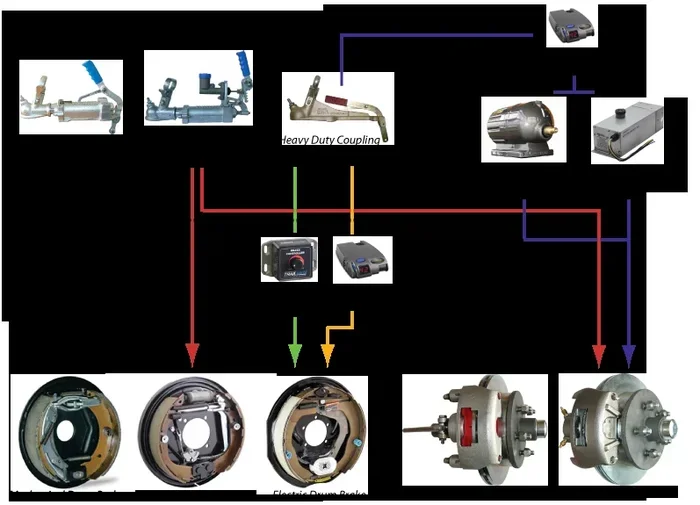
Electric trailer brakes are one of the most common braking systems you will find on trailers today. They work differently from the brakes on your tow vehicle. Instead of using hydraulic fluid, electric trailer brakes use an electromagnet to apply pressure to the brake shoes inside each wheel hub.
Here is how the system works in simple terms. When you press the brake pedal in your tow vehicle, the brake controller sends a signal to the trailer. That signal sends electrical current to the electromagnets. The magnets pull the brake shoes against the brake drum. This slows down the trailer wheels.
The whole process happens in seconds. And the amount of braking force depends on how much current the brake controller sends. More current means stronger braking. Less current means lighter braking. This is called proportional braking, and it is what keeps your tow stable.
Why Electric Brakes Need a Controller
Electric brakes cannot work on their own. They need a brake controller to tell them when to apply and how much force to use. Without that controller, there is no signal. No signal means no braking power from the trailer.
Some people think they can just wire the trailer brakes directly to the tow vehicle brake light circuit. This is a bad idea. When you do that, the trailer brakes apply the same amount of force every time you hit your brake lights. That means full braking power even when you are just tapping the brakes lightly. This can cause the trailer to jerk, sway, or even lock up the wheels.
A brake controller solves this problem. It reads how hard you are pressing the brake pedal and sends a proportional signal to the trailer. Light braking = light trailer braking. Hard braking = strong trailer braking. This keeps everything smooth and controlled.
Can You Actually Tow Without a Brake Controller?
The short answer is technically yes, you can physically tow a trailer with electric brakes and no controller hooked up. But just because you can does not mean you should. In fact, doing so is dangerous and often against the law.
Let us break this down. If you tow a trailer with electric brakes but leave the brake controller out of the circuit, you have essentially disabled the trailer brakes. The trailer wheels will not slow down when you press your brake pedal. You are now relying 100% on your tow vehicle brakes to stop the combined weight of both vehicles.
This creates several serious problems:
- Longer stopping distances: Your tow vehicle brakes alone cannot handle the extra weight of the trailer. It takes much longer to stop.
- Brake fade: Your vehicle brakes overheat from doing all the work. Overheated brakes lose their stopping power fast.
- Trailer sway: Without trailer brakes to help stabilize the load, the trailer can start to sway and fishtail, especially in wind or on curves.
- Damage to your vehicle: Your tow vehicle brake components wear out much faster and can fail prematurely.
- Uneven braking: The trailer pushes into the back of your vehicle during stops, which can cause instability.
What Happens If You Wire Trailer Brakes Directly to Brake Lights?
Some people try to wire the electric trailer brakes directly to the brake light wire. This is a very common shortcut, and it is a very bad one. When you do this, the trailer brakes apply full force every single time you tap your brake lights.
Imagine driving down the road and lightly touching your brake pedal to slow for a turn. The trailer brakes slam on at full power. The trailer lurches forward. Your tow vehicle’s rear end gets pushed around. This is dangerous and can cause a jackknife situation.
Even worse, if you are driving at highway speeds, full trailer braking from a light brake tap can cause the trailer to slide or spin. A brake controller prevents this by giving you smooth, adjustable control over the trailer braking force.
The Legal Side: Is It Even Allowed?
Towing laws vary from state to state and country to country. But in most places, if your trailer has electric brakes and weighs over a certain limit, you are required by law to have a working brake controller installed.
For example, in the United States, most states require a brake controller for trailers over 3,000 pounds gross trailer weight. Some states set the limit lower at 1,500 pounds. In Canada, the rules are similar. You must have a braking system that can be controlled from the driver’s seat of the tow vehicle.
Here is what you need to know about the legal requirements:
- Federal regulations: In the US, the Federal Motor Vehicle Safety Standards require trailers over a certain weight to have a braking system that can be controlled by the driver.
- State laws: Each state sets its own weight thresholds and enforcement rules. Check your local Department of Motor Vehicles website for the exact requirements in your area.
- Liability in accidents: If you are in a crash while towing without a brake controller and it is found to be a factor, you could face serious legal and financial consequences.
- Insurance issues: Your insurance company may deny a claim if they find you were towing illegally or without proper equipment.
The bottom line is clear. Towing with electric brakes and no brake controller is not just unsafe. It is often against the law. Do not risk tickets, accidents, or worse.
What Is a Brake Controller and Why Do You Need One?
A brake controller is a small electronic device that you install in your tow vehicle. It sits between the vehicle’s brake system and the trailer’s electric brake wiring. Its job is to read your braking input and send the right amount of electrical current to the trailer brakes.
Think of it like a translator. Your foot tells the brake controller how hard you want to stop. The controller translates that into the right signal for the trailer brakes. This is what makes proportional braking possible.
Types of Brake Controllers
There are two main types of brake controllers you will find on the market today. Each has its own advantages.
Time-Delayed Brake Controllers: These are the older and simpler type. They send a fixed amount of current to the trailer brakes based on how long you have been pressing the brake pedal. They are affordable and easy to install. However, they do not adjust perfectly to every situation. A time-delayed controller applies the same braking force whether you are stopping gently or slamming on the brakes.
Proportional Brake Controllers: These are the better choice for most towers. A proportional controller reads the deceleration of your tow vehicle and matches the trailer braking force to your actual braking input. When you brake gently, the trailer brakes gently. When you brake hard, the trailer brakes hard. This is the safest and most controlled option.
How to Choose the Right Brake Controller
When shopping for a brake controller, look for these features:
- Proportional braking: This is the most important feature. Always choose a proportional controller over a time-delayed one if you can.
- Multiple trailer outputs: If you tow more than one trailer, you need a controller with multiple outputs.
- Easy installation: Most modern controllers are plug-and-play and can be installed in under an hour.
- Display and controls: A clear display and simple adjustment knobs make it easy to fine-tune your settings on the road.
- Compatibility: Make sure the controller works with your tow vehicle and trailer brake system.
Risks of Towing Without a Brake Controller
Let us be very clear about the dangers. Towing a trailer with electric brakes and no brake controller is risky. Here are the real consequences you could face.
Loss of Vehicle Control: Without trailer brakes helping to slow the load, your tow vehicle has to do all the work. On steep downhill grades, this can be impossible. Your vehicle can pick up speed and become uncontrollable.
Trailer Push and Sway: When your tow vehicle slows down but the trailer does not, the trailer pushes into the back of your vehicle. This shifts the weight forward and can cause the trailer to sway from side to side. Trailer sway is one of the leading causes of towing accidents.
Brake Overheating and Failure: Riding your vehicle brakes to stop a heavy trailer causes extreme heat buildup. This leads to brake fade, where your brakes literally stop working. In extreme cases, the brakes can catch fire.
Increased Wear and Tear: Your tow vehicle’s brake pads, rotors, and suspension components wear out much faster when they are doing all the stopping. You will spend more on maintenance and repairs.
Accident Risk: Simply put, longer stopping distances and unpredictable trailer behavior increase your chances of being in a crash. This puts you, your passengers, and everyone else on the road in danger.
How to Properly Set Up Your Towing Braking System
Setting up your towing braking system correctly is not hard. It just takes a little time and attention to detail. Here is a step-by-step guide to get it right.
Step 1: Choose the Right Brake Controller
Start by picking a proportional brake controller that fits your tow vehicle and trailer weight. Read reviews and check compatibility with your specific vehicle make and model. Popular brands include Curt, Tekonsha, and Hopkins.
Step 2: Mount the Controller
Most brake controllers mount under the dashboard, within easy reach of the driver. The location should be convenient but not in the way of your steering or pedals. Follow the manufacturer’s mounting instructions carefully.
Step 3: Wire the Controller
Wiring a brake controller is straightforward for most vehicles. You will need to connect a few wires:
- Power wire: Connects to your vehicle’s battery or fused power source.
- Brake signal wire: Connects to the brake light switch so the controller knows when you are braking.
- Trailer output wire: Connects to the trailer wiring harness that runs to the trailer’s electric brakes.
- Ground wire: Connects to a clean, bare metal ground point on the vehicle.
Many brake controllers come with a wiring harness that plugs directly into your vehicle’s factory wiring. This makes the install much easier. If you are not comfortable wiring it yourself, a quick trip to an auto parts store or mechanic can handle it for you.
Step 4: Adjust the Settings
Once the controller is wired up, you need to set the braking level. Most controllers have a dial or digital display that lets you adjust the output. Start with a lower setting and test it on a safe, empty road. Increase the setting until you feel the trailer brakes engage smoothly and evenly with your vehicle brakes.
Step 5: Test Before Every Trip
Before you hit the road, always test your braking system. Find a safe, open area and practice braking at different speeds. Make sure the trailer brakes engage smoothly and that the trailer does not push or sway. A quick test takes just a few minutes and can save your life.
Common Mistakes People Make When Towing
Even experienced towers make mistakes. Here are some of the most common ones to avoid.
- Skipping the brake controller: This is the biggest mistake. Do not do it.
- Not checking trailer brake adjustment: Even with a brake controller, if the trailer brakes themselves are not adjusted properly, they will not work well.
- Overloading the trailer: Exceeding your towing capacity is dangerous and can overwhelm your braking system.
- Ignoring trailer sway: If your trailer starts to sway, do not slam on the brakes. Ease off the accelerator and let the trailer slow down gradually.
- Neglecting regular maintenance: Check your trailer brake wiring, connections, and brake pads before every trip.
Expert Tips for Safe Towing
Here are some expert tips that can make your towing experience safer and more enjoyable.
- Do a pre-trip inspection every time: Check tire pressure, brake connections, lights, and hitch security before you leave.
- Allow extra following distance: A loaded trailer increases your stopping distance significantly. Leave plenty of room between you and the vehicle ahead.
- Use engine braking on downhills: Shift into a lower gear on descents to help control your speed without overworking your brakes.
- Keep your load balanced: Distribute weight evenly in the trailer and secure everything tightly. An unbalanced load is a recipe for disaster.
- Practice in an empty lot: If you are new to towing, spend time practicing turns, backing up, and braking in a safe, empty area before hitting traffic.
Conclusion
So, can you tow a trailer with electric brakes without a brake controller? The answer is a firm no. It is not safe, it is often illegal, and it puts everyone on the road at risk. A brake controller is an essential piece of towing equipment that gives you control, safety, and peace of mind.
Installing a brake controller is simple, affordable, and one of the best things you can do for your towing setup. It ensures your trailer brakes work in harmony with your tow vehicle, giving you smooth, proportional stopping power every time you hit the road.
Do not take shortcuts with your towing safety. Invest in a quality brake controller, set it up properly, and test it before every trip. Your life and the lives of others depend on it. Safe towing starts with the right equipment and the right knowledge. Now go out there and tow with confidence, knowing your braking system is set up the right way.
Frequently Asked Questions
Can I tow a trailer with electric brakes if the brake controller is broken?
No, you should not tow with a broken brake controller. A faulty controller means your trailer brakes may not work at all or may apply unevenly. Replace or repair the controller before towing. Driving with a broken brake controller is both dangerous and often illegal.
What happens if I tow without a brake controller and get pulled over?
If you are pulled over and found to be towing without a required brake controller, you can receive a citation and a fine. In many areas, officers can also order you to stop towing until the proper equipment is installed. It is simply not worth the risk.
Do all trailers with electric brakes need a brake controller?
Yes, any trailer equipped with electric brakes needs a brake controller to function properly. The controller sends the electrical signal that activates the trailer brakes. Without it, the electric brakes cannot do their job.
Can I use a surge brake actuator instead of a brake controller?
Surge brakes use a different mechanism and do not require an electrical brake controller. However, surge brakes are typically found on boat trailers and are not a direct replacement for electric brakes on other types of trailers. They also have their own limitations and may not be legal for all towing applications.
How much does a brake controller cost?
A good quality proportional brake controller typically costs between $150 and $400. This is a small price to pay compared to the safety it provides and the potential cost of an accident or brake damage.
Can I install a brake controller myself?
Yes, most brake controllers are designed for DIY installation. The process usually involves mounting the unit, connecting a few wires, and adjusting the settings. If you are not comfortable with basic wiring, a professional installer can handle it quickly and affordably.
=== END FAQS ===