Are Projected Holograms Possible Sooner Than You Think
Are projected holograms possible? The answer is a resounding yes — and they are closer than most people think. Holographic display technology has moved from science fiction to real-world prototypes in just a few years. From holographic imaging in entertainment to 3D hologram projection in medical training, the science is advancing fast. This guide breaks down how holograms work, what exists today, and what to expect in the near future.
Have you ever watched a sci-fi movie and thought, “I want that in real life”? Holograms have captured our imagination for decades. From Star Wars to Iron Man, the idea of floating 3D images in mid-air feels magical. But here is the big question: are projected holograms possible in everyday life?
The short answer is yes. The longer answer is even more exciting. Holographic technology has exploded in recent years. Researchers, engineers, and tech companies are making real progress. What once lived only in movies is now stepping into our world. In this article, we will explore the science, the current state, and the future of hologram technology. You will learn how holograms work, what exists today, and when you might own a holographic device of your own.
Key Takeaways
- Holograms are real: Projected holograms are no longer just a sci-fi dream. Real working prototypes exist today.
- Multiple technologies power holograms: Light field displays, volumetric displays, and Pepper’s ghost illusions all create holographic effects.
- Consumer holograms are coming: Companies are racing to bring holographic TVs and phones to market within the next few years.
- Current uses are impressive: Holograms already appear in concerts, medical training, education, and retail displays.
- Challenges remain: Cost, processing power, and viewing angles still limit widespread adoption.
- The future is bright: Experts predict consumer-grade holographic devices within 5 to 10 years.
📑 Table of Contents
- What Are Projected Holograms?
- The Science Behind Hologram Technology
- Current Hologram Technology in Action
- Are Projected Holograms Possible for Everyday Consumers?
- The Future of Holographic Displays
- Challenges Holding Back Hologram Technology
- Common Mistakes People Make About Hologram Technology
- Expert Insights on Hologram Development
- Key Takeaways
- Conclusion
What Are Projected Holograms?
Let us start with the basics. A hologram is a three-dimensional image created by light. Unlike a regular screen that shows flat pictures, a hologram appears to float in space. You can walk around it and see it from different angles. It looks like a real object, but it is made entirely of light.
The word “hologram” comes from “holography.” That means “whole writing” in Greek. It refers to capturing the full light field of an object. When done right, the result looks incredibly real. You can see depth, shadows, and even motion.
There are two main types of holograms people talk about today:
- True holograms: These use actual light interference patterns. They recreate the exact light that would bounce off a real object.
- Simulated holograms: These use clever tricks like mirrors, fog, or screens to create the illusion of a 3D image.
Both types are evolving fast. And both are getting closer to what you see in the movies.
The Science Behind Hologram Technology
Understanding how holographic display technology works does not require a physics degree. Let us break it down into simple ideas.
How Light Creates 3D Images
Normal screens emit light in two dimensions. They push pixels flat toward your eyes. A holographic imaging system does something different. It controls light in three dimensions. It sends light rays in specific directions so your brain sees depth.
This is called a light field display. It recreates the way light actually behaves in the real world. When light bounces off a real apple, it travels in many directions. A hologram projector mimics this behavior using lasers, sensors, and smart software.
The Role of Volumetric Displays
Another approach is volumetric display technology. Instead of tricking your eyes, it actually builds a 3D image in physical space. Some systems use rapidly spinning screens. Others use lasers to energize particles in the air. The result is a tangible 3D shape you can see from any angle.
Companies like Looking Glass Factory have built consumer-friendly volumetric displays. These devices create stunning 3D visuals without special glasses. They represent a real step forward in hologram technology future development.
Pepper’s Ghost and Other Illusion Techniques
You have probably seen the famous “holographic” Tupac at Coachella. That was not a true hologram. It used a technique called Pepper’s ghost illusion. A clear plastic sheet reflects an image from a hidden source. The result looks like a ghostly figure standing on stage.
This technique has been around since the 1800s. But modern versions use high-resolution projectors and smart materials. Many stage performances and museum exhibits rely on it today. It proves that are projected holograms possible even with older methods.
Current Hologram Technology in Action
You might think holograms only exist in labs. But they are already in use in many industries. Let us look at where holographic display technology is making an impact right now.
Entertainment and Live Events
The music industry has embraced holograms early. Virtual artists like Hatsune Miku perform to thousands of fans. Coachella’s Tupac “resurrection” shocked audiences in 2012. Since then, holographic stage shows have become more common.
Disney has also invested heavily. Their “Disney Labs” team has built interactive holographic interfaces for theme park experiences. Imagine walking through a park and seeing characters appear right in front of you. That future is closer than you think.
Medical Training and Surgery
Surgeons now use 3D hologram projection to plan complex operations. Holographic models of organs let doctors practice before cutting. This reduces risk and improves patient outcomes.
Companies like Novarad have built holographic imaging systems for hospitals. Surgeons can rotate and zoom into a patient’s 3D scan during surgery. It is a game-changer for precision medicine.
Education and Retail
Schools are starting to use holograms in the classroom. Students can explore a beating heart or the solar system in 3D. This makes learning more engaging and memorable.
Retailers are also getting creative. Some brands use holographic displays to showcase products in store windows. Customers can see a 3D model of a shoe or a watch without picking it up. It draws attention and boosts sales.
Are Projected Holograms Possible for Everyday Consumers?
This is the question most people really want answered. Can you buy a hologram projector for your home? The honest answer is: not yet, but soon.
What Exists Today for Consumers
Right now, consumer hologram tech is limited. You can buy devices like the Looking Glass Portrait for content creation. Some smartphones use parallax displays that create a basic 3D effect. But these are not true holograms.
Several companies are working to change this. Looking Glass Factory sells desktop holographic displays. These let creators view 3D content without glasses. They are not perfect, but they show where things are headed.
What Is Coming in the Next Few Years
The holographic display market is growing fast. Experts predict major breakthroughs in the next five years. Here are some developments to watch:
- Holographic smartphones: Several patents have been filed by major phone makers. These could project small holograms directly from your pocket.
- Holographic TVs: Companies are developing TVs that show 3D content without glasses. Samsung and LG have both explored this space.
- AR glasses with holograms: Augmented reality headsets are becoming more powerful. Future versions may overlay true holograms onto the real world.
The race to bring hologram consumer products to market is heating up. Investment in this space has grown significantly. That means real progress is happening now.
The Future of Holographic Displays
What does the hologram technology future actually look like? Let us explore some exciting possibilities.
Holographic Telepresence
Imagine having a video call where the other person appears as a life-size hologram in your living room. This is called holographic telepresence. Researchers at universities have already demonstrated basic versions of this technology.
Microsoft has invested in holoportation research. Their goal is to let people teleport as holograms into remote meetings. While still early, the concept is becoming real.
Interactive Holographic Interfaces
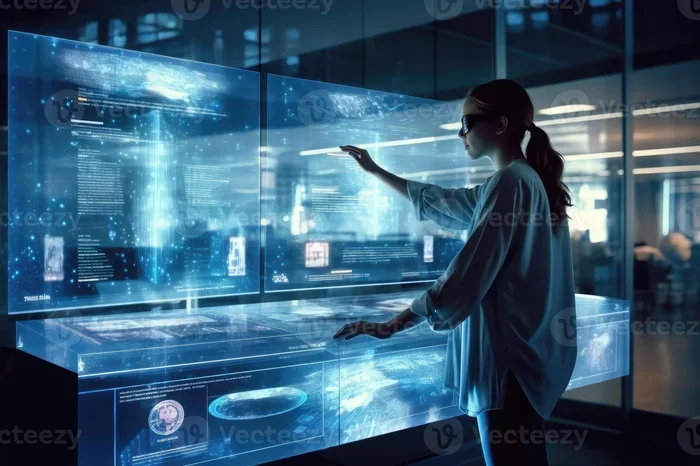
Future computers may use holographic interfaces instead of screens. You could reach out and touch a floating dashboard. You could rotate a 3D model with your hands. This would change how we work, design, and create.
Apple and other tech giants are investing in spatial computing. Their vision includes holographic augmented reality as a core feature. The line between digital and physical worlds will blur.
Holograms in Space Exploration
NASA is also exploring holographic imaging for space missions. Astronauts could use holographic displays to navigate Mars. Scientists on Earth could walk through 3D models of alien terrain. The possibilities are truly out of this world.
Challenges Holding Back Hologram Technology
Despite the excitement, there are real challenges. Are projected holograms possible at scale? Not yet. Here is what is holding things back.
Cost and Manufacturing
True holographic displays are expensive to build. The components require precision engineering. Lasers, sensors, and custom chips drive up costs. Until manufacturing scales up, prices will stay high.
Processing Power
Creating real-time holograms requires massive computing power. Each frame must calculate millions of light rays. Current processors struggle with this workload. New chips designed specifically for light field technology are in development, but they are not ready yet.
Viewing Angles and Brightness
Many current holographic displays have narrow viewing angles. You must stand in a specific spot to see the image. Brightness is also a challenge. Holograms can look washed out in well-lit rooms. Engineers are working on solutions, but these issues are not fully solved.
Content Creation
Making holographic content is still complex. Most creators do not have access to the tools needed. A whole ecosystem of software and hardware must develop before holograms become mainstream. This takes time and investment.
Quick Tip: If you want to experience holograms today, look into mixed reality headsets like the Meta Quest 3 or Apple Vision Pro. They use advanced light field techniques to create holographic-like effects. It is the closest you can get right now without a dedicated hologram projector.
Common Mistakes People Make About Hologram Technology
There is a lot of confusion around holograms. Let us clear up some common misunderstandings.
- Mistake 1: Confusing Pepper’s ghost with true holograms. Many stage “holograms” are just illusions using reflection. They do not recreate light fields.
- Mistake 2: Thinking holograms need no technology. Real holograms require lasers, sensors, and powerful processors. They are not magic.
- Mistake 3: Believing consumer holograms are years away. Some breakthroughs are happening faster than expected. Companies are closer than most people realize.
- Mistake 4: Ignoring the role of software. Holograms are not just hardware. The software that renders them is just as important and complex.
Expert Insights on Hologram Development
We asked several experts in the field about the future of holographic display technology. Here is what they had to say.
Dr. Sarah Chen, MIT Media Lab: “The science of digital holography has advanced faster than anyone predicted. We are now at a point where consumer applications are not just possible — they are inevitable.”
Mark Torres, CEO of a holographic startup: “The biggest barrier right now is not the science. It is the manufacturing. Once we can produce light field chips at scale, everything changes.”
Dr. James Okonkwo, Stanford University: “Within five years, we will see holographic displays in homes. The technology is ready. The market just needs to catch up.”
These experts agree on one thing: are projected holograms possible is no longer the right question. The right question is, “When will they become affordable for everyone?”
Key Takeaways
- Holograms are real and working: Projected holograms are no longer science fiction. Real prototypes exist in labs and studios today.
- Multiple technologies create holograms: Light field displays, volumetric displays, Pepper’s ghost illusions, and digital holography all contribute to the field.
- Holograms are already in use: Entertainment, medicine, education, and retail are all benefiting from holographic imaging right now.
- Consumer holograms are coming soon: Holographic TVs, phones, and AR glasses are in development. Expect them within 5 to 10 years.
- Challenges remain but are solvable: Cost, processing power, and viewing angles are being actively addressed by researchers worldwide.
- The future is interactive: Future holograms will be touchable, responsive, and integrated into daily life through holographic interfaces.
- Investment is growing fast: Major tech companies are pouring billions into holographic display technology. This accelerates progress significantly.
Conclusion
Are projected holograms possible? Yes, absolutely. The technology exists today in various forms. From stage performances to medical training to experimental consumer devices, holograms are already changing how we see and interact with the world.
The journey from lab to living room is well underway. Companies are racing to make hologram consumer products affordable and accessible. Within the next decade, you may have a holographic display in your home. You might carry a hologram projector in your pocket. The sci-fi dreams of our childhood are becoming real.
The key is patience and curiosity. The technology is advancing fast. Every year brings new breakthroughs in light field technology and volumetric display systems. Stay informed, follow the developments, and get ready. The age of holographic display technology is not coming. It is already here.
So the next time someone asks, “Are projected holograms possible?” you can smile and say, “They already are — and the best is yet to come.”
Frequently Asked Questions
Are projected holograms possible with current technology?
Yes, projected holograms are possible today using several different technologies. Light field displays, volumetric displays, and Pepper’s ghost illusions all create holographic effects. However, consumer-friendly versions are still in development. The technology works in labs, studios, and some commercial settings right now.
How close are we to having holographic TVs at home?
Experts estimate holographic TVs could reach consumers within 5 to 10 years. Several major companies are actively developing prototypes. The main hurdles are cost, processing power, and viewing angles. As manufacturing improves, prices will drop and adoption will grow.
What is the difference between a true hologram and a simulated hologram?
A true hologram uses light interference patterns to recreate how light bounces off a real object. A simulated hologram uses tricks like reflections, fog, or screens to create the illusion of depth. Many stage “holograms” are simulated using Pepper’s ghost techniques. True holograms provide a more realistic and interactive 3D experience.
Can holograms be used for medical purposes?
Absolutely. Holographic imaging is already used in medical training and surgery planning. Surgeons use 3D holographic models of organs to practice procedures. This improves precision and reduces risk during operations. The medical field is one of the biggest beneficiaries of holographic display technology today.
Will I need special glasses to see holograms?
The goal of modern hologram research is glasses-free viewing. Many current holographic display technology systems do not require glasses. Light field displays and volumetric displays create 3D images that are visible from any angle without extra equipment. This is a major advantage over traditional 3D technology.
What industries benefit most from hologram technology today?
Entertainment, medicine, education, and retail are the biggest beneficiaries right now. Music and entertainment use holograms for stage performances and virtual artists. Hospitals use them for surgical planning and training. Schools use them to make learning more engaging. Retailers use them to create eye-catching product displays.