Do People Still Use Overhead Projectors in Classrooms
Do People Still Use Overhead Projectors in Classrooms? The answer might surprise you. While most schools have moved to digital projectors and smart boards, many teachers still rely on the classic overhead projector for lessons. This simple visual aid tool continues to serve classrooms around the world, especially in schools that value reliability and low cost.
You might think the overhead projector belongs in a museum. After all, most classrooms have traded in these bulky boxes for sleek digital projectors and interactive smart boards. But here is the thing — do people still use overhead projectors in classrooms? The answer is yes, and more often than you might think.
Walk into a school in a rural area, a community college, or even some well-funded districts, and you will likely spot one sitting on a cart next to the teacher’s desk. These machines have been a staple of classroom technology for decades, and they are not disappearing anytime soon. Whether it is the cost factor, the simplicity, or just plain habit, the overhead projector still has a place in education.
In this article, we will explore why do people still use overhead projectors in classrooms today. We will look at the reasons teachers choose them, how they compare to modern alternatives, and what the future might hold for this classic piece of presentation equipment. By the end, you will have a clear picture of why this old-school tool still matters in modern teaching methods.
Key Takeaways
- Overhead projectors are still used in many classrooms today: Despite the rise of digital technology, teachers in various settings continue to use this classic tool for lessons and presentations.
- Simplicity and reliability are the main draws: Teachers love that overhead projectors work instantly with no software updates, no internet connection, and no compatibility issues.
- They are a cost-effective alternative to modern classroom technology: Schools with limited budgets appreciate the low price and easy maintenance of overhead projectors.
- Transparency slides offer a hands-on teaching method: Students can interact directly with the classroom display, creating a more engaging and participatory learning experience.
- Overhead projectors serve as reliable backup equipment: When digital projectors or smart boards fail, the overhead projector is a dependable fallback that keeps lessons running.
- They are not going away anytime soon: Many educators see value in keeping overhead projectors as part of a balanced classroom setup alongside modern tools.
📑 Table of Contents
- The Surprising Truth About Overhead Projectors Today
- Why Some Teachers Still Choose Overhead Projectors
- How Overhead Projectors Compare to Modern Classroom Tech
- Common Uses for Overhead Projectors in Schools
- The Pros and Cons of Using an Overhead Projector
- What the Future Holds for Overhead Projectors in Education
- Quick Tips for Using an Overhead Projector in the Classroom
- Final Thoughts
The Surprising Truth About Overhead Projectors Today
When you picture a modern classroom, what comes to mind? Most people imagine a smart board, a laptop, and maybe a digital projector mounted on the ceiling. But the reality is different in many schools. The overhead projector is still alive and well in thousands of classrooms across the country and around the world.
These machines first became popular in the 1960s and 1970s. They quickly became the go-to visual aid for teachers everywhere. For decades, they were the primary way to share information with a room full of students. Even as newer technology emerged, many schools kept them around because they worked well and did not need frequent upgrades. The overhead projector became a trusted friend in the classroom, and that trust has not faded.
Where You Can Still Find Them
You will find overhead projectors in all kinds of settings. Elementary schools, middle schools, high schools, and even some universities still use them regularly. They are especially common in places like:
- Schools with older buildings that have not been fully updated with new classroom technology
- Rural districts with limited budgets for modern equipment
- Training rooms and workshop spaces where simplicity matters
- Homeschool environments where families prefer straightforward tools
- Schools in developing countries where access to modern school technology is limited
- Community centers and adult education programs
Some teachers also keep an overhead projector as a backup. If the digital projector breaks or the smart board malfunctions, the overhead projector is there to save the day. It is a reliable fallback that many educators value more than people realize. Having a classroom display that works without any technical fuss is a comfort that newer tools sometimes cannot provide.
Why Some Teachers Still Choose Overhead Projectors
There are many reasons why do people still use overhead projectors in their classrooms. Let us break down the most common ones so you can understand the appeal.
Simplicity and Reliability
The biggest advantage of the overhead projector is how simple it is to use. There are no software updates, no Wi-Fi connections, and no compatibility issues. You plug it in, turn it on, and it works. This simplicity is a huge draw for teachers who want to focus on teaching, not on troubleshooting technology.
Unlike a digital projector that might need a laptop, specific cables, and software to run, the overhead projector just works with a sheet of transparency film and a marker. Teachers can write or draw on the fly without any preparation. This makes it a favorite for spontaneous lesson planning moments when a teacher wants to explain something visually in real time. There is no boot-up time, no lag, and no freezing. It is technology that gets out of the way and lets the teaching happen.
Low Cost and Easy Maintenance
Budget is a major factor in many schools. A new digital projector or smart board can cost thousands of dollars. An overhead projector, on the other hand, can be found for a fraction of that price. Many schools buy them secondhand or receive them as donations from retiring teachers or closed schools.
Maintenance is also straightforward. If a part breaks, it is usually easy and cheap to replace. The projector lamp is simple to swap out, and the machine itself has very few moving parts. There is no need for IT support staff to fix it, which saves schools both time and money. For schools that cannot afford a dedicated tech support team, this kind of presentation equipment is a practical lifesaver.
Hands-On Teaching Methods
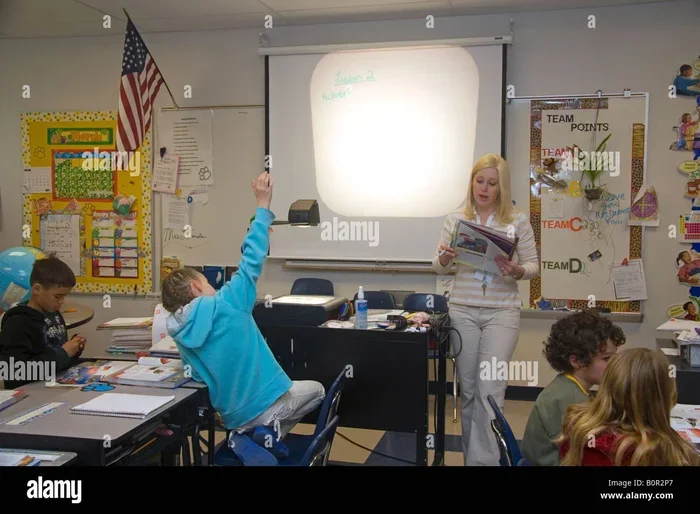
Many teachers appreciate that overhead projectors allow for a hands-on approach. Students can come up to the front and draw on the transparency themselves. This creates an interactive experience that some educators feel is lost with digital tools. It gives students a sense of ownership over the classroom display and encourages participation in a way that sitting behind a screen sometimes does not.
Using transparency slides also gives teachers a tactile way to present information. They can layer transparencies to show comparisons, build concepts step by step, or reveal information gradually. This is a teaching method that digital tools sometimes struggle to replicate in the same intuitive, physical way. The act of placing a transparency on the glass and watching the image appear on the screen is a simple but powerful classroom setup that engages students visually and kinesthetically.
How Overhead Projectors Compare to Modern Classroom Tech
It is only fair to compare the overhead projector to the modern tools it competes with. Understanding the differences helps us appreciate what each tool brings to the table.
Overhead Projector vs. Digital Projector
A digital projector offers vibrant colors, high resolution, and the ability to show videos and animations. It can connect to the internet and display content from any device. On paper, the digital projector wins in almost every category.
But the overhead projector has its own strengths. It does not depend on a computer or an internet connection. It works during power outages if it has a backup power source. It does not freeze, crash, or require boot-up time. For teachers in areas with unreliable electricity or internet, the overhead projector is often the more practical choice. The overhead transparency is also something you can hold, flip through, and annotate without any digital processing that might distort the image or add unwanted complexity.
Overhead Projector vs. Smart Board
A smart board is an interactive display that combines a projector with a touch-sensitive surface. It allows teachers and students to interact directly with digital content. This is a powerful tool for engaging lessons and modern classroom technology.
However, smart boards are expensive and complex. They require professional installation, specialized software, and training for teachers. The overhead projector needs none of that. It can be set up in seconds and used by anyone, regardless of technical skill. For schools that cannot afford smart boards or do not have the staff to maintain them, the overhead projector remains a practical and effective teaching tool that delivers results without the headaches.
Overhead Projector vs. Document Camera
A document camera is a modern alternative that lets teachers display physical objects, pages from books, or handwritten notes on a screen. It is similar to what an overhead projector does, but with a digital twist.
While document cameras offer more versatility, they also come with a higher price tag and more technical requirements. The overhead projector, with its simple setup and durable design, still holds its own in many classrooms. Some teachers even prefer the overhead projector because the image is projected large and clear without any digital processing that might distort the colors or resolution. For straightforward visual aid needs, the overhead projector is hard to beat.
Common Uses for Overhead Projectors in Schools
What exactly do teachers do with overhead projectors today? More than you might think. Let us look at the most common and creative uses.
Showing Transparencies During Lessons
The most traditional use of the overhead projector is displaying transparency slides during a lesson. Teachers create or purchase transparencies with diagrams, maps, text, or illustrations. They place the transparency on the glass surface, and the image appears on the screen for the whole class to see.
This method is still widely used in subjects like geography, history, and science. A teacher might show a map of ancient Rome, a diagram of a cell structure, or a timeline of historical events. The large, clear image helps students visualize concepts that might be hard to understand from a textbook alone. The overhead transparency becomes a shared reference point that every student can see and discuss together.
Displaying Student Work and Documents
Many teachers use the overhead projector to display student work. A completed worksheet, a handwritten essay, or a science experiment result can be placed on the glass for the class to see and discuss. This is a great way to review answers together or showcase excellent work in a classroom setup that encourages peer learning.
The overhead transparency also works well for displaying documents that need to be shared with the entire class. Permission slips, schedules, and instructions can all be shown on the big screen, ensuring every student can see the details clearly. It is a simple but effective way to keep everyone on the same page, literally and figuratively.
Interactive Brainstorming and Group Activities
One of the most creative uses of the overhead projector is for brainstorming sessions. Teachers can place a blank transparency on the machine and have students come up to the front to write or draw their ideas. This turns the classroom display into a collaborative tool that everyone can contribute to.
Group activities also benefit from this approach. Students can work together to solve a problem on the transparency, and the whole class can see their progress in real time. It creates a dynamic, engaging environment that encourages teamwork and communication. The teaching methods that work best with an overhead projector are those that put students at the center of the learning experience.
Art and Creative Projects
Art teachers and creative writing instructors also find value in the overhead projector. They can project images for students to trace, sketch over, or use as inspiration. The large scale of the projected image makes it easy for an entire class to see details that would be hard to show on a small screen.
Some teachers even use the overhead projector for shadow puppet shows or light-based art activities. The versatility of this tool extends far beyond simple text and diagrams, making it a valuable asset in many teaching methods. The overhead projector proves that sometimes, the simplest tools can inspire the most creative outcomes in the classroom.
The Pros and Cons of Using an Overhead Projector
Like any piece of school technology, the overhead projector has its strengths and weaknesses. Let us take an honest look at both sides so you can make an informed decision.
Advantages of the Overhead Projector
- Simplicity: It is easy to use with minimal training. Any teacher can set it up and start using it within minutes.
- Reliability: There are no software crashes or compatibility issues. It works consistently every single time.
- Cost-effective: The machine is affordable, and replacement parts are inexpensive and widely available.
- No technology dependence: It does not require a computer, internet connection, or special software to function.
- Durability: These machines are built to last. Many overhead projectors from the 1980s and 1990s still work perfectly today.
- Interactive potential: Teachers and students can write directly on transparencies, creating a hands-on learning experience.
- Backup option: It serves as a reliable backup when digital equipment fails unexpectedly.
- No screen fatigue: Unlike staring at a computer or smart board all day, the overhead projector provides a softer, more comfortable visual experience.
Disadvantages and Limitations
- Limited functionality: It cannot show videos, animations, or interactive content like a digital projector can.
- Bulky and heavy: Overhead projectors take up significant space and are difficult to move around the classroom.
- Heat and noise: The machine generates heat and can be noisy when the fan is running during long lessons.
- Dim image quality: In bright rooms, the projected image may be hard to see compared to a modern digital projector.
- Preparation time: Creating custom transparencies takes time and effort, especially for complex visuals and diagrams.
- Limited availability of supplies: Finding transparency film and replacement parts can be challenging in some areas.
- Outdated technology: Schools may miss out on the benefits of modern educational technology by relying too heavily on older equipment.
What the Future Holds for Overhead Projectors in Education
So, what happens next for the overhead projector? Will it eventually disappear from classrooms, or will it continue to find a niche in modern education?
Are They Making a Comeback?
In some ways, yes. There has been a small but noticeable trend of teachers returning to analog tools. Some educators feel that the classroom technology of today is overwhelming for both teachers and students. The overhead projector offers a simple, distraction-free way to present information. This has led to a quiet resurgence in popularity among certain teaching communities who value focus and simplicity over flashy features.
Additionally, the push for interactive display tools that do not require screens has given the overhead projector a new lease on life. Teachers who want to reduce screen time for students sometimes turn to the overhead projector as a practical alternative. It allows for face-to-face interaction and keeps the focus on the lesson rather than on a glowing screen. The overhead projector fits naturally into a balanced approach to classroom technology that values both analog and digital tools.
Why Some Schools Are Keeping Them
Schools keep overhead projectors for several important reasons. Budget constraints are the biggest one. Not every school can afford to replace all their old equipment with the latest technology. For many, the overhead projector is a perfectly functional tool that gets the job done without breaking the bank. It is a practical choice that makes sense for schools operating on tight school technology budgets.
Another reason is preparedness. Schools that have experienced technology failures during important lessons know the value of having a reliable backup. The overhead projector is the ultimate Plan B. It does not depend on software updates, internet connectivity, or expensive maintenance contracts. It just works, day after day, year after year.
There is also a sentimental factor. Many teachers who grew up using overhead projectors feel comfortable and confident with them. They know how to create effective transparency slides, how to troubleshoot common issues, and how to integrate the tool into their lesson planning seamlessly. This familiarity is a real advantage that should not be underestimated. The overhead projector is more than just a machine to these teachers, it is a trusted partner in the classroom.
As classroom technology continues to evolve, the overhead projector will likely become less common over time. But it is far from obsolete. For many educators, it remains a trusted, practical, and effective tool that serves its purpose well. The question is not really whether people still use them, but rather how long they will continue to coexist with newer tools in the classroom. One thing is certain, the overhead projector has earned its place in the history of education, and it is not leaving anytime soon.
Quick Tips for Using an Overhead Projector in the Classroom
If you are thinking about using an overhead projector or already have one in your classroom, here are some practical tips to get the most out of it:
- Keep spare transparencies on hand so you can write or draw on the spot during lessons without any delay.
- Use fine-tip markers for clear, readable text on your transparencies that every student can see from the back of the room.
- Clean the glass regularly with a soft, lint-free cloth to keep the projected image sharp and free of smudges.
- Store transparencies in a safe, organized place to prevent scratches, bends, and other damage that can affect image quality.
- Layer transparencies to show step-by-step processes or compare concepts side by side for deeper understanding.
- Position the projector so the screen is clearly visible to all students, not just those sitting in the front row.
- Have a backup plan in case the projector lamp burns out or the machine malfunctions during an important lesson.
These simple steps will help you use the overhead projector effectively and keep your classroom setup running smoothly. Even with all the advances in educational technology, sometimes the old ways still work best. The key is to use the right tool for the right moment, and the overhead projector continues to be a valuable option in any teacher’s toolkit.
Final Thoughts
The overhead projector is far from dead. While it may not be the flashiest piece of classroom technology available, it continues to serve teachers and students in meaningful ways. From rural schools to community colleges, from art rooms to science labs, this classic piece of presentation equipment still has a lot to offer.
So, do people still use overhead projectors? Absolutely. They may not dominate the classroom the way they once did, but they have found a lasting niche as reliable, affordable, and versatile teaching tools. Whether you are a teacher looking for a simple visual aid or a school weighing its options, the overhead projector deserves a second look. Sometimes, the best technology is the one that just works, and the overhead projector proves that timeless truth every single day in classrooms around the world.
Frequently Asked Questions
Are overhead projectors still used in schools today?
Yes, many schools still use overhead projectors, especially in rural areas, older buildings, and schools with limited budgets. They serve as reliable teaching tools and backup equipment when digital devices fail.
Why do some teachers prefer overhead projectors over digital projectors?
Teachers prefer overhead projectors because they are simple to use, do not require internet or software, and work instantly without any setup delays. They are also affordable and easy to maintain compared to modern digital alternatives.
Can overhead projectors still be purchased new?
While they are harder to find new than in the past, overhead projectors are still available for purchase online and through educational supply stores. Many schools also buy them secondhand at very low prices.
What are the main advantages of using an overhead projector in the classroom?
The main advantages include simplicity, reliability, low cost, no technology dependence, durability, and the ability to create interactive, hands-on lessons with transparency slides and markers.
Do students still benefit from learning with overhead projectors?
Yes, students can benefit from the hands-on, interactive experience that overhead projectors provide. They encourage participation, allow for collaborative brainstorming, and offer a screen-free learning alternative that some educators prefer.
Will overhead projectors eventually disappear from classrooms?
It is likely that overhead projectors will become less common as schools adopt more modern technology. However, their reliability, low cost, and simplicity mean they will probably remain in use for many years to come, especially in budget-conscious settings.