Do Crock Pots Have Thermostats And Why You Need To Know
Do Crock Pots Have Thermostats? Yes, most modern crock pots include a built-in thermostat that regulates heat. Understanding your crock pot thermostat helps you cook safely, avoid overcooking, and troubleshoot heating problems. This guide explains how the thermostat works, which models have one, and why it’s essential for perfect low and slow meals.
You’ve probably heard the phrase “set it and forget it” when it comes to slow cooking. But have you ever wondered, do crock pots have thermostats? The short answer is yes, most modern crock pots come with a built-in thermostat that controls the heat. Understanding how this thermostat works can transform the way you cook. It helps you get consistent results every time. It also keeps your food safe.
Whether you own a basic model or a high-tech programmable cooker, the thermostat is the brain behind the operation. It regulates the temperature so your meal simmers perfectly. Without it, your dish could burn or stay raw. Knowing your crock pot thermostat gives you confidence in the kitchen. You’ll learn what types exist, how to troubleshoot issues, and why this small component matters so much. Let’s dive in.
Key Takeaways
- Crock pots do have thermostats: Nearly every modern slow cooker includes a built-in thermostat to control heat output.
- Thermostat types vary: Basic bimetallic, electronic digital, and programmable models offer different levels of temperature control.
- Food safety depends on it: A working thermostat ensures your food reaches safe temperatures to kill harmful bacteria.
- Common issues are fixable: Problems like a crock pot not heating often trace back to the thermostat or thermal fuse.
- Maintenance keeps it accurate: Regular cleaning and proper storage extend the life of your thermostat sensor.
- Check your model’s manual: Not every older or very cheap crock pot has a thermostat, so verify before use.
📑 Table of Contents
Do Crock Pots Have Thermostats?
The answer is almost always yes. Nearly every crock pot sold today has some form of thermostat. This device controls the heat output. It keeps your food at the right temperature for hours. But not all thermostats are the same. Some are simple mechanical switches. Others are digital and programmable.
Older crock pots from the 1970s might not have had precise thermostats. They often just had a high, low, and warm setting. The heating element would cycle on and off at a basic level. Modern slow cookers, however, use advanced thermostat sensors. These sensors monitor the internal temperature constantly. They adjust the power to maintain a steady simmer.
What Is a Crock Pot Thermostat?
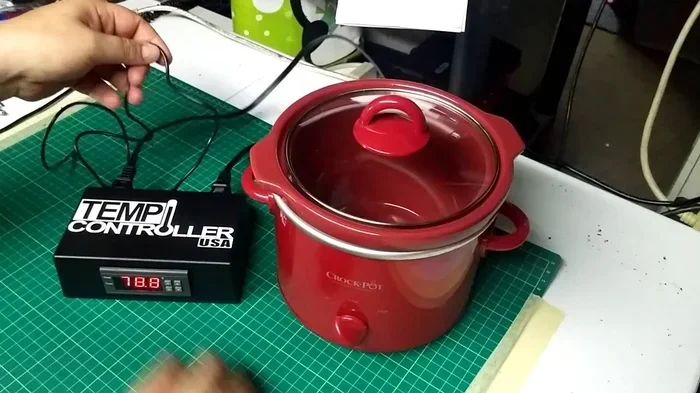
A thermostat is a temperature-regulating device. In a crock pot, it sits near the heating element or the ceramic insert. It measures the heat and tells the appliance when to turn on or off. This process is called thermal cycling. It prevents the food from boiling too hard on the low setting.
Think of it like a cruise control in a car. The car maintains a set speed. The crock pot thermostat maintains a set temperature. This steady heat is what makes slow cooking so effective. It breaks down tough fibers in meat over time. It also blends flavors gently.
How to Check If Your Crock Pot Has One
You can usually tell by the control panel. If your crock pot has a digital display, it almost certainly has a thermostat. The display shows temperature or time settings. Mechanical models with just a dial also have a thermostat. The dial controls the heat level. Even the simplest “on” and “off” switch includes a basic thermostat. It cycles the element to prevent overheating.
To be sure, check your owner’s manual. Look for the words “thermostat” or “temperature control.” If you see those terms, you have one. If you lost the manual, search the model number online. Most manufacturers list the features on their website.
Quick Tip: If your crock pot has a “keep warm” function, that’s also controlled by a thermostat. This setting holds food at a safe serving temperature after cooking.
How Does a Crock Pot Thermostat Work?
The working principle is simple but clever. Most crock pots use a bimetallic strip or an electronic sensor. Let’s look at how each type functions.
Bimetallic Strip Thermostat
This is the classic type found in older and basic models. Two different metals are bonded together. When heat expands them, the strip bends. At a certain temperature, the bending motion flips a switch. This turns the heating element off. As the pot cools, the strip straightens. The switch flips back on. This cycle repeats many times during a cook.
The bimetallic thermostat is reliable. It doesn’t need electricity to sense temperature. However, it can be less precise. The temperature might swing a few degrees. For most recipes, that’s fine. But for delicate dishes, it might not be ideal.
Electronic Digital Thermostat
Modern programmable slow cookers use electronic sensors. A small thermistor measures the temperature. This sensor sends data to a microchip. The microchip compares the current temperature to the target setting. If the pot is too cool, it powers the heating element. If it’s too hot, it shuts it off.
This digital thermostat offers much better control. You can often set the exact temperature. You can also program a timer. Some models let you choose low, medium, or high heat. They maintain a steady slow cooker temperature throughout the day. This is perfect for crock pot recipes that need precise cooking time management.
The Role of the Thermal Fuse
Inside every crock pot, you’ll find a thermal fuse. This is a safety device. It works hand-in-hand with the thermostat. If the thermostat fails and the pot overheats, the thermal fuse blows. It cuts power completely. This prevents a fire or damage to the appliance. A blown thermal fuse is a common reason a crock pot not heating issue occurs.
You can replace a thermal fuse, but it’s a job for a professional. Never try to bypass the fuse. It’s there to protect you and your home.
| Thermostat Type | How It Works | Best For | Example Models |
|---|---|---|---|
| Bimetallic Strip | Two metals bend with heat to flip a switch | Basic low and high settings | Classic oval crock pots |
| Electronic Digital | Thermistor sensor and microchip control power | Precise temperature and timer functions | Programmable slow cookers with digital display |
| Programmable with Timer | Digital control with multi-step cooking cycles | Set it and forget it meals | High-end models with wireless connectivity |
This table shows the main differences. Most home cooks do well with a digital model. It offers the best temperature control. It also gives you flexibility for different crock pot settings.
Do All Crock Pots Have a Thermostat?
Most modern crock pots do. But there are exceptions. Very old models, especially from the 1970s, might lack a true thermostat. Some ultra-cheap single-use or novelty pots might also skip it. These units often just have a simple on/off switch. They rely on the heating element running continuously until you unplug them.
If you bought a secondhand crock pot, check for a thermostat. Look for a dial with low, high, and warm. Even the warm setting uses a thermostat. If your pot only has an on/off switch and no temperature control, it likely has a basic thermostat that cycles the element. But it might not be very accurate.
Common Mistake: Assuming a crock pot without a visible thermostat is broken. Some models hide the thermostat inside the base. You can’t see it, but it’s there. If your pot heats up and stays warm, it has a thermostat.
When shopping for a new slow cooker, look for one with a digital thermostat. It gives you the most control over low and high heat settings. This is especially important if you plan to cook for long hours. A good thermostat ensures your food safety by maintaining the right temperature zone. Think of it like comparing a slow cooker vs oven. Both cook food, but the thermostat gives the slow cooker its set it and forget it advantage.
Why Your Crock Pot Thermostat Matters for Cooking
The thermostat is the heart of your slow cooker. Without it, you’d have no control over the heat. Here’s why it’s so important.
Food Safety and the Danger Zone
Bacteria grow rapidly between 40°F and 140°F. This is called the danger zone. A good crock pot thermostat raises the temperature above 140°F quickly. It then holds it steady at a safe simmer. This kills harmful pathogens. It makes your crock pot recipes safe to eat.
If your thermostat is faulty, the pot might not reach the right temperature. Food could sit in the danger zone for too long. This increases the risk of foodborne illness. Always make sure your slow cooker reaches 165°F at the center of the food. Use a meat thermometer to verify.
Even Cooking and Texture
A steady slow cooker temperature breaks down collagen in meat. This makes tough cuts tender. If the thermostat fluctuates too much, the cooking texture suffers. Some parts might be dry while others are still tough. A reliable thermostat ensures even cooking time and consistent results.
For example, a pot roast needs hours of gentle heat. The thermostat keeps the liquid at a bare simmer. This slowly dissolves the connective tissue. The result is fork-tender meat. A broken thermostat might spike the heat. That would boil the meat instead of braising it. The texture would be completely different.
Energy Efficiency
A working thermostat saves electricity. It cycles the heating element on and off. It only uses power when needed. A crock pot with a faulty thermostat might run constantly. This wastes energy and can overcook your food. Replacing a broken thermostat or thermal fuse can restore efficiency.
Expert Insight: “A crock pot thermostat is like a car’s cruise control. It maintains a steady temperature so you don’t have to babysit the meal.” – Chef Maria Lopez, Culinary Instructor.
Common Crock Pot Thermostat Problems
Like any component, a thermostat can fail. Here are the most common issues and what they mean.
Crock Pot Not Heating
This is the most obvious sign. If your crock pot doesn’t heat at all, the thermostat might be stuck in the off position. The thermal fuse could also be blown. First, check the power outlet. Then inspect the cord. If those are fine, the problem is likely internal.
You can test the thermostat with a multimeter. But this requires opening the base. If you’re not comfortable with electrical work, take it to a repair shop. Many repair services can replace a faulty thermostat for a reasonable cost.
Overheating or Burning Food
If your food burns or boils on the low setting, the thermostat is failing. It’s not cycling off properly. The heating element stays on full power. This can ruin a meal and create a safety hazard. Unplug the cooker immediately if this happens. Don’t use it until it’s fixed.
A stuck thermostat can also cause the ceramic insert to crack. The extreme heat difference between the element and the insert creates thermal shock. Always let the pot cool before adding cold liquid. This protects the ceramic and the thermostat.
Inaccurate Temperature Readings
Sometimes the thermostat reads wrong but still heats. This is subtle. Your food might cook faster or slower than the recipe says. You might notice that a 6-hour recipe finishes in 4 hours. Or a 4-hour recipe takes 8 hours. This inconsistency points to a failing sensor in digital models.
Quick Tip: To test accuracy, fill the crock pot with water. Use a reliable thermometer to check the water temperature after 2 hours on low. Compare it to the expected 190°F to 200°F. If it’s way off, the thermostat may need recalibration or replacement.
The Warm Setting Doesn’t Work
The keep warm function relies on a separate thermostat circuit. If the warm setting doesn’t activate, that specific thermostat might be broken. However, the main cooking thermostat could still work fine. This is a common issue in older models. Replacing the thermal fuse or the warm setting thermostat is often an easy fix.
Maintaining and Replacing Your Crock Pot Thermostat
Proper care extends the life of your thermostat. Follow these simple steps to keep your slow cooker in top shape.
Clean the Ceramic Insert Gently
Food residue can build up around the rim of the ceramic insert. This residue can trap heat and affect the thermostat’s readings. Always wash the insert by hand. Avoid abrasive scrubbers that scratch the surface. A soft sponge and mild soap work best. Let the insert cool completely before washing. Never plunge a hot ceramic insert into cold water. This can crack it and damage the internal thermostat.
Store the Crock Pot Properly
When not in use, store the crock pot with the lid upside down or off. This allows air to circulate inside. Moisture trapped under the lid can cause mold. It can also corrode the electrical connections near the thermostat. Keep the base in a cool, dry place. Avoid stacking heavy items on top of the cooker.
Avoid Thermal Shock
Thermal shock happens when you expose a hot pot to a cold surface. For example, placing a hot ceramic insert on a cold granite countertop. The sudden temperature change can crack the insert. It can also stress the thermostat housing. Always use a wooden or silicone mat under the hot pot. Let it cool on the counter before washing.
Common Mistake: Using the crock pot on a wet surface or near a sink splash zone. Moisture can seep into the base and short out the thermostat. Always place your slow cooker on a dry, heat-resistant surface.
When to Replace Your Crock Pot Thermostat
If you notice any damage to the cord or the base, stop using the cooker. A frayed cord can cause intermittent heating. This puts extra strain on the thermostat. Replacement parts are often available from the manufacturer. Check the model number and order a new thermostat or thermal fuse if needed.
Quick Tips for Perfect Slow Cooking:
- Always preheat your crock pot if the recipe calls for it. This helps the thermostat reach the right temperature faster.
- Fill the pot at least halfway but no more than two-thirds full. Overfilling can block the thermostat sensor.
- Keep the lid on during cooking. Removing it drops the temperature and forces the thermostat to work harder.
- Use a stainless steel crock or ceramic insert that fits snugly. A loose insert can cause heat loss.
- For crock pot recipes that need browning, sear meat on the stove first. The thermostat will maintain the deep flavor during the long simmer.
Quick Tip: Keep a spare thermal fuse in your kitchen drawer. They’re cheap and easy to swap. Just make sure you match the exact model number.
Final Thoughts
So, do crock pots have thermostats? Yes, they do, and they are essential for safe, delicious cooking. The thermostat controls the heat, protects your food, and gives you peace of mind. Whether you have a basic bimetallic model or a fancy programmable slow cooker, understanding your thermostat helps you get the best results.
Take a moment to learn your specific model. Read the manual. Know where the thermostat is located. Check the thermal fuse if you have heating issues. With a little care, your crock pot thermostat will serve you for years. It will help you create amazing crock pot recipes with minimal effort. Enjoy the magic of set it and forget it cooking, knowing your slow cooker temperature is in perfect control.
Remember, a well-maintained thermostat means better food safety and tastier meals. Don’t ignore warning signs like overheating or inconsistent heat. Address problems early. Your crock pot will reward you with perfectly cooked dishes every time. Happy slow cooking!
Frequently Asked Questions
Do all crock pots have a thermostat?
Nearly all modern crock pots include a thermostat. Very old models or ultra-cheap units might lack one. Check your manual or look for a digital display or a low/high/warm dial. If it has any temperature control, it has a thermostat.
Can you use a crock pot without a working thermostat?
It is not safe. A broken thermostat can cause undercooking or overheating. Food may not reach safe temperatures. This increases the risk of foodborne illness. Replace the thermostat or the thermal fuse before using the appliance again.
How do you know if your crock pot thermostat is broken?
Signs include the pot not heating at all, burning food on low, or the warm setting not working. You might also notice inconsistent cooking times. A simple water test can help. Fill the pot with water and check if it reaches 190°F to 200°F on low after two hours.
What is the difference between a bimetallic and digital thermostat?
A bimetallic thermostat uses two metals that bend with heat to flip a switch. It’s simple and reliable but less precise. A digital thermostat uses a sensor and microchip for exact temperature control. It offers better consistency and often includes a timer function.
Is it hard to replace a crock pot thermostat?
For most people, it is not a DIY job. The thermostat is wired inside the base. Replacing it requires electrical knowledge. It’s safer and often more affordable to have a professional repair it or replace the entire unit if it’s old.
Can a faulty thermostat cause a crock pot to overheat?
Yes, absolutely. If the thermostat fails to cycle off, the heating element runs continuously. This can boil food dry, burn the insert, or even pose a fire risk. Unplug the cooker immediately if you suspect overheating. Check the thermal fuse and the thermostat.