Can Other Cars Hear My FM Transmitter Through Walls
Can other cars hear my FM transmitter through walls? This guide explains how FM transmitters broadcast audio, their range limitations, and why walls can block or weaken the signal. You will learn practical tips to minimize interference and keep your music private.
Have you ever wondered if can other cars hear my FM transmitter through walls? It is a common question for anyone who streams music or podcasts from their phone to their car stereo. You want to enjoy your audio without blasting it for everyone in the parking lot. The short answer is usually no, but the full picture is more interesting. FM transmitters have a limited broadcast range. Walls and obstacles weaken the signal even more. Still, under the right conditions, another car might pick up your audio. This guide will explain how FM transmitters work, why walls matter, and what you can do to keep your sound private. You will learn about signal strength, frequency choice, and legal rules. By the end, you will know exactly what to expect from your car FM transmitter.
Many people use a car FM transmitter because their vehicle lacks Bluetooth or an auxiliary input. It is a simple, wireless solution. You plug it into your cigarette lighter or USB port. It then broadcasts your phone’s audio to an FM frequency. Your car radio picks it up. The convenience is undeniable. But convenience can come with a privacy trade-off. If you park in a busy lot, you might worry about strangers hearing your playlist. Or maybe you live in an apartment building and wonder if the signal leaks into neighboring units. This article covers all of that. We will look at the science, real-world tests, and practical tips.
Key Takeaways
- Limited Range: FM transmitters typically broadcast within 100-300 feet, making it unlikely for distant cars to hear you.
- Walls Attenuate Signals: Concrete, brick, and metal walls significantly reduce FM signal strength, further limiting reach.
- Frequency Matters: Choosing a clear, unused FM frequency reduces the chance of interference and bleed to other cars.
- Legal Limits Apply: FM transmitters must comply with power output regulations to avoid interfering with licensed broadcasts.
- Privacy Tips Help: Lowering power, positioning the antenna, and using a wired connection can keep your audio private.
- Interference Is Common: Other electronic devices, static, and even your car’s electrical system can cause signal leakage.
📑 Table of Contents
- What Is an FM Transmitter and Why Do People Use Them?
- Can Other Cars Hear My FM Transmitter Through Walls?
- Factors That Affect FM Transmitter Range Through Walls
- How to Minimize the Chance of Other Cars Hearing Your FM Transmitter
- Legal and Privacy Considerations
- Quick Tips and Common Mistakes
- Conclusion
What Is an FM Transmitter and Why Do People Use Them?
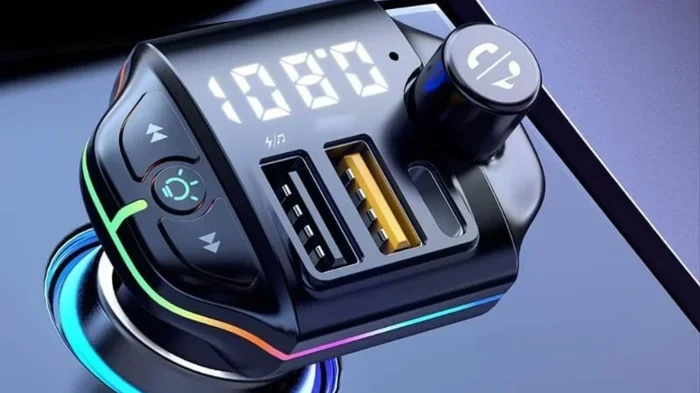
An FM transmitter is a small device that takes an audio source and sends it out as an FM radio signal. Think of it as a tiny, low-power radio station. Your phone or music player connects to the transmitter. The transmitter then broadcasts that sound on a specific FM frequency. Your car radio tunes into that frequency and plays the audio. It is a bridge between your digital device and your analog car stereo.
How FM Transmitters Work
Inside the transmitter, a tiny oscillator generates a carrier wave at an FM frequency. Your audio signal modulates that carrier wave. The modulated wave travels through the transmitter’s small antenna. It radiates outward as an electromagnetic wave. Your car radio antenna picks up that wave. The radio demodulates it to recover the original audio. The whole process happens in milliseconds. You hear music without any cables. That is the magic of wireless FM transmission.
Most car FM transmitters operate in the 87.5 to 108.0 MHz band. This is the standard FM radio band. The device uses a wireless FM modulator to convert your audio into a radio signal. The signal strength is very low, usually under 1 watt. That is why the range is short. It also means the signal is easy to block with common materials.
Common Uses in Cars
People use FM transmitters for car audio in many situations. You might have an older car with only a cassette player or CD deck. A transmitter lets you add Bluetooth or USB playback. You might also use it to charge your phone while playing music. Some drivers use a Bluetooth FM transmitter to get hands-free calling. The transmitter acts as a bridge between your phone and the car radio. It is a popular solution for older vehicles or when the built-in system fails.
Another common use is in rideshare or delivery work. Drivers often play music or podcasts for hours. A transmitter keeps the audio streaming without draining the phone battery. It is also useful for parents who want to play kids’ shows through the car speakers. The FM transmitter car setup is simple and works with almost any phone.
Can Other Cars Hear My FM Transmitter Through Walls?
The question “can other cars hear my FM transmitter through walls” comes up a lot. The short answer is that it is very unlikely, but not impossible. FM signals can pass through walls, but they lose energy. The thicker or denser the wall, the more signal strength you lose. A typical FM transmitter range is 100 to 300 feet in open air. When you add walls, that range drops fast. A single drywall interior wall might cut the range in half. A concrete exterior wall can reduce it to almost nothing.
Imagine you are in your garage, parked with the door closed. Your transmitter is on the dashboard. The signal must pass through the garage door, the wall between the garage and your house, and maybe the house wall to reach the street. By the time it gets out, it is very weak. A car driving by on the street is unlikely to pick it up. The same applies to apartment buildings. Your neighbor’s radio is probably tuned to a completely different frequency.
The Science Behind FM Signal Penetration
FM radio waves are part of the electromagnetic spectrum. They have a wavelength of about 3 meters. That is relatively long. Longer waves can bend around obstacles better than shorter waves. However, they still get absorbed by dense materials. The key concept is signal penetration. Every material has a certain amount of wall attenuation. This is the loss of signal strength as it passes through the material.
FM signals also suffer from wall attenuation based on frequency. Lower FM frequencies (around 88 MHz) can sometimes travel slightly farther than higher frequencies (around 108 MHz). But the difference is small for typical building materials. The main factor is the material itself. A signal blocker like a metal roof or a concrete slab will kill the signal quickly. Wood and drywall are less effective blockers, but they still reduce the range significantly.
Real-World Range Tests
Many reviewers test FM transmitter range in open fields. They measure the distance at which the audio starts to distort or disappear. In open air, a good Bluetooth FM transmitter might reach 200 feet or more. But that test does not include walls. When tested through a single layer of drywall, the range often drops to 80-100 feet. Through a brick exterior wall, it can fall to 20-30 feet. Through concrete, it may be nearly zero beyond a few feet.
These numbers show why FM transmitter through walls is rarely a problem for privacy. Your signal stays mostly inside your car or home. The FM radio bleed is minimal in real-world conditions. If you park in a crowded lot with concrete pillars and brick buildings, your signal is even more contained.
| Wall Material | Approximate Signal Loss | Effect on FM Transmitter Range |
|---|---|---|
| Drywall (interior) | 3-6 dB | Reduces range by about 50% |
| Wood paneling | 4-8 dB | Reduces range by 50-70% |
| Brick | 10-15 dB | Reduces range by 80-90% |
| Concrete | 15-20 dB | Reduces range by 90%+ |
| Metal sheeting | 20+ dB | Blocks signal almost completely |
| Glass (single pane) | 1-3 dB | Minimal reduction |
These numbers are approximate. They give you a clear picture of how different materials affect your FM signal range. The denser the material, the more it blocks the FM radio frequency. This is why a car with a metal body acts as a Faraday cage. The signal does not escape easily.
Factors That Affect FM Transmitter Range Through Walls
Several factors determine whether your FM transmitter range will reach another car. Understanding these helps you control your signal. You can make choices that keep your audio private.
Wall Material and Thickness
The most obvious factor is what the signal has to pass through. A single interior wall is easy for FM waves to penetrate. But a double brick wall with insulation is a different story. Thickness matters a lot. A thin concrete block wall might still let some signal through. A thick poured concrete wall will stop it dead. If you park in a garage with a concrete floor and metal door, your signal is trapped. The FM transmitter range walls inside a building are very short.
FM Frequency and Signal Strength
The frequency you choose also plays a role. Some FM frequencies are less crowded in your area. If you pick a frequency that is already in use by a local station, your transmitter will cause interference. It may also sound distorted. A clear FM frequency gives you the cleanest signal and the best chance of staying within your car. The FM transmitter power output is another key factor. Most car transmitters are limited to 1-2 watts by law. That is enough for a car interior, but not much beyond it. Some models let you adjust the power. Lowering the power can reduce the chance of FM signal leakage to other cars.
Interference from Other Devices
Your car is full of electronics. The alternator, ignition system, and even the phone charger can create electrical noise. This noise can mix with your FM signal. It causes static or a buzzing sound. Sometimes that noise radiates outside the car. Another driver might hear a buzzing or static instead of your music. This is not your actual audio, but it can still be annoying. Using a high-quality FM transmitter audio cable and a noise filter can reduce this problem. A FM signal strength test can help you find the cleanest channel with the least interference.
Expert Insights
According to broadcast engineers, FM signals behave predictably in indoor environments. A FM range test inside a typical home shows that the signal drops to background noise levels within 10-15 feet through a single wall. The FM transmitter range is much shorter than the advertised 300 feet. That is because the advertised range assumes perfect line-of-sight with no obstacles. In a real parking lot with cars, buildings, and trees, the effective range is often under 50 feet.
How to Minimize the Chance of Other Cars Hearing Your FM Transmitter
If privacy is your goal, you can take several steps. These tips help you keep your audio inside your vehicle. They also reduce the risk of interfering with other FM radio listeners.
Choose a Clear Frequency
Before you turn on your transmitter, scan the FM dial. Find a frequency that has no local stations. In many cities, frequencies like 87.9, 88.1, or 88.3 are often unused. Some FM transmitter models have a “scan” feature that finds the clearest frequency for you. Once you find a clear channel, lock it in. Avoid frequencies near the edges of the band (87.5 or 107.9) because they are more likely to be occupied. A clear frequency means less chance of your signal bleeding into another car’s radio.
Lower the Transmitter Power
Many FM transmitters for car models have a power adjustment setting. If yours does, set it to the lowest level that still gives you clear audio. A lower power output means a shorter broadcast range. It is the simplest way to limit the signal to your car interior. This is especially useful if you are parked in a tight space and do not want the music to reach the next car over.
Position the Antenna Properly
The location of the transmitter matters. Most car FM transmitters have a short antenna or a plug-in design. Place the transmitter as close to your car radio antenna as possible. This helps the signal stay inside the car’s audio system. If the transmitter is buried under a seat or in the glovebox, the signal has to travel through more metal and plastic to get out. That naturally reduces the chance of FM radio bleed. Keep the transmitter in the center console or near the dash for the best audio quality and the least external leakage.
Use a Wired Connection When Possible
If your car has an auxiliary input or a USB port, use it. A wired connection eliminates the FM broadcast entirely. You get better audio quality and zero chance of other cars hearing your music. If you must use a transmitter, consider a model with a short cable that connects directly to the AUX port. This FM transmitter AUX setup keeps the signal path short and contained.
Legal and Privacy Considerations
Using an FM transmitter in your car is legal in most countries, but there are rules. In the United States, the Federal Communications Commission (FCC) regulates these devices. The rules are designed to prevent interference with licensed radio stations.
FCC Rules and Regulations
The FCC limits the FM transmitter power output to 1 milliwatt (0.001 watt) for unlicensed devices. Some models claim higher power, but they must still meet strict limits. The transmitter must not cause interference to other radio services. If your FM transmitter causes a licensed station to buzz or distort, you could be fined. The good news is that most FM transmitter car devices operate well below the legal limit. They are designed to be safe and non-interfering.
Is It Legal to Use FM Transmitters?
Yes, using an FM transmitter in your car is legal. You do not need a license. However, you must use it responsibly. Do not try to boost the power to reach farther. Do not use a modified transmitter that exceeds legal limits. The device is meant for personal use in your vehicle. If you use it to broadcast music to a large area, that could be seen as illegal broadcasting. Keep the signal low and keep it legal.
Privacy is another consideration. While it is unlikely that someone will hear your FM transmitter through walls, it is not impossible in rare cases. If you are in a building with very thin walls and you use a high-power transmitter, the signal might leak. To protect your privacy, keep the power low and choose a frequency that is not used by any local station. This reduces the chance of anyone else tuning in.
Quick Tips and Common Mistakes
Quick Tips for Best Performance
- Always start by scanning for a clear FM frequency before you drive.
- Keep the transmitter plugged in for stable power. Battery-powered transmitters can sound weak.
- Place the transmitter near your car’s antenna for the best signal containment.
- Use a FM transmitter with USB charging to keep your phone powered while streaming.
- If you hear static, move the transmitter slightly. Small position changes can reduce noise.
- Turn off other Bluetooth devices in the car that might cause interference.
Common Mistakes to Avoid
- Choosing a frequency that is already in use by a local radio station. This causes distortion and interference.
- Placing the transmitter near the car’s power cables. Electrical noise from the alternator can create a loud hum.
- Using a transmitter with a damaged antenna. A broken antenna reduces range and increases signal leakage.
- Assuming the advertised range is the real-world range. Walls, cars, and buildings cut the range dramatically.
- Ignoring the legal power limit. Boosting the signal to reach farther can result in fines.
Conclusion
So, can other cars hear my FM transmitter through walls? The answer is almost always no. FM transmitters are designed for short-range use inside your vehicle. Walls, especially thick or dense ones, block the signal effectively. Even in open air, the range is limited to a few hundred feet. By choosing a clear frequency, lowering the power, and positioning the antenna correctly, you can keep your audio completely private. The FM transmitter range is your friend when it comes to privacy. Use it wisely, and you will enjoy your music without worrying about strangers listening in. A car FM transmitter is a convenient tool, and with the right setup, it stays a private one. Follow the tips in this guide, and you will have a great FM transmitter car experience every time.
Frequently Asked Questions
How far can an FM transmitter reach through a wall?
Through a single drywall interior wall, an FM transmitter might reach 50-100 feet. Through a brick exterior wall, the range drops to 20-30 feet. Through concrete, the signal may not travel more than a few feet. The actual distance depends on the wall material and thickness.
Can my neighbor hear my FM transmitter if we share a wall?
It is very unlikely. FM transmitters use low power, and shared walls in apartments are usually thick enough to block the signal. If your neighbor does hear something, it would likely be faint static, not clear music.
What is the best FM frequency to avoid interference?
Look for a frequency between 87.9 and 107.9 that has no local station. In many areas, 87.9, 88.1, or 88.3 are often unused. Use a frequency scan feature on your transmitter to find the clearest channel.
Are FM transmitters legal to use in cars?
Yes, FM transmitters are legal in most countries, including the United States. They must comply with FCC power limits, usually 1 milliwatt or less. Using a compliant transmitter does not require a license.
Why does my FM transmitter sound staticy when I turn the volume up?
High volume on the transmitter can introduce distortion and static. The transmitter’s amplifier is very small. Keep the volume moderate on both your phone and the car radio. If static persists, try a different FM frequency or move the transmitter closer to the car antenna.
Can an FM transmitter signal reach another car in a parking lot?
In an open parking lot, the signal might reach a nearby car if it is within 50-100 feet. However, if there are walls, pillars, or other cars between you, the signal will not reach. Most drivers in adjacent cars will not hear your audio unless they happen to be tuned to the exact same frequency.