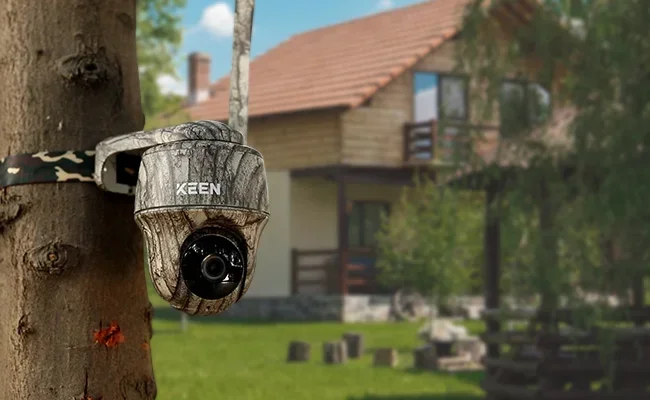
Can I Use A Trail Cam As A Security Camera At Home
Yes, you can use a trail cam as a security camera at home. These battery-powered devices offer motion detection, night vision, and remote alerts that make them surprisingly effective for property monitoring. Whether you want to watch your backyard, driveway, or cabin, a trail cam can fill gaps in your home security setup without breaking the bank.
Have you ever wondered if a trail cam could do the job of a traditional security camera? Maybe you have a cabin in the woods, a large backyard, or a property that needs watching but doesn’t have easy access to power outlets. A trail cam as a security camera might just be the answer you’ve been looking for.
The idea of using a wildlife camera for home protection sounds unusual at first. But when you think about what these devices actually do, the logic becomes clear. They detect motion, capture video, record at night, and some even send alerts straight to your phone. That’s a lot of what a security camera does, right?
In this guide, we will walk through everything you need to know about using a trail camera for home security. We will cover the benefits, the drawbacks, the best models, and how to set one up the right way. By the end, you will know exactly whether a trail cam fits your home surveillance needs.
Key Takeaways
- Trail cams work as security cameras: They offer motion detection, night vision, and video recording that can protect your property.
- They are affordable and easy to set up: No wiring or professional installation needed for most models.
- Battery life is a major advantage: Many trail cams run for months on a single set of batteries, making them ideal for remote areas.
- Limitations exist: Smaller storage, lower video quality, and lack of live streaming on basic models are real trade-offs.
- Cellular trail cams are the best choice: They send real-time alerts to your phone, closely mimicking a true security camera experience.
- Placement matters enormously: Where you mount your trail cam determines how effective it will be for home security.
📑 Table of Contents
- What Is a Trail Cam and How Does It Work?
- Can You Really Use a Trail Cam as a Security Camera?
- Benefits of Using a Trail Cam for Home Security
- Limitations You Should Know About
- Trail Cam vs Security Camera: A Side-by-Side Comparison
- Best Trail Cameras for Home Security Use
- How to Set Up Your Trail Cam for Maximum Protection
- Common Mistakes to Avoid When Using a Trail Cam for Security
- Final Thoughts: Is a Trail Cam Worth It for Home Security?
What Is a Trail Cam and How Does It Work?
A trail camera is a rugged, weatherproof device designed to capture photos and videos of wildlife. Hunters and nature enthusiasts have used them for decades. But in recent years, homeowners have discovered that these cameras serve a second purpose: home security and property monitoring.
Here is how a typical game camera works:
- Motion sensor: A passive infrared (PIR) sensor detects heat and movement within its field of view.
- Trigger speed: When motion is detected, the camera wakes up and starts recording. Fast trigger speeds mean fewer missed moments.
- Night vision: Most trail cams use infrared LEDs to capture clear footage in complete darkness.
- Storage: Photos and videos are saved to an SD card inside the camera.
- Power: Batteries keep the device running, often for weeks or months depending on usage.
That simple process is what makes a trail cam so appealing for security. There are no wires to run, no outlets needed, and no complicated setup. You simply mount the camera, aim it at the area you want to watch, and let it do its job.
How Motion Detection Works in Trail Cameras
The motion detection sensor is the heart of any trail cam. When a warm object — like a person, animal, or vehicle — passes through the sensor’s detection zone, the camera activates. The speed at which it responds is called the trigger speed, and it matters a lot for security purposes.
Cheaper models might have a trigger speed of one to two seconds. That means you could miss the first part of someone approaching your property. Better models trigger in under half a second. If you are serious about using a trail cam for security, look for a fast trigger speed and a wide detection angle.
Can You Really Use a Trail Cam as a Security Camera?
The short answer is yes. The longer answer is that it depends on what you need. A trail cam as a security camera works well for certain situations but falls short in others. Let us break it down honestly.
Trail cams shine when you need to monitor a remote area without access to electricity. Think of a hunting cabin, a vacation home, a farm property, or a backyard that is far from your house. They also work great for catching trespassers, recording wildlife activity near your home, or keeping an eye on a driveway or gate.
Trail cams fall short when you need live streaming, continuous recording, or high-definition video of every corner of your property. Most trail cams record in bursts or when motion is detected. They do not provide a live feed like a wired home security camera system would.
When a Trail Cam Makes Sense for Home Security
Here are some common scenarios where a trail cam works perfectly as a security tool:
- You own a vacation home or cabin that sits empty for weeks at a time.
- You want to monitor a large wooded area or acreage around your property.
- You need to watch a remote gate, driveway, or parking area.
- You want a low-cost, no-fuss option for basic property surveillance.
- You live in a rural area where power outages are common and battery-powered devices are a necessity.
When a Trail Cam Is Not the Right Choice
There are times when a traditional security camera system is a better fit:
- You need 24/7 live video monitoring of your property.
- You want high-resolution footage with clear facial recognition.
- You need two-way audio to communicate with visitors or intruders.
- Your property is close to power sources and you want continuous recording.
Benefits of Using a Trail Cam for Home Security
Using a trail cam for home surveillance comes with some surprisingly strong advantages. Let us look at why more homeowners are choosing this route.
1. No Wiring Required
This is the biggest selling point. A battery-powered trail camera needs no electrical wiring, no outlet nearby, and no professional installation. You can place it almost anywhere — up a tree, on a fence post, or hidden in a bush. That freedom of placement is something most wired security cameras simply cannot match.
2. Excellent Battery Life
Many trail cams run for three to six months on standard batteries. Some models with lithium batteries last even longer. This makes them ideal for locations where you cannot easily access the camera for recharging or maintenance. For remote property monitoring, long battery life is a game-changer.
3. Weatherproof and Durable
Trail cameras are built to survive rain, snow, extreme heat, and freezing temperatures. Most are rated IP65 or higher for weather resistance. You can leave them outside year-round without worrying about damage. This durability makes them a reliable choice for outdoor security.
4. Affordable Option for Property Protection
A good trail cam costs between $80 and $200. Compare that to a full home security system with multiple cameras, which can run several hundred dollars or more. If you only need to monitor one or two areas, a single trail cam is a budget-friendly alternative.
5. Stealth and Discretion
Trail cams are small and often camouflaged in natural colors like bark or green. They blend into trees and bushes, making them hard for intruders to spot. This stealth factor is a real advantage for security — a visible security camera can be tampered with, but a hidden trail cam is much harder to find.
Limitations You Should Know About
Before you run out and buy a trail cam for home security, it is important to understand the limitations. No device is perfect, and knowing the downsides helps you make a smart decision.
1. Limited or No Live Streaming
Most standard trail cameras do not offer live video feeds. You have to retrieve the SD card or wait for a cellular model to send images and short clips to your phone. If you want to watch your property in real time, a basic trail cam will not cut it.
2. Smaller Storage Capacity
Trail cams typically use SD cards ranging from 8GB to 128GB. That is enough for thousands of photos and several hours of video, but it fills up faster than you might expect with continuous or frequent motion triggers. You will need to visit the camera regularly to manage storage.
3. Video Quality Gaps
While some high-end trail cams shoot 1080p video, many budget models record at 720p or lower. For identifying faces or license plates, this resolution may not be sufficient. If clear identification is important for your home security, you will want to invest in a higher-quality model.
4. No Two-Way Audio
Unlike many modern security cameras, most trail cams do not have microphones for two-way communication. You cannot warn off a trespasser or talk to a delivery driver through a trail cam. Some models include basic audio recording, but that is different from live communication.
5. Motion-Only Recording
A trail cam only records when it detects motion. That means if nothing moves in front of the camera, you get no footage. For continuous monitoring of a specific area, this is a significant limitation compared to a surveillance camera that records nonstop.
Trail Cam vs Security Camera: A Side-by-Side Comparison
Not sure whether a trail cam or a traditional security camera is right for you? This comparison table breaks down the key differences.
| Feature | Trail Cam | Security Camera |
|---|---|---|
| Power Source | Battery-powered | Usually plugged into outlet |
| Installation | No wiring, mount anywhere | May require wiring and professional help |
| Live Streaming | Limited or none on basic models | Available on most models |
| Night Vision | Yes, infrared LEDs | Yes, often with color night vision |
| Battery Life | Months on a single charge | Not applicable (plugged in) |
| Weather Resistance | Excellent, built for outdoors | Varies, some need enclosures |
| Price Range | $50 to $300 | $30 to $300+ per camera |
| Video Quality | Up to 4K on premium models | Up to 4K on premium models |
| Two-Way Audio | Rare | Common on modern models |
| Remote Alerts | Yes, on cellular models | Yes, on smart models |
As you can see from the table, a trail cam and a security camera share many features. The main differences come down to power source, live streaming, and two-way audio. For basic property monitoring, a trail cam holds its own very well.
Best Trail Cameras for Home Security Use
Not all trail cameras are created equal. If you want to use one for home surveillance, you need a model with fast trigger speed, good video quality, and reliable motion detection. Here are some categories to consider.
Best Overall: Cellular Trail Cameras
A cellular trail camera connects to a cellular network and sends photos and short video clips directly to your phone or email. This is the closest thing to a real security camera experience without wires. You get instant alerts when motion is detected, so you can check your property from anywhere.
Popular models in this category include the Browning Strike Force Pro and the Moultrie A-50i. These cameras offer solid video quality, fast trigger speeds, and reliable cellular connectivity. They do require a data plan, which adds a small monthly cost.
Best Budget Option: Standard Flash Trail Cameras
If you do not need cellular alerts, a basic flash trail camera works well for recording footage that you check manually. These models are affordable and reliable. You simply visit the camera periodically to download the SD card and review your footage.
Brands like Bushnell and Reconyx offer solid budget-friendly options that deliver good image quality and fast trigger speeds without the cellular subscription.
Best for Video: High-Resolution Trail Cameras
If video quality matters to you, look for a trail cam that shoots 1080p or even 4K video. Higher resolution helps with identification and makes the footage more useful as surveillance evidence. These cameras typically cost more but are worth it if you need clear, detailed footage.
How to Set Up Your Trail Cam for Maximum Protection
Setting up a trail cam for home security is straightforward, but a few smart choices will make a big difference in how well it works.
Step 1: Choose the Right Location
The placement of your trail camera determines everything. Mount it at a height of about three to four feet for the best coverage of people and vehicles. Aim it along a path or driveway where movement is expected. Avoid pointing the camera directly at the sun, which can cause false triggers and washed-out footage.
Step 2: Secure the Camera
Home security means you do not want your camera stolen or tampered with. Use a sturdy mounting strap or chain to attach the camera to a tree or post. Some trail cams come with built-in security slots for cable locks. You can also use a camouflage cover to keep it hidden from view.
Step 3: Set the Right Sensitivity
Most trail cameras let you adjust the motion detection sensitivity. Set it too high, and you will get triggered by blowing leaves or small animals. Set it too low, and you might miss a person walking by. Start with a medium sensitivity and adjust based on your results.
Step 4: Use the Right SD Card
A fast, high-capacity SD card ensures you do not miss recordings. Look for a Class 10 or UHS-I card with at least 32GB of storage. This gives you plenty of room for video files without needing to visit the camera too often.
Step 5: Check and Maintain Regularly
Even though trail cams are low-maintenance, you should check them every two to four weeks. Replace batteries if needed, clear the SD card when full, and clean the lens with a soft cloth. Regular maintenance keeps your property monitoring running smoothly.
Quick Tips for Better Trail Cam Security
- Use lithium batteries for longer life and better performance in cold weather.
- Point the camera north to avoid direct sunlight triggering false alerts.
- Enable the time-stamp feature so your footage is easy to organize.
- Use a security box or enclosure to protect the camera from theft.
- Test your camera for a few days before relying on it for security.
Common Mistakes to Avoid When Using a Trail Cam for Security
Even experienced users make mistakes. Here are some common errors that reduce the effectiveness of your trail cam for home surveillance.
Mistake 1: Placing the Camera Too High or Too Low
Mounting a trail cam too high means it will miss faces and capture mostly heads and shoulders. Placing it too low makes it vulnerable to being knocked over by animals or bumped by people. The sweet spot is about three to four feet off the ground.
Mistake 2: Ignoring the Detection Zone
Every trail camera has a specific detection zone — the area within which the motion sensor can pick up movement. If you place the camera too far from the activity area, you will miss triggers. Check the detection range in the specs and position accordingly.
Mistake 3: Using the Wrong SD Card
A slow or low-quality SD card can cause the camera to freeze, fail to record, or corrupt files. Always use a fast, name-brand SD card rated for video recording. This small investment prevents big headaches.
Mistake 4: Forgetting About Battery Drain
If your trail cam has a backlight or flash feature, it will drain batteries faster. If you are using the camera purely for security and do not need flash, turn it off to extend battery life significantly.
Mistake 5: Not Checking Footage Regularly
A trail cam is only useful if you actually review the footage. Set a reminder to check the camera every two weeks. This habit ensures you catch important events and manage storage before the card fills up.
Expert Insight: What Security Professionals Say
Many home security experts agree that a trail cam is a valuable supplement to a full security system, not a complete replacement. “Trail cams are excellent for monitoring remote areas and filling blind spots,” says one security consultant. “But for main entry points like front doors and garage entries, a dedicated smart security camera with live streaming and two-way audio is still the better choice.”
Final Thoughts: Is a Trail Cam Worth It for Home Security?
So, can you use a trail cam as a security camera at home? Absolutely. It is a practical, affordable, and effective solution for many homeowners — especially those with remote properties, large acreage, or areas without easy access to power.
A trail cam will not replace a full smart home security system if you need live feeds, two-way audio, and continuous recording. But for basic property monitoring, trespasser detection, and peace of mind, it does an impressive job.
The key is choosing the right model, placing it strategically, and maintaining it regularly. A cellular trail camera with fast trigger speed and good night vision will give you the best home surveillance experience without the complexity and cost of a traditional security camera system.
If you have a spot on your property that needs watching, do not overlook the humble trail camera. It might just be the simplest and smartest security upgrade you can make.
Frequently Asked Questions
Can a trail camera be used as a permanent security camera?
Yes, a trail cam can serve as a permanent security camera as long as you keep the batteries charged and the SD card managed. Many homeowners leave their trail cameras mounted outside for months at a time without any issues. Just make sure to check the camera regularly and replace batteries as needed.
Do trail cameras work at night for security purposes?
Absolutely. Almost all trail cameras come with infrared night vision that captures clear footage in complete darkness. This makes them highly effective for nighttime security and monitoring after dark when most break-ins occur.
Can I get real-time alerts from a trail cam?
You can, but only with a cellular trail camera. These models connect to a cellular network and send photos and short video clips to your phone instantly when motion is detected. Standard non-cellular trail cams require you to physically retrieve the SD card to review footage.
How far can a trail cam detect motion?
Most trail cams have a motion detection range of 40 to 80 feet, though some premium models reach up to 100 feet or more. The detection range varies by model and settings, so check the specifications before purchasing if range is important for your property monitoring needs.
Is a trail cam better than a security camera for rural properties?
For rural properties, a trail cam often has the edge because it requires no wiring, no power outlet, and no Wi-Fi connection. It is built to withstand harsh outdoor conditions and can run on batteries for months. For remote outdoor security, a trail cam is frequently the more practical choice.
What is the best type of trail cam for home security?
A cellular trail camera is generally the best choice for home security because it sends real-time alerts and images to your phone. If you prefer a budget option, a standard flash trail camera with fast trigger speed and good night vision will also work well for basic home surveillance.
=== CONCLUSION ===
Using a trail cam as a security camera at home is not only possible — it is a smart, cost-effective choice for many homeowners. Whether you are protecting a cabin in the woods, monitoring a large backyard, or keeping an eye on a remote driveway, a trail camera delivers reliable motion detection, strong night vision, and durable outdoor performance.
The key is understanding what a trail cam can and cannot do. It works best for motion-triggered recording and periodic monitoring rather than live streaming and continuous surveillance. Choose the right model, place it wisely, and maintain it regularly, and you will have a dependable home security tool that keeps your property protected.
Start with one trail cam in the most vulnerable spot on your property, test it for a few days, and see how it works for you. You might be surprised at how much peace of mind a simple game camera can provide.