Are Floating Holograms Possible or Science Fiction
Are floating holograms possible? The short answer is yes, but with major limitations. True free-floating holograms without screens or glasses remain a work in progress. Today, hologram technology uses light fields, volumetric displays, and augmented reality to create stunning floating images. While full holographic TV and real-life holographic projection are not yet mainstream, rapid advances suggest a holographic future closer than you think.
Are Floating Holograms Possible or Science Fiction
Have you ever watched a movie and wondered if floating holograms could really exist? The idea of a floating image hovering in mid-air feels like pure science fiction. But here is the exciting truth. Hologram technology has come a long way, and some forms of floating holograms are already real.
So, are floating holograms possible right now? The answer is both yes and no. We can create holographic projections that look like free-floating objects. But creating a true, untethered hologram that anyone can walk around and view from any angle is still a challenge. Let us dive deep into what is real, what is not, and what the future holds for this amazing technology.
Key Takeaways
- Floating holograms exist in limited forms today through volumetric displays and light field technology.
- True free-space holograms without screens or headsets are still being developed by researchers worldwide.
- Pepper’s ghost remains the most widely used technique for creating holographic illusions on stage and in entertainment.
- Augmented reality devices like smart glasses are bringing holographic experiences closer to everyday consumers.
- Holographic film and digital holography are advancing fast, paving the way for practical applications.
- Holographic projection in consumer products is expected within the next decade as light field displays mature.
- Science fiction has inspired real-world research, and the gap between fantasy and reality is shrinking every year.
📑 Table of Contents
- What Are Floating Holograms?
- The Science Behind Floating Holograms
- Current Hologram Technology in Use Today
- Are Floating Holograms Possible Without Screens?
- Famous Hologram Moments in Pop Culture
- The Future of Holographic Technology
- Common Myths About Floating Holograms
- Quick Tips for Understanding Hologram Tech
- Common Mistakes People Make About Holograms
What Are Floating Holograms?
A floating hologram is a three-dimensional image that appears to hover in space without a physical screen or surface. Unlike a regular video on a TV, a holographic display creates a virtual image that you can see from different angles. This gives the illusion that the object is truly there in the room with you.
The concept comes from holography, which records light patterns and reproduces them as a three-dimensional scene. When most people think of science fiction, they picture holograms like the ones in Star Wars or Iron Man. Those floating images look incredibly cool. But making them work in real life is a whole different story.
Understanding Holographic Technology
Hologram technology works by controlling light. A holographic projection uses lasers, mirrors, and special materials to bend light into shapes that look like real objects. The key is light diffraction. This is when light waves bend around objects or pass through small openings and create patterns. Those patterns form the image you see.
There are two main types of holograms. One type needs a physical medium like a holographic film or a glass plate. The other type uses digital projectors and screens. Both create 3D projection effects, but neither is a truly free-floating hologram yet. The technology is getting closer, though.
How Holograms Differ from 3D Projections
Many people confuse 3D projection with holography. They are not the same thing. A 3D projection on a movie screen tricks your brain using glasses or special screens. A holographic display does not need glasses. The image appears to have real depth and dimension.
Here is a simple way to tell the difference. If you move your head and the image shifts like a real object, it is likely a holographic projection. If the image stays flat and fixed, it is just 3D projection. True holograms change based on your viewing angle. This is what makes them so magical.
The Science Behind Floating Holograms
The science of creating floating holograms is fascinating. It combines physics, optics, and computer engineering. Researchers around the world are working on ways to make holographic images appear in open air without any screen or device blocking the view.
Light Field and Volumetric Display
Two of the most promising technologies are light field displays and volumetric display systems. A light field display controls the direction of every light ray that reaches your eye. This creates a realistic floating image that you can view from multiple angles.
A volumetric display builds an image point by point in actual three-dimensional space. Instead of projecting onto a flat surface, it uses lasers, fog, or spinning LEDs to create a solid-looking virtual image. Some of these systems can produce small holographic images that truly float in the air. They are not yet large or bright enough for everyday use, but they work.
How Holographic Interference Patterns Work
Traditional holography relies on light interference patterns. When two beams of laser light overlap, they create a pattern. This pattern is recorded on a holographic film. When you shine light through the film, the pattern reconstructs the original image in three dimensions.
This process is called digital holography when done with computers. Modern systems use sensors and processors to calculate interference patterns in real time. Then they display them on screens or through holographic lenses. The result is a holographic projection that looks incredibly lifelike. But it still needs a surface or device to work.
Current Hologram Technology in Use Today
Believe it or not, hologram technology is already being used in many places. From concerts to medical imaging, holographic displays are making an impact. Let us look at where they are used today.
Pepper’s Ghost and Stage Holograms
The most famous technique for creating floating holograms is called Pepper’s ghost. This method has been around since the 1800s. It uses a sheet of glass or transparent film angled at 45 degrees. A hidden light source projects an image onto the glass, making it look like a ghost or object is floating on stage.
You have probably seen Pepper’s ghost without knowing it. The Tupac hologram at Coachella was created using this technique. So was the famous “hologram” of Michael Jackson. These are not true holograms in the scientific sense. They are clever illusions. But they look incredibly convincing, and that is what matters for entertainment.
Holographic Displays and AR Devices
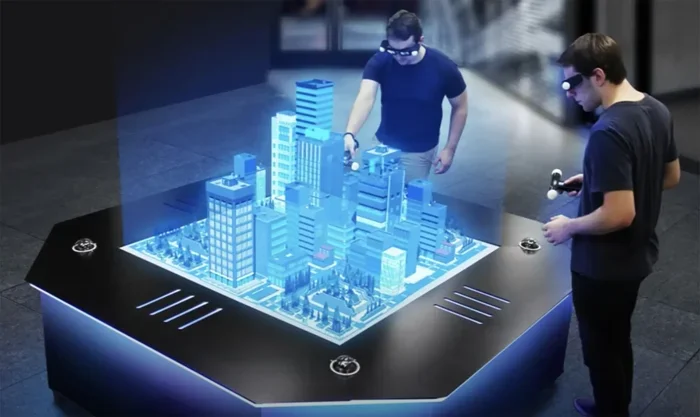
Today, augmented reality headsets and smart glasses are bringing holographic experiences into homes and workplaces. Devices like the Microsoft HoloLens and Magic Leap create floating images that you can interact with using your hands and voice.
These are not free-floating holograms either. They use holographic waveguides and holographic lenses to project images directly into your eyes. The result feels like a floating image hovering in front of you. As augmented reality technology improves, these devices will become lighter, cheaper, and more powerful. The holographic future is already starting to take shape.
Are Floating Holograms Possible Without Screens?
This is the big question. Can we create a floating hologram that you can see without any screen, glasses, or headset? The honest answer is that we are not fully there yet. But researchers are making incredible progress.
Volumetric Displays and Light Field Tech
Some companies have built volumetric displays that create small floating images in mid-air. These systems use lasers to ionize air molecules or project light onto fog screens. The result is a glowing virtual image that appears to float in open space.
One example is the Looking Glass Factory display. It uses a light field display to show 3D images without glasses. You can move around it and see different angles. Another example is the work done by researchers at Brigham Young University. They created a holographic projection of a small butterfly that actually floats in the air using laser traps.
These are small-scale achievements. But they prove that free-space holograms are possible. The challenge is scaling them up. Making large, bright, colorful holographic images that fill a room is still very difficult.
Challenges of True Free-Space Holograms
Creating a true floating hologram in open air comes with huge challenges. First, there is the brightness problem. Light needs something to bounce off of. In open air, there is nothing for the light to hit. So the image appears faint or invisible.
Second, there is the size problem. Most volumetric displays can only create tiny images. Making them larger requires more lasers, more computing power, and more precision. Third, there is the cost. Advanced holographic tech is expensive right now. Making it affordable for consumers is a big hurdle.
Finally, there is the viewing angle issue. Many current systems only look good from one or two angles. A true holographic display should look great from every direction. Solving all these problems at once is the holy grail of hologram technology.
Famous Hologram Moments in Pop Culture
Science fiction has shaped our idea of what floating holograms should look like. Movies, TV shows, and video games have given us a vision of the future that is both inspiring and ambitious.
Holograms in Movies and TV Shows
Star Wars introduced the world to the concept of holographic communication. Princess Leia’s message floating in R2-D2 is one of the most iconic floating images in cinema history. Iron Man uses a holographic interface to design suits and fight villains. The Avengers use a holographic display to plan missions in their headquarters.
These scenes made hologram technology feel exciting and real. They inspired a generation of engineers and scientists. Many of them are now working on making those science fiction dreams come true. The gap between the movies and reality is getting smaller every year.
Real-World Hologram Events and Stunts
Beyond movies, holographic projections have been used in real-world events. The Tupac performance at Coachella in 2012 was a massive moment for hologram technology. It showed the world that holographic illusions could captivate millions of people.
Since then, artists like ABBA, Whitney Houston, and various K-pop stars have used holographic stage shows. These events use Pepper’s ghost and advanced holographic film techniques. They create the illusion of a performer being right there on stage. While not true free-floating holograms, they are incredibly effective and emotionally powerful.
The Future of Holographic Technology
The future of hologram technology is bright. Researchers and companies are investing heavily in making floating holograms a everyday reality. Here is what we can expect in the coming years.
What Realistic Holograms Could Look Like Soon
In the near future, we will likely see holographic TV sets that do not need glasses. These devices will use light field displays to create 3D images that float above the screen. You will be able to walk around your living room and see the image from different angles.
Smartphones may also get holographic projection capabilities. Imagine pointing your phone at your desk and seeing a floating image of a document or a game character. Some companies are already working on holographic generators small enough to fit in a pocket device.
How Holographic Tech Could Change Daily Life
Holographic technology could transform many industries. In medicine, doctors could view 3D holographic scans of patients before surgery. In education, students could interact with a floating image of the solar system or a human heart. In design, engineers could walk around a holographic model of a car or building before it is built.
Communication could change too. Instead of video calls, you might have holographic conversations with people on the other side of the world. Their virtual image would sit in your living room, and you could see them from every angle. This is the kind of holographic future that science fiction promised us.
The key to getting there is continued investment in light field technology, volumetric displays, and digital holography. As these technologies mature, the cost will come down and the quality will go up. A world with floating holograms everywhere is not as far-fetched as it once seemed.
Common Myths About Floating Holograms
There are many misconceptions about hologram technology. Let us clear up a few of the most common ones.
Myth one: Holograms are always free-floating. In reality, most holographic projections today need a surface, screen, or device to work. True free-space holograms are still in development.
Myth two: Holograms and 3D projection are the same thing. They are not. 3D projection creates depth on a flat surface. Holography creates a true three-dimensional virtual image that changes with your viewing angle.
Myth three: Holograms are only for entertainment. While concerts and movies use them heavily, holographic technology has serious applications in medicine, engineering, military, and education.
Myth four: We will have holographic TV tomorrow. The truth is that consumer holographic displays are still years away from being affordable and widely available. But progress is happening fast.
Quick Tips for Understanding Hologram Tech
- Tip one: Remember that light diffraction is the core principle behind all holography. Without controlling light, there is no hologram.
- Tip two: Not every “hologram” you see is a real one. Many stage shows use Pepper’s ghost or augmented reality tricks.
- Tip three: Look for volumetric display and light field display when researching real holographic tech. These are the most promising paths forward.
- Tip four: Follow companies like Looking Glass, Light Field Lab, and Microsoft for updates on holographic projection breakthroughs.
- Tip five: Keep an eye on holographic film and holographic lens innovations. These components are what make modern holographic displays possible.
Common Mistakes People Make About Holograms
One common mistake is calling every 3D projection a hologram. Not all floating images are true holograms. Pepper’s ghost illusions are often mislabeled as holograms in news coverage. This confuses the public about what hologram technology really is.
Another mistake is expecting holographic TV to arrive overnight. Real technological breakthroughs take years of research and development. The holographic future will arrive gradually, not in a single moment. Patience and realistic expectations are important when following holographic tech news.
People also underestimate the role of computing power. Creating real-time holographic projections requires massive processing. Every frame of a holographic display involves calculating millions of light rays. As computers get faster, holographic technology will keep improving.
Frequently Asked Questions
Are floating holograms possible right now?
Yes, but only in limited forms. Small volumetric displays and light field displays can create floating images in mid-air. However, large, bright, and fully free-floating holograms without any screen or device are still being developed.
What is the difference between a hologram and 3D projection?
A 3D projection displays depth on a flat surface and usually requires glasses. A holographic display creates a true three-dimensional virtual image that changes as you move around it. No glasses are needed for a real holographic projection.
How does Pepper’s ghost work?
Pepper’s ghost uses a sheet of glass or transparent film angled at 45 degrees. A hidden light source projects an image onto the glass, making it appear as if a floating image is hovering on stage. It is an illusion, not a true hologram, but it looks incredibly convincing.
When will holographic TVs be available?
Consumer holographic TV sets are likely still several years away. Companies are actively developing light field displays and volumetric displays for home use. As costs come down and technology improves, holographic displays could become a household item within the next decade.
Can holograms be used for communication?
Yes, holographic communication is a real possibility. Researchers are working on systems that project a virtual image of a person in real time. This could eventually replace video calls with life-like holographic projections of the person you are talking to.
Is holographic technology expensive?
Currently, yes. Advanced holographic tech like volumetric displays and light field systems is expensive to produce. However, costs are dropping as the technology matures. In the future, affordable holographic devices could become widely available.
=== CONCLUSION ===
So, are floating holograms possible? The answer is a resounding yes. They are possible today in many forms. From volumetric displays to augmented reality headsets, hologram technology is already creating stunning floating images that were once pure science fiction.
But we are not at the finish line yet. True free-floating holograms without screens, headsets, or glasses are still in development. The challenges of brightness, size, cost, and viewing angles are real. However, the progress is undeniable. Every year, researchers get closer to the holographic future that movies have promised us for decades.
If you are excited about holographic projection and digital holography, now is a great time to follow this space. The next few years could bring breakthroughs that change how we communicate, learn, and entertain ourselves. Floating holograms are no longer just a dream. They are becoming our reality.