Do Projectors Work In Daylight Everything You Need To Know
Do projectors work in daylight? The short answer is yes, but it depends on brightness, screen type, and placement. Projector daylight performance hinges on lumens output, ambient light rejection, and proper viewing environment setup. This guide covers everything you need to know about outdoor projection and daytime viewing.
Have you ever tried watching a movie outside on a sunny afternoon and wondered, do projectors work in daylight? It is a question many people ask, especially with the rise of outdoor movie nights and backyard cinema setups. The truth is that projectors can absolutely work in bright environments. But the results depend on several key factors that many people overlook.
In this guide, we will walk through everything you need to know about projector daylight performance. We will cover brightness, screens, placement, and the best projectors for daytime use. Whether you are planning a backyard gathering or just want to watch TV during the day, this article has you covered.
Projector brightness is the single most important factor when it comes to daytime viewing. A standard home projector with 1,500 lumens will struggle in a sunlit room. But a powerful unit with 5,000 lumens or more can hold its own against direct sunlight. The key is understanding how ambient light affects your image and what you can do about it.
Key Takeaways
- Projectors can work in daylight: High-lumen models and the right screen make daytime viewing possible.
- Brightness is everything: Look for 3,000+ lumens for acceptable daylight performance and 5,000+ for bright environments.
- Screen choice matters: ALR screens with high gain reflect light back to viewers and reject ambient light.
- Placement and angle: Shading the screen and positioning the projector correctly reduce washout dramatically.
- LED and laser projectors excel: They offer better brightness and color accuracy compared to older lamp-based models.
- Common mistakes kill image quality: Wrong screen color, low lumens, and poor placement are the top culprits.
📑 Table of Contents
- How Projectors Work and Why Daylight Is a Challenge
- What Makes a Projector Work in Bright Light
- Best Projectors for Daylight Use
- Tips for Getting the Best Image in Daylight
- Outdoor Projection Setup for Daylight Viewing
- Common Mistakes That Ruin Daytime Projection
- Expert Insights on Daytime Projection
- Key Takeaways
- Conclusion
How Projectors Work and Why Daylight Is a Challenge
To understand whether a projector can handle daylight, you need to understand how projectors work. A projector takes light from a lamp, LED, or laser source and pushes it through a tiny image chip. That chip creates the picture, and the projector lens enlarges it onto a screen. The entire process depends on controlling light very precisely.
Now here is the problem. During the day, sunlight floods your room or outdoor space with intense white light. This ambient light hits your screen and washes out the image your projector creates. Think of it like trying to read a book outside on a bright day. The sunlight makes the printed words hard to see. The same thing happens with a projector image.
The Role of Lumens in Daylight Projection
Lumens measure how much light a projector produces. The higher the lumen count, the brighter the image. For daylight projection, you need a lot more lumens than you would for a dark room. Here is a simple breakdown of what different lumen levels mean for your viewing experience.
- 1,000 to 2,000 lumens: Best for dark rooms only. Daylight will wash out the image completely.
- 2,500 to 3,500 lumens: Works in dimmed rooms or shaded areas during the day.
- 4,000 to 5,000 lumens: Handles bright ambient light well. Good for shaded outdoor setups.
- 5,000+ lumens: Excellent for direct daylight and large outdoor screens.
If you want to know do projectors work in daylight, start here. Your lumen count sets the ceiling for what is possible. A low-lumen projector simply cannot compete with the sun.
Understanding Projector Contrast Ratio
Another important spec is the projector contrast ratio. This measures the difference between the brightest white and the darkest black on screen. A high contrast ratio means deeper blacks and more vivid colors. In daylight, however, contrast matters less than raw brightness. Ambient light fills in the dark areas of your image, making blacks look gray. So while contrast is nice to have, brightness is the real hero for daytime viewing.
What Makes a Projector Work in Bright Light
Not all projectors are created equal. Some are built specifically for bright environments and can deliver a crisp image even when the sun is shining. Others fall flat the moment daylight hits. So what separates the two?
Brightness Levels and Light Source Technology
The light source inside your projector plays a huge role. Traditional lamp-based projectors have been around for years. They produce decent brightness but lose power over time. LED projectors and laser projectors are newer technologies that offer several advantages. They are brighter, more energy-efficient, and last much longer.
For daylight use, laser projectors are the gold standard. They maintain consistent brightness over thousands of hours and produce excellent color accuracy. LED projectors are also a solid choice for casual daytime viewing. They are more affordable and still deliver impressive results.
Screen Gain and Its Impact on Daylight Viewing
Your screen matters just as much as your projector. Screen gain measures how much light the screen reflects back to the viewer. A high-gain screen reflects more light directly back at the audience, which helps in bright environments.
But here is the catch. High-gain screens have a narrower viewing angle. That means you need to sit in a specific sweet spot to get the best image. If you have a large group spread across a wide area, a high-gain screen might not be ideal.
Ambient light rejection screens are specifically designed for daytime use. They use special materials and coatings that reflect projector light while absorbing or deflecting ambient light. These ALR screens can make a massive difference in image quality during the day.
| Screen Type | Gain Range | Best For | Daylight Performance |
|---|---|---|---|
| Standard White Screen | 1.0 | Dark rooms only | Poor |
| High-Gain Screen | 1.3 to 2.5 | Bright rooms with controlled seating | Moderate |
| ALR Screen | 0.8 to 1.6 | Daylight and mixed lighting | Excellent |
| Gray Screen | 0.6 to 1.0 | Improved contrast in moderate light | Good |
Best Projectors for Daylight Use
If you are serious about outdoor projection, you need a projector built for the job. Not every model can handle bright environments. Here are some categories and examples of projectors that excel in daylight.
High-Lumen Home Theater Projectors
These projectors deliver 4,000 to 7,000 lumens and are designed for large venues and bright rooms. Brands like Epson, Optoma, and BenQ offer models in this range. They are perfect for backyard movie nights and daytime presentations. The image remains vibrant even when the sun is partially out.
Portable Outdoor Projectors
Portable projectors have come a long way in recent years. Many modern units offer 2,000 to 3,000 lumens in a compact, lightweight design. They are great for casual outdoor gatherings where perfect image quality is not the top priority. They are easy to set up and often run on battery power.
Commercial and Large Venue Projectors
At the top end, commercial projectors deliver 10,000 lumens or more. These are the machines you see at outdoor events, stadiums, and large corporate gatherings. They are expensive but virtually unbeatable for daylight performance. If you want the best possible image in direct sunlight, this is where you need to look.
Quick Tips for Choosing the Right Projector
- Check the lumen rating first. Never go below 3,000 lumens for daytime use.
- Look for laser or LED light sources for better longevity and brightness.
- Consider the throw ratio to ensure the projector fits your space.
- Read reviews that specifically test daylight image quality.
- Do not forget to factor in the screen size. Larger screens need more lumens.
Tips for Getting the Best Image in Daylight
Buying the right projector is only half the battle. How you set it up matters just as much. Even a powerful projector will produce a weak image if the setup is wrong. Here are proven strategies for maximizing projector daylight performance.
Shade the Screen
The easiest way to improve daytime image quality is to reduce the amount of sunlight hitting the screen. Use a pop-up canopy, a patio umbrella, or even a simple tarp. Even partial shade makes a noticeable difference. The goal is to cut direct sunlight on the screen surface while still allowing viewers to see the image comfortably.
Position the Projector Correctly
Projector placement affects both brightness and image size. Place the projector as close to the screen as possible while still achieving your desired image size. A shorter throw ratio means less light travels through the air before hitting the screen, which means a brighter image. Also, keep the projector level and aligned with the center of the screen for the best results.
Adjust Projector Settings
Most modern projectors include settings specifically designed for bright environments. Look for modes labeled “Bright,” “Daylight,” or “Dynamic.” These modes boost brightness and adjust color settings to combat ambient light. You can also manually increase the brightness and contrast through the projector menu.
Use a Short Throw or Ultra-Short Throw Projector
Short throw projectors sit close to the screen and project a large image from a short distance. Because the light travels a shorter path, less light is lost to air particles and diffusion. This results in a brighter, more vivid image. Ultra-short throw models sit inches from the screen and are excellent for reducing shadows and glare.
Optimize Your Viewing Environment
Think about the entire viewing environment, not just the projector. Paint nearby walls in dark colors to reduce light reflection. Remove shiny surfaces that might bounce sunlight onto the screen. If you are outdoors, position the screen facing away from the sun as much as possible. Even small environmental changes can dramatically improve your image quality.
Outdoor Projection Setup for Daylight Viewing
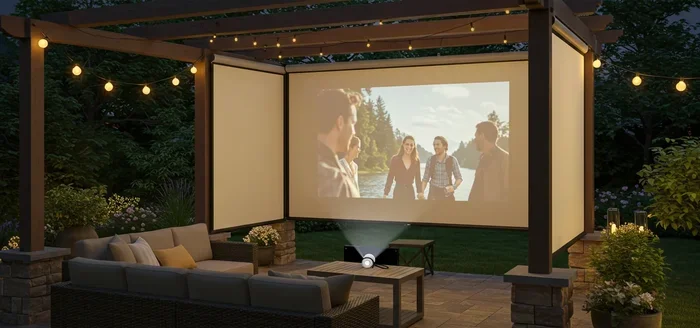
Setting up an outdoor projector for daytime use is different from a home theater setup. You are working with the sun as your biggest opponent. But with the right approach, you can create an impressive outdoor movie night experience even during the day.
Choosing the Right Outdoor Screen
Outdoor screens come in several varieties. Inflatable screens are popular for casual gatherings. They are easy to set up and affordable. However, they often have lower gain and can wrinkle, which affects image quality. Fixed frame screens offer the best image quality but require a permanent setup. Portable tripod screens are a good middle ground for occasional use.
For daylight outdoor use, invest in an ALR outdoor screen. These screens are specifically engineered to reject ambient light and boost projector brightness. They are more expensive than standard screens, but the difference in image quality is significant.
Timing Your Viewing Session
One simple trick is to time your outdoor movie with the sun’s position. Late afternoon sessions with the sun behind you or to the side work better than midday screenings. Golden hour, the period just before sunset, offers the best balance of natural light and comfortable viewing.
Sound Considerations for Outdoor Setups
Do not forget about audio. Outdoor environments lack the walls that help contain sound indoors. A good external speaker system or soundbar makes a big difference. Some projectors include built-in speakers, but they are usually not powerful enough for outdoor use. Invest in a portable Bluetooth speaker or a dedicated outdoor audio setup for the full experience.
Power and Connectivity Tips
Outdoor setups need reliable power. Use a heavy-duty extension cord rated for outdoor use. If you are going fully portable, consider a portable power station or generator. For connectivity, a wireless HDMI transmitter gives you freedom from long cables. Just make sure your signal source is close enough to the projector for a stable connection.
Common Mistakes That Ruin Daytime Projection
Even with the best projector, certain mistakes can ruin your daytime viewing experience. Here are the most common errors and how to avoid them.
Using the Wrong Screen Color
White screens reflect all light, including ambient light, which washes out the image in bright environments. Gray screens absorb more ambient light and improve contrast. ALR screens are the best choice for daylight because they are engineered to reject unwanted light. Choosing the wrong screen color is the single biggest mistake people make.
Underestimating Lumens Requirements
Many people buy projectors based on price alone without checking the lumen rating. A cheap projector with 1,500 lumens will produce a faint, washed-out image in daylight. Always check the brightness spec and match it to your viewing environment. When in doubt, go brighter.
Ignoring Screen Size and Distance
Bigger is not always better. Projecting a massive image in daylight spreads the light too thin, resulting in a dim picture. Keep your screen size proportional to your projector’s brightness. Also, make sure the projector is positioned at the correct distance for your screen size. Check the throw ratio before you buy.
Placing the Projector in Direct Sunlight
Never place the projector itself in direct sunlight. The heat can damage internal components and shorten the lamp or laser life. Keep the projector in a shaded area or use a projector enclosure. Also, direct sunlight on the projector lens can cause overheating and image distortion.
Neglecting Regular Maintenance
Dust, dirt, and old lamps all reduce projector performance. Clean the air filters regularly. Replace lamps when they dim. Keep the lens clean and free of fingerprints. A well-maintained projector performs significantly better than a neglected one, especially in challenging daylight conditions.
Expert Insights on Daytime Projection
We spoke with several AV professionals about projector daylight performance. Their advice centers on a few key principles. First, brightness always wins. A 5,000-lumen projector on a basic white screen will outperform a 2,000-lumen projector on an expensive ALR screen in direct sunlight.
Second, the viewing environment is everything. Professionals always recommend controlling ambient light first before investing in expensive equipment. A simple shade structure can transform a mediocre projector setup into a perfectly watchable daytime experience.
Third, do not overlook color accuracy. Many high-brightness projectors sacrifice color vibrancy for raw lumen output. Look for models that balance brightness with excellent color reproduction. Laser projectors tend to excel in this area, offering bright images with natural, true-to-life colors.
Finally, experts recommend testing your setup before the big event. Set up your projector and screen during the day before your gathering. Make adjustments to placement, screen angle, and projector settings. A little preparation goes a long way toward a perfect outdoor movie experience.
Key Takeaways
- Projectors can work in daylight: High-lumen models and the right screen make daytime viewing possible.
- Brightness is everything: Look for 3,000+ lumens for acceptable daylight performance and 5,000+ for bright environments.
- Screen choice matters: ALR screens with high gain reflect light back to viewers and reject ambient light.
- Placement and angle: Shading the screen and positioning the projector correctly reduce washout dramatically.
- LED and laser projectors excel: They offer better brightness and color accuracy compared to older lamp-based models.
- Common mistakes kill image quality: Wrong screen color, low lumens, and poor placement are the top culprits.
- Preparation is key: Test your setup beforehand and adjust placement and settings for the best results.
Conclusion
So, do projectors work in daylight? Absolutely. The key is choosing the right equipment and setting it up correctly. A projector with high lumen output, paired with an ambient light rejection screen and smart placement, can deliver a great image even in bright sunlight.
Daytime projection has become more accessible thanks to advances in LED and laser technology. You no longer need a massive budget to enjoy outdoor movies during the day. The right setup makes all the difference. Focus on brightness, screen quality, and environmental control, and you will be amazed at what a projector can do in daylight.
Whether you are hosting a backyard party, setting up a backyard cinema, or just want to watch your favorite show while the sun is still out, projector daylight performance is entirely achievable. Follow the tips in this guide, avoid the common mistakes, and you will enjoy a bright, vivid image no matter what time of day it is.
Start planning your next outdoor viewing session today. With the right projector brightness, the right screen, and the right setup, daytime projection is not just possible. It is genuinely enjoyable.
Frequently Asked Questions
Can any projector work in daylight?
Not every projector works well in daylight. You need a model with at least 3,000 lumens for acceptable performance in bright environments. Lower-lumen projectors will produce a washed-out image that is hard to see in sunlight.
What is the best screen for daytime projection?
Ambient light rejection (ALR) screens are the best choice for daytime use. They are designed to reflect projector light back to viewers while absorbing or deflecting ambient sunlight. This dramatically improves image quality compared to standard white screens.
How many lumens do I need for outdoor daytime projection?
For outdoor daytime projection, aim for 4,000 to 5,000 lumens minimum. If you are in direct sunlight, go higher at 5,000 to 7,000 lumens for the best results. The brighter the projector, the better the image will hold up against daylight.
Are LED projectors good for daylight use?
Yes, LED projectors are a solid choice for daylight use. They offer excellent brightness, great color accuracy, and long-lasting performance. Many modern LED projectors deliver 3,000 lumens or more, making them well-suited for daytime outdoor viewing.
What time of day is best for outdoor projection?
Late afternoon during golden hour is ideal. The sun is lower, creating less direct glare on the screen. Avoid midday sessions when the sun is at its peak. Position your screen facing away from the sun whenever possible for the best image quality.
Do I need a special projector for outdoor movies?
You do not need a special projector, but you do need one with sufficient brightness for daytime use. Look for models rated at 3,000 lumens or higher. Pair it with an ALR screen and a shaded setup, and you will have a fantastic outdoor movie experience.